A team display built on fluid movement and shared responsibility
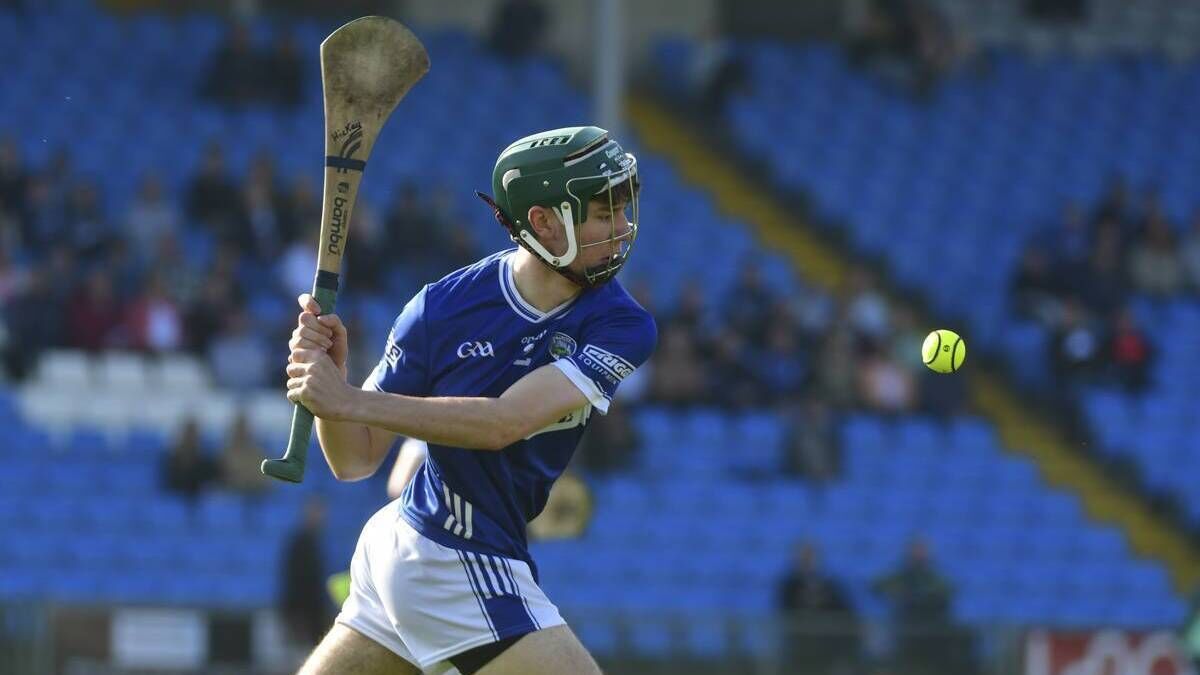
Conor Hickey playing this sliotar in against Kerry in Laois's Leinster Minor Hurling game.
While a seven-point victory is comfortable on paper, the manner in which Laois controlled proceedings, particularly through their composure in defence and variety in attack, marked them out as a side with both structure and scoring depth.
That attacking spread was evident almost immediately. To have five different scorers contributing to their opening five points speaks volumes about Laois’s unpredictability and collective threat.
Rather than relying on one marquee forward, they consistently found scores from across the line, making them difficult to contain and ensuring Kerry could never key in on a single danger man. It set the tone for the afternoon, a team performance built on fluid movement and shared responsibility.
Still, within that collective effort, Bobby O’Connor’s contribution stood out. Finishing with 1-3, he provided both a cutting edge and a moment of real quality with his goal, a strike that underlined his ability to turn possession into something decisive.
Beyond the numbers, his willingness to take on defenders and drive at the heart of the Kerry rearguard gave Laois a focal point when they needed one. It was the kind of display that hints at a player capable of influencing bigger tests down the line.
If there is a note of caution, it lies in Laois’s inefficiency in front of goal. Hitting close to 20 wides and missing a number of frees meant they left a significant tally behind them. On another day, or against stronger opposition, that lack of clinical finishing could prove costly. The encouraging aspect, however, is that chances were being created with regularity.
Sharpening their accuracy should be a more straightforward fix than trying to manufacture chances from scratch.
The second half also highlighted the value of astute in-game management. The introduction of Dan Downey at the break proved a turning point in terms of tempo. With an athletics background, he brought a burst of pace and direct running that stretched the Kerry defence and injected fresh energy into the Laois attack. His impact wasn’t just in scores, but in how he shifted the rhythm of Laois’ play, turning steady control into something more incisive.
Behind it all, the Laois defence operated with notable ease. Kerry, outside of Sean Ross’ placed balls, struggled to generate sustained pressure or carve out clear openings. Laois’ defence read the game well, cleared their lines efficiently, and rarely looked troubled, providing the platform for everything that followed further up the field.
All told, this was a composed and promising start. With greater accuracy, Laois could have pushed the margin into emphatic territory, but even allowing for that, there was enough here to suggest a team developing nicely, with balance, depth and a few standout performers ready to lead the way.