Dublin GAA secures approval for major new state-of-the art training facility
Sean McCarthaigh
Dublin GAA County Board has secured approval for the development of a major new state-of-the-art training facility in south Dublin, despite objections from local residents.
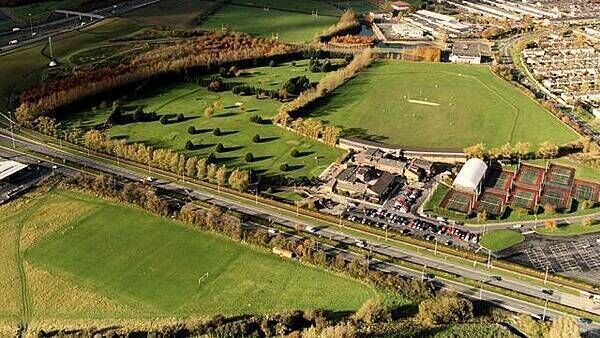
An Coimisiún Pleanála has upheld the decision of South Dublin County Council to grant planning permission for the development of the new “GAA cluster facility” at the site of the existing Spawell sports and leisure centre just off the M50 in Templeogue.
The Commission rejected several appeals against the council’s ruling, including ones from the Orwell Park Residents Association in Templeogue.
Subject to compliance with a number of planning conditions, the Commission said the development would provide “a high-quality sports facility for the wider South County Dublin community.”
The plans, which require the demolition of the existing golf driving range and the partial loss of indoor and outdoor soccer pitches, will provide three new floodlit GAA pitches with electronic scoreboards and dugouts and an indoor training facility.
The project also involves the construction of a stand with seating for 500 spectators and two uncovered terraces on either side of the main stand with capacity for another 500 attendants.
A new pavilion will include 10 changing rooms, shower facilities, dining room, gym, tuck shop, meeting room, physio and first aid facilities and medical room.
A fourth pitch is already under construction on a former pitch and putt course at the 13.8-hectare facility, which Dublin GAA bought for over €9 million in 2017.
Other elements of the project include a large L-shaped hurling wall running to 105 metres in length and an all-weather surface sprint training area as well as a 1.32km walking trail/jogging track.
Dublin GAA has already secured a €7m grant under the Government’s large-scale sport infrastructure fund for the project.
The Commission said the new training facility would not seriously injure the residential amenities of the area or have a detrimental impact on biodiversity, while also being acceptable in terms of road safety and in keeping with the character of the area.
It also directed that the development be carried out on a phased basis and stipulated that the kitchen and dining area should not be used as “a commercial eatery” for the public without a separate planning permission.
Other conditions include limiting the use of floodlights to 10 pm at night between October and March and having an event traffic management plan in place for match days as well as measures to protect local bat and badger habitats.
The Dublin GAA County Board had to submit revised plans containing a “comprehensive redesign” of the project in October 2024 to address concerns raised by council planners about its impact on the environment and traffic.
They included the redesign and relocation of the pavilion building and overflow car parking area.
Dublin GAA said the new facility will represent “a very significant addition to the area’s active recreational infrastructure” to enable the future growth of Gaelic games in south Dublin.
It claimed the provision of a jogging/walking trail with exercise stations constituted “a significant community gain” for the wider community.
The number of car parking spaces was also increased from the original proposal of 112 to 155, which excludes an overflow car park for 19 vehicles, while a boundary wall on Wellington Lane as well as an embankment and a significant number of trees and hedgerow,s will be retained.
Dublin GAA sought a 10-year planning permission for the project on the basis it is an amateur volunteer-based sporting organisation which will require extensive fundraising over a period of time to develop the site.
It stressed that the new facility is not “a centre of excellence” but an accessible resource for clubs, schools, institutions and community organisations.
Dublin GAA said it had a strong track record in managing facilities and there would be no potential for anti-social behaviour.
A total of 63 third-party submissions were received by South Dublin County Council, including many from local GAA clubs, which voiced strong support for the project, adding it would provide much-needed training and match facilities.
In an appeal, the Orwell Park Residents’ Association claimed there were major flaws in traffic projections made by consultants for the Dublin GAA County Board, including the failure to take into account the substantial impact which the BusConnects project will have on traffic flows on Wellington Lane.
The residents also maintained that the proposed level of car parking was inadequate for events attracting 1,000 spectators, which would result in “inevitable and substantial” on-street parking in adjoining housing estates.
In a 97-page report, a planning inspector with An Coimisiún Pleanála concluded that the use of the facility for hosting matches attracting large numbers of spectators with its impact on the local road network would be “limited and infrequent.”
The inspector said he was also satisfied that it would not create significant noise impacts.
The Spawell site was once proposed as the location for a 25,000-seater GAA stadium to host intercounty matches as a more suitable alternative to Croke Park for certain games.
However, the county board said its current plans for the Spawell site had emerged from a strategic plan published in 2012 which had identified a range of significant deficits in the physical infrastructure for the playing of Gaelic games in Dublin.