Explained: How did an Irish alumina refinery become linked to the Russian military?
Kenneth Fox
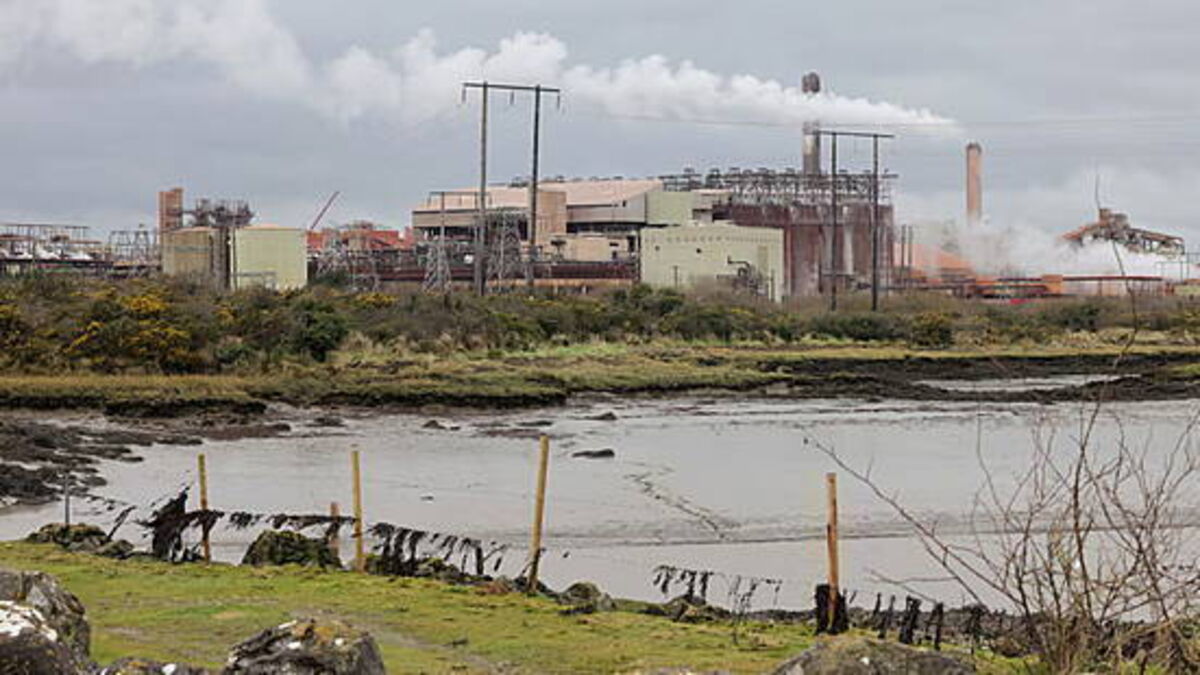
A recent investigation from The Irish Times, along with the Organised Crime and Corruption Reporting Project (OCCRP), found that alumina produced in Co Limerick is entering the Russian military supply chain.
While in the past, Ministers have defended the plant and said it does not have links to the Russian military, it is clear that much of the alumina ends up being used for the Russian Ministry of Defence.
Who owns Aughinish Alumina, and how does the refined alumina make its way from Limerick to Siberia? Here is everything you need to know:
Who owns Aughinish Alumina in Limerick?
The Aughinish plant is owned by Rusal, a Russian company, which also owns smelters in Siberia to which much of the output from the Co Limerick plant is exported.
A big customer of these smelters is a Moscow trading company that has links with Rusal and is an important player in the Russian arms industry.
Alumina, as a basic commodity, is not subject to EU sanctions and the company and the Government point out that it has wide uses in civilian projects.
Nor is it possible to prove definitively that the output of the Co Limerick plant is used in arms production.
But industry experts point out that aluminium producers such as the big Russian smelters would not typically use alumina from specific suppliers in different ways.
When Rusal’s major shareholder, Oleg Deripaska, was sanctioned by Washington in 2018 for alleged interference in the 2016 US presidential election, Irish officials successfully lobbied for the Co Limerick plant to be excluded.
This was agreed on the basis that Deripaska reduced his stake in the plant, though he remains its largest shareholder. The Irish Government also lobbied for the company again in 2022, following the full-scale Russian invasion of Ukraine.
How does the alumina end up in Russia?
The supply chain starts when bauxite from Africa and South America arrives at the Shannon estuary for processing into alumina.
Once the raw bauxite arrives at Aughinish by ship, it goes through the Bayer process. This uses huge amounts of heat, pressure and caustic soda to turn bauxite into alumina, producing the red mud that surrounds the plant.
The finished alumina is then loaded back on ships and exported overseas.
The Irish alumina arrives in Russia at Novy Port, near St Petersburg, where it is loaded onto trains and transported almost 5,000km east to Rusal-owned smelters in Siberia. A large portion of the material is transported to the Rusal smelter in Krasnoyarsk, one of the biggest aluminium manufacturing plants in the world.
Satellite and shipping data shows much of the material produced in Co Limerick is transported to smelters in Russia, which are also owned by Rusal. There, it is transformed into aluminium.
Between 2020 and 2024, Russian imports of Irish alumina surged, rising from 394,430 tonnes to 826,584 tonnes, before declining slightly last year, according to export data from the Central Statistics Office (CSO).
Aughinish also sells substantial amounts of alumina to other countries, but since the war, Russia has become by far its biggest customer. In 2020, Russia accounted for 23 per cent of the Limerick plant’s business. Last year, that figure was 68 per cent, according to the CSO.
What is the alumina used for?
The aluminium product is purchased by a trader called ASK, which has extensive links to Rusal.
ASK then sells aluminium to sanctioned weapons manufacturers who make missiles, tanks, helicopters and other weapons of war used in the Ukraine conflict by Russia.
Financial records do not definitively show whether specific Irish alumina is being used in Russian weapons. But they do show that vast amounts of Irish alumina are being smelted into aluminium by Rusal, which then sells it to the ASK. The trader, in turn, supplies huge amounts to Russian weapons companies.

Their investigation identified 107 defence companies as ASK customers, of which 40 are subject to EU sanctions. According to Andriy Yusov, an official from the main directorate of intelligence in Ukraine’s ministry of defence, 18 of these customers are responsible for manufacturing weapons directly used in deadly attacks on Ukraine.
The companies include Votkinsk Machine Building Plant which manufactures intercontinental and medium-range ballistic missiles, including the infamous Iskander-M missile.
Advanced missiles such as the Iskander killed 682 Ukrainian civilians last year, a 28 per cent increase on the number killed in 2024.
Another ASK customer, Uraltransmash, makes howitzers for the Russian army, while NPK Uralvagonzavod uses aluminium to produce the T-72 tanks that formed the vanguard of the 2022 invasion.
What do the locals think?
People living near Russian-owned Aughinish Alumina in Limerick defended the plant, despite the reported links between the alumina it produces and dozens of Russian weapons manufacturers.
Locals who spoke included those who publicly represent some of the plant’s staff.
“It’s a case of do you eat the egg or do you choke the chicken?” said local former special branch detective and recently retired Fianna Fáil councillor Kevin Sheahan.
“We can’t stop these things. If they weren’t shipping the alumina, the plant wouldn’t be functioning, and the employment wouldn’t be here and it wouldn’t be beneficial to anybody,” Sheahan said.
Asked how he balanced concerns for those families with links between Aughinish and the Russian military supply chain, he said “It’s a fair question” but argued that the source of the alumina was irrelevant.
“If the plant in Askeaton couldn’t export it any more, it would be exported [from] someplace else,” he said.
“The people in Askeaton or Ireland didn’t declare war on anybody, and you wouldn’t find anybody here wishing the war to go any place other than to finish.
Publican Adam Teskey, who represents the area as an elected Fine Gael councillor, said that although he did not support Russia’s war in Ukraine, he did support the continued exportation of alumina from the Rusal plant, which is part-owned by Russian oligarch Oleg Derepeska, who has close ties with Russian leader Vladimir Putin and the Kremlin.
“The majority of people I represent are employed by Aughinish. It’s a very valued employer and a local taxpayer that contributes enormous amounts of money to the area which I represent,” said Teskey.
He and others in the Shannon estuary zone were quick to point out that a second big local employer – Wyeth Nutritionals Ireland in Askeaton, an infant formula manufacturer owned by Nestlé – is closing its doors at the end of this month with the loss of 542 jobs.
Finally, what has the Government's reaction been?
Two Government departments are to review findings of the investigation that highlighted links between Irish-made alumina and dozens of Russian weapons manufacturers.
It follows a commitment in the Dáil from Taoiseach Micheál Martin to examine the matter and a commitment by the Belgian government to close the “loophole” that allows alumina produced in Ireland to be exported to Russia.
There have also been calls from Opposition members and a prominent Ukrainian politician for a crackdown on exports of the material to Russia.
The Government has previously denied that the plant plays any part in supplying material to Russia’s military industry.
Responding to questions in the Dáil on Tuesday, the Taoiseach said he was not previously aware of the links between Irish alumina and the Russian weapons industry.
He expressed concern about the findings and pledged to examine the issue and “try to get into the background of it”.
But he stressed Aughinish Alumina “is a very significant employer in the Midwest and it supports hundreds of jobs directly and indirectly”.