Former British soldier played 'logistical' role in €42m cocaine smuggling operation, court hears

Fiona Magennis
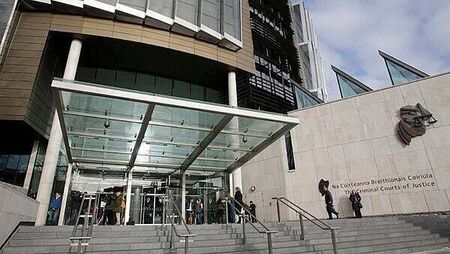
A former British soldier played a “logistical” role in a large-scale cocaine smuggling operation into Ireland but was not among the “top” figures directing the criminal enterprise, the Special Criminal Court has heard.
Gary Monks was part of a “structured and organised” cell under the control of others that conspired to import cocaine with an estimated value of up to €42 million into Ireland.
The Special Criminal Court heard on Monday that 41-year-old Monks has been diagnosed with post-traumatic stress disorder (PTSD) stemming from his military service and subsequent work in conflict zones, including Iraq and Afghanistan.
Monks was also “haunted” after witnessing a car bomb in which a number of local people died and some of his colleagues were injured, the court was told.
Monks is one of seven men who have pleaded guilty to conspiring with others to import controlled drugs with a value exceeding €13,000 between December 18th, 2024, and January 15th, 2025, both within and outside the State.
Three of the men were Filipino nationals who were crew members aboard a ship transporting the drugs from the Amazon region. The vessel docked off the coast of Co Clare.
The remaining four men, including Monks, were based in the UK and formed part of a “landing cell” tasked with collecting the drugs using an inflatable boat and transporting them to a location in Co Kerry.
The seven men are Monks (41) of Amulree Place, Glasgow, Scotland; Miljan Koprivica (46) of Bollin Drive, Manchester; Conor Costello (31) of Earhart Park, Madamsbank Road, Derry in Northern Ireland; Ryan Watson (32), of Mailerbeg Gardens, Modiesburn, Glasgow; and three Filipino men, Hanz Pangahin (36), Christopher Ampo (44), and Feljon Lao (29).
Gardaí told a previous sentencing hearing that the seven defendants operated as “structured and organised cells” under the overarching control of persons on the ground.
A detective inspector today agreed with Monk’s defence counsel Shane Costelloe SC that his client was part of the “landing crew” and his function was to be on the semi-inflatable Rigid Inflatable Boat (RIB) to go out and bring the drugs in.
Mr Costelloe put it to the Det Insp that while he was not suggesting that Monks was “an ingenue” or an “innocent abroad” he was not someone who was “at the upper echelons of the organisation”.
The detective said there was a hierarchy involved, noting Monks had “a logistical importance but as regards the overall management, he certainly wouldn’t be at the top.”
He accepted that Monks is someone who had a military background before working in the private sector. He also accepted the 41-year-old has a “psychiatric background” and suffers from PTSD.
In mitigation, Mr Costelloe outlined his client’s background, noting that he joined the British Army at a young age, served with distinction, and was honourably discharged in 2011.
Monks later worked in private security roles in the Near and Far East until 2020.
He said Monks had also been present when a car bomb detonated. Colleagues were injured in the blast, the barrister said, and a number of local people were killed.
“He is now alive to the fact that as a result of that particular incident, perhaps coupled with his time in the military, he is now suffering from PTSD,” said Mr Costelloe.
He said that when Monks went back to his home country of Scotland, and “while in the throws of PTSD”, he started abusing drugs, something he had never done before. Monks was also drinking to excess, counsel said, and was “slowly descending into out-of-control behaviour”. He lost his job and couldn’t get alternative employment.
Monks was offered a large amount of money and took the opportunity to commit a crime in the hope that he would make that “easy money, as he saw it”, counsel said.
Mr Costelloe said his client understands he is going to be in custody for a significant amount of time but asked the judges, when imposing sentence, to bear in mind that his client had been law abiding for many years.
There was a “marked distinction”, between Monks and those who have come before the courts with a lengthy history of prior offending, Mr Costelloe said, noting his client has convictions dating back to his return to Scotland but nothing as serious as those he is before the Special Criminal Court for.
“His history of offending occurs when he came back from Iraq and Afghanistan,” said counsel.
Mr Costelloe said Monks is managing his psychiatric illness and is finding medication very helpful.
He said a probation report notes Monks is at high risk of reoffending “in the generic sense” but stressed the report is written in the context of the next 12 months. He said there was no suggestion his client will be out of custody in the next year “and he knows that”.
He asked the court to be as lenient as possible and said Monks was someone who can provide an explanation as to “how he came to be committing a crime of this magnitude” rather than an excuse.
Ms Justice Karen O’Connor adjourned the matter to Monday, March 23rd. She remanded all of the defendants in custody to that date.