Garda tells inquest bullets appeared to have no effect on George Nkencho
By Bairbre Holmes, Press Association
A Garda who witnessed the shooting of George Nkencho said the bullets which hit him “did not look like they were having any effect on him whatsoever”.
Peter Bernard was giving evidence at the inquest into the 27-year-old’s death at Dublin District Coroner’s Court on Friday.
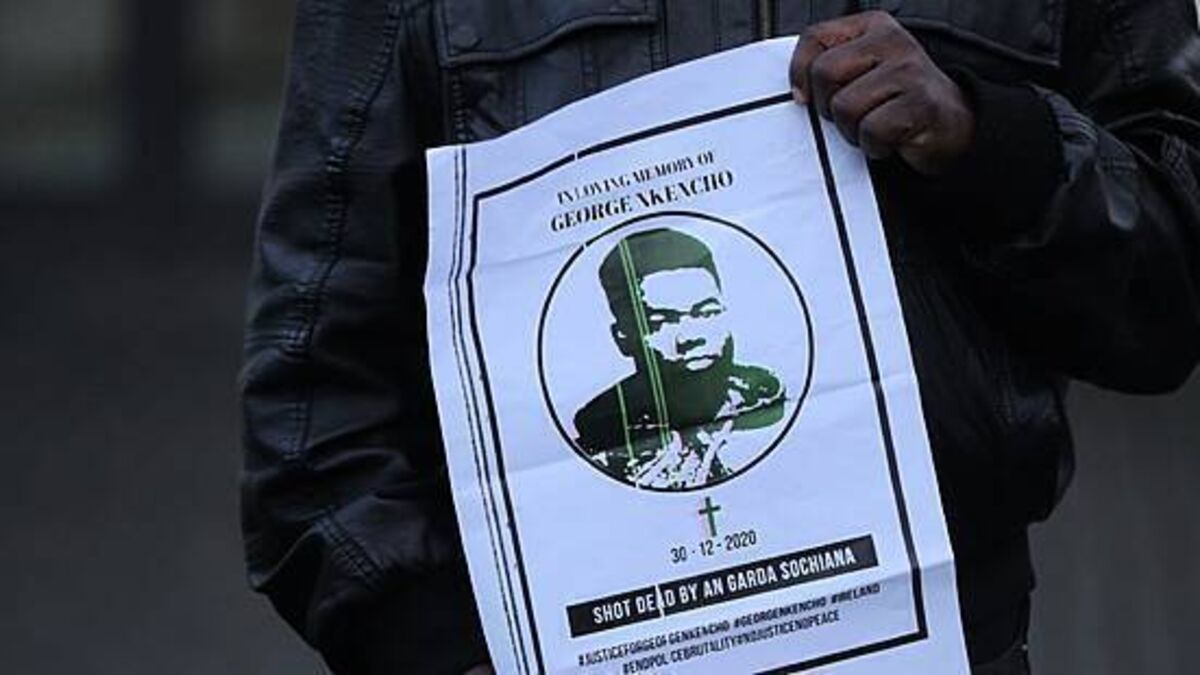
Mr Nkencho died outside his home in west Dublin in December 2020 after being shot multiple times by the Garda Armed Support Unit (ASU).
It didn't look like they were having any effect on them whatsoever
The Garda said when Mr Nkencho was shot, the bullets “did not seem to have any effect, nothing”.
He didn’t “flinch”, Mr Bernard said, adding: “I couldn’t believe what I was seeing.
“It didn’t look like they were having any effect on them whatsoever.”
Later he said “I remember thinking to myself, like what’s happening here? Every shot’s not working.”
He gave evidence alongside another Garda member. Both men were called to the area following a disturbance at Eurospar, which preceded the shooting.
The inquest had previously heard from witnesses who said Mr Nkencho punched a retail worker at the shop and brandished a knife.
Mr Bernard and Garda Tom McCarrick came across Mr Nkencho walking through the Manorfields Estate with a knife in his hands.
They described trying to engage him in conversation and contain the situation.
Garda Tom McCarrick repeatedly shouted at Mr Nkencho to “to stop walking and drop the knife”, but this was “ignored” by Mr Nkencho, whose “demeanour was aggressive and intimidating”.

Mr Nkencho replied, telling them to “talk to the people in the shop and to arrest the people in the shop.”
Mr Bernard said: “He was completely indifferent to any questions we were asking him.
Later he said: “Any time anyone approached, he raised the knife up above his head in a stabbing motion.”
The Gardai said they shouted at members of the public to “retreat into their homes and to get out of the way”.
Mr Bernard described the risk level as “extremely high”.
Mr McCarrick said he was particularly “concerned for the safety” of a woman and toddler with a tricycle in the street.
The Garda said he considered using his pepper spray, but would have had to “close the gap” between them for it to be effective and he “did not believe it was safe to do so”.
The Garda Armed Support Unit arrived as Mr Nkencho got to his home on Manorfields Drive.
The Gardai said they were unaware he lived there, with Mr Bernard saying: “It just looked like he was fleeing into the nearest property to him.”
During cross-examination, he said: “It was literally the first house he could have gone into when the ASU fellas engaged him.”
Both men described how Mr Nkencho continued to stab and “slash” at the ASU members even as they tasered, pepper-sprayed and shot him.
Mr McCarrick said he feared the ASU member would be “fatally stabbed” during the incident, and Mr Bernard said he thought one of them had been stabbed twice.
At that point, Mr Bernard drew his own firearm fearing the ASU member would “lose blood and collapse” and thought “maybe it’s adrenaline and keeping the ASU guy up on his feet”.
He said he believed there was an “imminent threat” to both his and the ASU members’ lives.
He said he had never drawn his firearm prior to this incident as Gardai “don’t draw out a firearm unless you’re willing to fire it”.
After he was shot, Mr Nkencho stayed on his feet for “approximately 15 seconds”, Mr McCarrick said, before he fell to the ground.
Earlier on Friday, depositions by members of the Dublin Fire Brigade (DFB) were read to the inquest.
Crew members from the DFB, which also provides ambulance services in the Dublin area, arrived on the scene and found Mr Nkencho in a “critical condition”.
Station officer Declan Rice said he found Mr Nkencho with gunshot injuries to his chest, “some type of wound to his left arm” and metal wires from the taser were protruding from his clothes.
Mr Rice said he called for an “advanced paramedic”, but none was available.
As Mr Nkencho was put into the ambulance, the DFB crew described how the area grew “volatile”.
Mr Rice said there was “a number of angry members of the public” who were “shouting at Gardaí”.
Firefighter Mick Carton said the crowd which had gathered, “became quite hostile, and by that I mean the crowd on scene were shouting at the Gardai, which I felt was abusive”.
Another firefighter, Dermot Mooney, outlined how CPR continued in the ambulance on the way to Connolly Hospital in Blanchardstown.
He said there was “a lot of blood on the stretcher, I thought the gunshot wounds had exited”.

Emergency department consultant at Connolly Hospital, Dr Siobhan Maguire, described how her team worked on Mr Nkencho after he arrived at the hospital.
She said he had a Glasgow Coma scale of 3, meaning he was deeply unconscious.
His heart was not beating, Dr Maguire said, and she was told three previous attempts to use defibrillators had found no electrical current in his heart.
On examination of Mr Nkencho, she said she found he had wounds to his chest and to his left forearm.
As part of their treatment they quickly administered adrenaline and infusions of red blood cells.
Resuscitation attempts continued for 17 minutes before Mr Nkencho was declared dead.
The incident was the subject of an independent criminal investigation by the then Garda Siochana Ombudsman Commission (GSOC), now Fiosru, which concluded in June 2023 with the submission of an investigative file to the director of public prosecutions.
A decision was made not to pursue any criminal prosecution in relation to the shooting.
The inquest into Mr Nkencho’s death began last week at Dublin District Coroner’s Court.