Budding Laois designers turn flowerpots into fashion
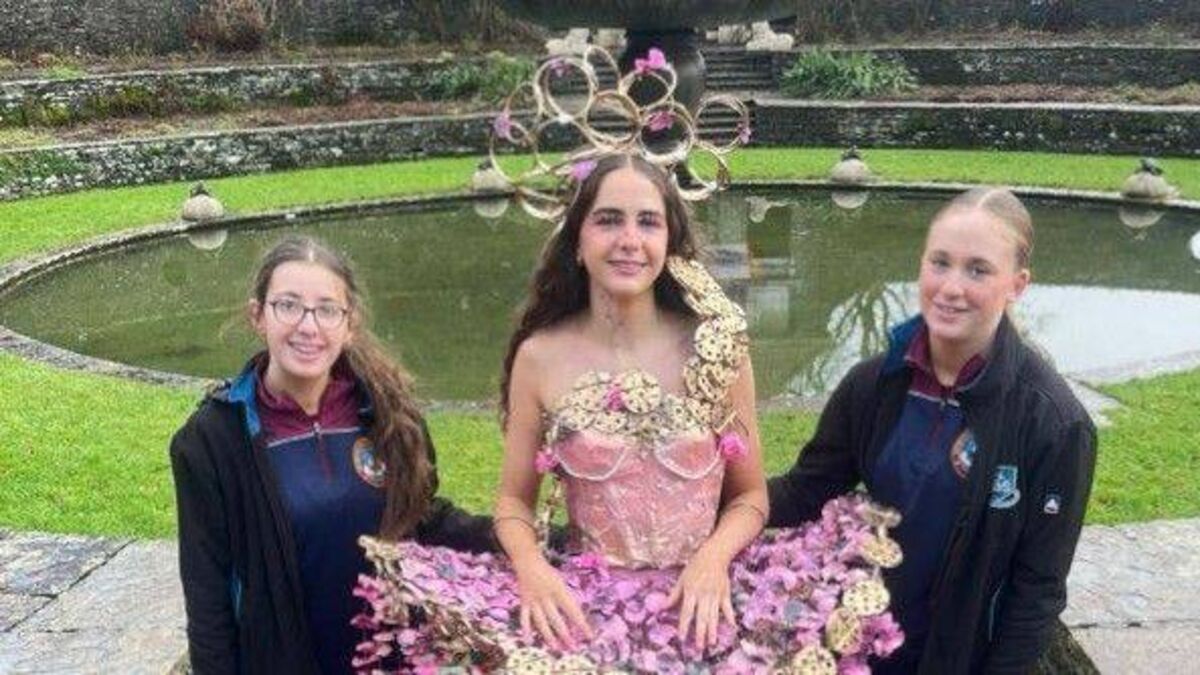
Heywood CS students Aaliyah Troy, Jessica Lawlor and Ashling Gonzalez with their couture-inspired design Planting Potential, made from plastic flowerpots. See full designs from both teams in our newspaper edition
PLASTIC flowerpots have been transformed into fabulous fashion by students at Heywood CS, which has two entries in the upcoming Junk Kouture regional finals.
Budding designers Aaliyah Troy, Jessica Lawlor and Ashling Gonzalez used garden waste to craft a striking design called Planting Potential, combining creativity with a strong environmental message.
Meanwhile, their classmates Fatima Shah, Veronika Stoyko and Lacey Dalton created Fit2Function, a high-fashion piece made of recycled fabrics and repurposed materials, showing that fashion can be both powerful and sustainable.
Both designs are a magnificent testament to the teenagers’ dedication, imagination and sheer hard work, which deserve to be rewarded with a ticket to the national finals of the internationally renowned Junk Kouture competition.
The Planting Potential design was inspired by a team member whose family flower shop was closing, providing materials that would otherwise have gone to waste.
Inspired by the Dior Haute Couture Spring/Summer 2025 collection, the dress was made using recycled plastic flowerpots. Throughout the project, the girls learned to melt, cut, weave, sew and reshape plastic, turning rigid materials into a bold fashion statement.
Their design highlights the issue of single-use plastic in the gardening industry. Research by the team found that around 500 million plastic plant pots and seed trays are sold annually across Ireland and the UK, with most ending up in landfill or incinerated.
With Fit2Function, the other teenage trio recycled and repurposed materials that would normally be thrown away, instead of using new fabrics. The structured design represents resilience and empowerment, reflecting strength, confidence and adaptability.
The dress also highlights the issue of gender inequality in developing countries, sharing the message that everything - and everyone - has value and potential. A striking headpiece and strong silhouette help bring this message to life.
The students said that working with materials not originally intended for clothing brought challenges along the way, requiring creativity, experimentation and problem-solving to achieve the final look. The finished piece is both eye-catching and meaningful.
Delighted with their finished designs, both teams are hoping for a green light from judges at the hotly-contested regional finals in March.