Finding a spirituality of hope: an interview with Fr Paddy Byrne
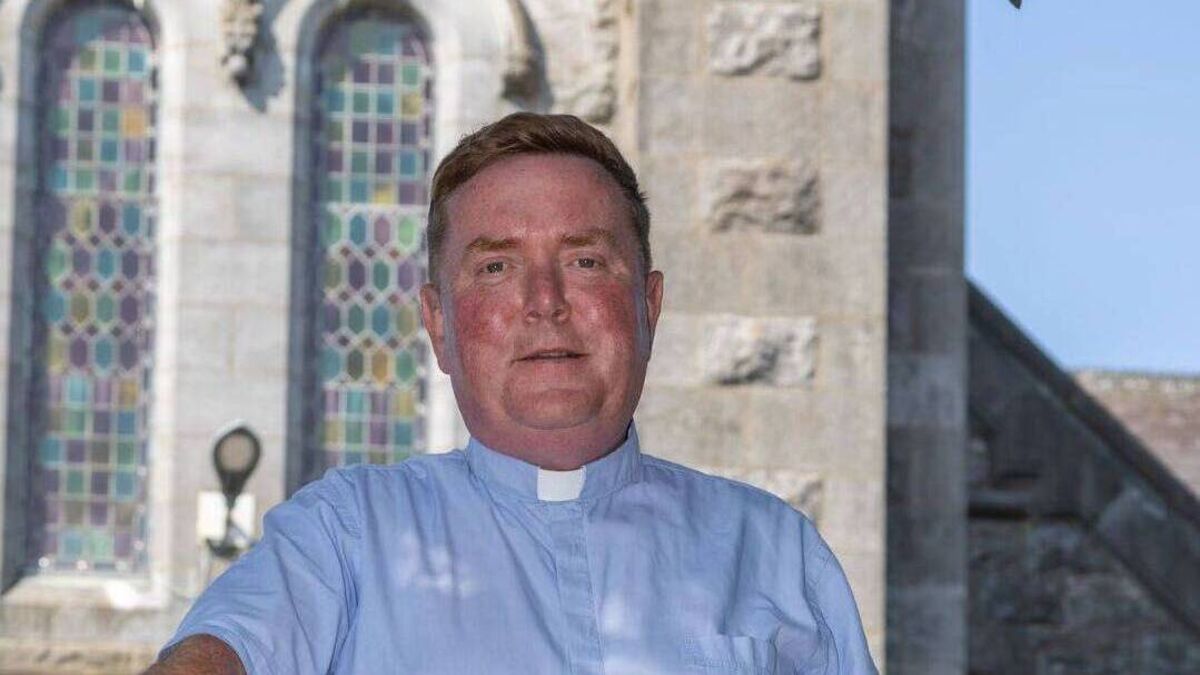
Fr Paddy Byrne, PP Abbeyleix Photos: Alf Harvey
At a young age, Father Paddy Byrne felt a calling – what those in the Catholic Church say is a divine invitation to devote a life to service.
A graduate of CBS Carlow, after his Leaving Cert Fr Byrne studied Business, Economics, and Social Studies in Trinity College Dublin, but it was God’s calling that won out in the end.
“God's calling is very loud and it's hard to ignore”, he reflects on a humid summer’s morning. “I value that and own that now, but at the time I was very scared and anxious and confused”.
Fr Byrne found courage, he says, and entered the seminary to “discern that vocation”. A seven-year journey, trainee priests study theology, philosophy and humanities as part of their intellectual formation. “I loved that part of it”, says Fr Byrne.
He continues: “You also do a lot of pastoral work; working out in the parishes in various contexts to ministry that will be very important to you as a priest”.
Fr Byrne completed a chaplaincy course in Cork University Hospital and was later ordained. He has operated in multiple parishes in his time: His first was in Newbridge, Co Kildare; his second was in Bagenalstown in Carlow; his third was Portlaoise. For the last seven years, Fr Byrne has operated in Abbeyleix, Ballinakil and Raheen.
2026 marks 25 years since Fr Byrne became a priest. At the time, he says, it was the very beginning of “a different type of church”.
He elaborates: “I've never experienced in public ministry a church that wasn't in crisis, be it in terms of scandal or indeed in terms of vocational crisis.
“The jobs that I've been doing for 25 years are now in a real crisis in that there are so few priests”.
The average age of a priest in Fr Byrne’s diocese of Kildare and Leighlin is almost 75 years of age, he says.
“There are more priests in our diocese over 90 than under 60”, he says, adding: “Apart from the priests that generously come to work with us from different countries, we would no longer be able to serve many of the parishes we continue to reach out to.” Indeed, in 2025, only 13 men started studying to becomes priests at the national seminary in Maynooth, signalling a dramatic decline in interest in the vocation.
Multiple abuse scandals within the Church have eroded public trust in the institution. In 2022, the Irish census indicated a 10 per cent decline in the number of people identifying as Catholic in the Republic of Ireland compared to 2016, a drop from 79 per cent to 69 per cent. Weekly Mass attendance has also dropped significantly, with only about 30 per cent of Catholics in Ireland attending Mass weekly in 2021.
Fr Byrne has never shied away from reflecting aloud on any issue pertaining to the Church, particularly the scandals that have impacted the institution, as well as questions of social justice.
His opinions have been documented in a column he has contributed weekly to the for the last 20 years, which traces the journey of a changing Church. He has never once missed a deadline, he says proudly.
“There’s a great sense of pride and achievement to be able to do that. I have a commentary that is appreciated and people often write and talk to me about the issues of the day”, he says.
“I think we’re at a cathartic moment in the Catholic Church in Ireland”, he says. “We're at a point where we cannot continue as we used to because we're just not able to.
“The clerical Church as we know it is no longer, and I think there has to be more lay ownership, lay leadership.
“I wonder, is it necessary that a prohibition is around for men [who are priests] to have a wife or family? Is that necessary in 2026? Would it enhance my humanity? Would it give me a greater sense of accompaniment and a sense of togetherness in my life? I'm sure it would”.
Regarding women priests: “Is it, in 2026 in Western Europe, necessary that the women are prohibited from ministry?” Fr Byrne continues: “One thing that the Catholic Church is unapologetic for … is the gospel of life. We live in a culture of death, where the casual nature of life is seriously being undermined – look at how we treat refugees worldwide.
"The Catholic Church at its best is where there's a good social consciousness, where there's compassion, where there's inclusion, where there's a sense of hopefulness, and I think that's a very important message to communicate”.
Fr Byrne cites Pope Leo XIV’s recent visit to Lampedusa, Italy – where tens of thousands of people have been died crossing the Mediterranean – as an example; the pontiff defended the dignity of migrants in counterpoint to rising anti-migrant sentiment.
“We live in a time when the President of the United States can call people of different colour or creed the most incredible dehumanising things”, he says, adding: “I'd be worried about the direction our own people are going because the wave of Trumpism is never too far away.
“In my experience I've never made any judgment to anybody, and I’m really proud of that. Pope Leo, inspirationally, continually challenge priests to smell like sheep in the sheepfold, because Christ is the good shepherd. He welcomes members of the LGBTQ community, as I do. I mean, Lord save us, that's just basic humanity”.
Despite a decline in the number of people identifying as Catholic, Fr Byrne finds solace in interactions with young Catholics, whom he calls an ‘inspiration’: “I think young people particularly are an inspiration. The narrative is that faith is dying among young people, [yet] I'm often very much surprised by their spirituality”.
Fr Byrne believes the Church should think more creatively in terms of its liturgies. “The expectation for young families maybe is too much to expect them to come to Church every week, so there's definitely no judgment, but when they do come, they receive warmth and welcome.” For his part, Fr Byrne engages followers on his X account, where he boasts an impressive follower count of 35.4k. He is also an avid user of TikTok, Facebook and Instagram - platforms he uses to encourage moments of reflection: “A little pause, a little comment, a little spiritual hope”.
As a spiritual leader within a community, Fr Byrne is witness to pivotal moments in people’s lives: baptisms, first communions, confirmations. “I love the sacrament of marriage”, he says. “It's a joyful encounter”.
This also means Fr Byrne is present for moments of intense sadness: “People in old age, in sickness, in hospitals, and in death, and that's a huge part of our ministry – the ministry of bereavement. It's where you're with families at those moments and celebrating the lives of loved.” Fr Byrne will also point people in the direction of services that are more professionally equipped to support them, particularly around mental health, which he calls “a huge crisis”.
A great sadness Fr Byrne encounters in his work is the volume of people he has buried due to death by suicide.
“It’s a huge loss to a family, a community, and it's literally a tsunami in our country and an unspoken one, deaths because of suicide”.
How does he approach a family who might be dealing with something as serious as suicide?
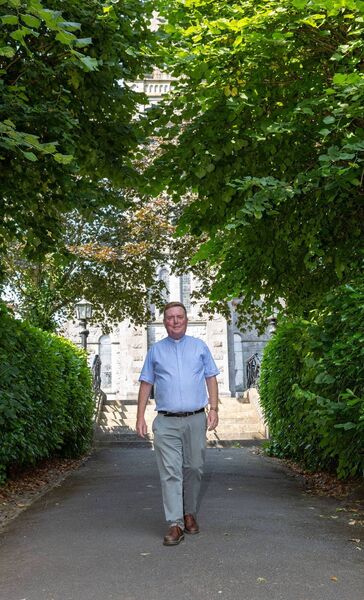
“With the greatest of sympathy, empathy, and not answers, because there are no answers, but just to be present and to listen and to hold together in those early days and indeed the days, weeks and years after, because grief is something we never get over, but learn in time to live with”.
Despite the challenges and, at times, many questions he has had over the last 25 years, Fr Byrne says he has been very happy, deeply fulfilled and “greatly inspired by the kindness and support and encouragement of people on the ground.” He elaborates: “Being a priest is about being present for me, and it's about being present in the midst of the ordinary, and in that place, you often encounter the extraordinary – the extraordinary commitment parents have to rearing families, the wonderful sense of community that's available, particularly in rural life where I live, the sense of heroism by people often overcoming great challenges in life and keep on going.
“Fulfilment doesn't come necessarily in a role. It comes in ourselves. It’s the great human endeavour to find contentment, to be in a place where one experiences peace of mind and hopefulness, and it’s a challenge in the culture we live in because we seek it in so many different places.
“We live in a culture that's very instant, that's very materialistic, that's very superficial, and ultimately where I find that place, that space, that energy, that enthusiasm, that comfort – what gives me hope and peace of mind – I find that very much in my relationship with the good Lord.
“I find it in his presence in nature, in his presence among us in celebrating sacraments, and I find it, as I mature in life, in the ordinary. The great poet Patrick Kavanagh said that God is found in the ordinary and it's very powerful – that he’s in the bits and pieces of our day-to-day living. That's where we need to find our spirituality of hope.”