Fr Paddy Byrne: Robin red breast ... a Christmas bird
x
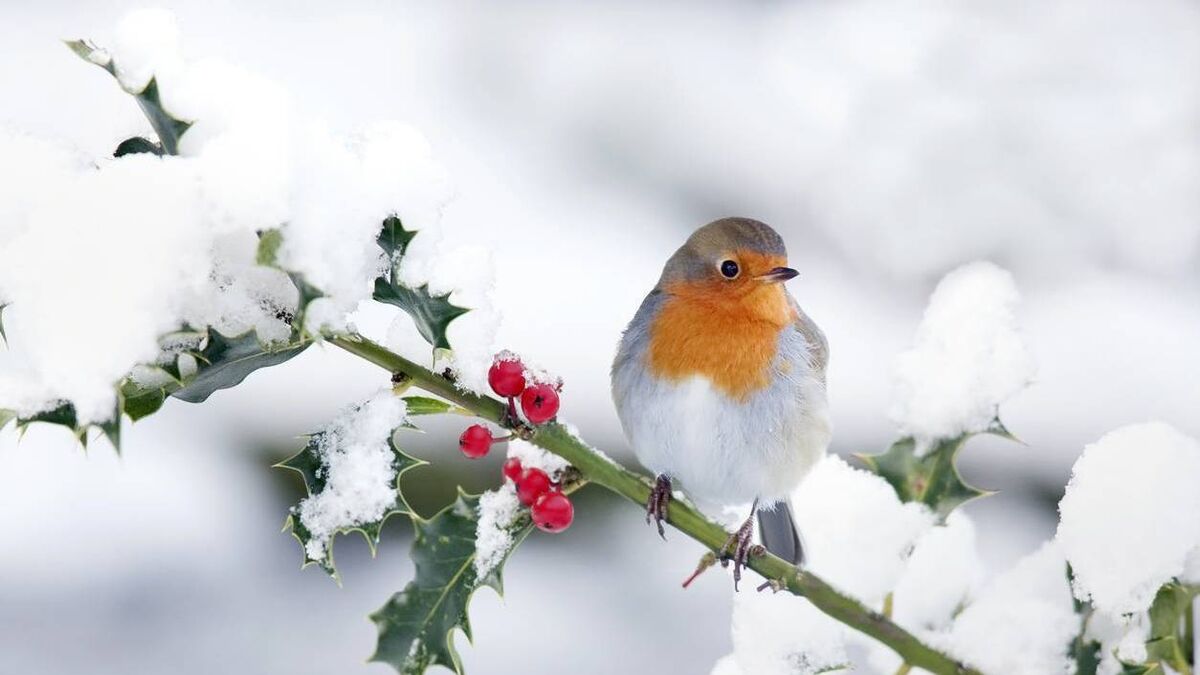
THESE days, we find ourselves plunged into the depths of winter darkness. Nature seems to have fallen asleep and, yet, in its raw and empty silence, creation continues to inspire hope and contemplation. The tiny and very beautiful robin red breast is synonymous with the Christmas story.
Many people believe when robins are near, so, too, are loved ones gone before us. Hence, huge folklore has developed about the life of robins. They represent the Christmas bird song. In Christian folklore, the robin was said to have played a sacred role in protecting the infant Jesus as Mary fled with him to Egypt. After cutting her leg on brambles, Mary left a trail of blood ... allowing Herod's soldiers to follow. Yet, seeing the family in need the devoted Robin covered the blood with leaves and twigs to keep them hidden from danger.
Across Europe, especially in Britain, Ireland and parts of northern France and Germany, the humble European robin (Erithacus rubecula) carries a rich body of Christian legend that explains its most striking feature â its red breast â and gives it a special place in religious folk imagination.
The most widespread and enduring story tells how a small brown bird was present at the crucifixion of Jesus. As Christ hung on the cross, a little bird noticed his suffering and flew to him. In pity, it tried to ease his pain by pulling out one of the cruel thorns from the crown pressed into his brow. As it tugged at the thorn, a drop (or in some versions a splash) of Christ’s blood fell from Jesus’ forehead onto the bird’s breast, staining it red forever. From that day on, the bird has worn the ‘blood of Christ’ as a badge of compassion.
Another closely related version says the robin flew to the cross to sing a song of comfort to the dying Saviour. As it sang close to his face, drops of blood again fell onto its breast. In some tellings, the bird also tried to fan the burning brow of Jesus with its wings or bring him water in its beak. A third variant claims the robin stayed near the cross after the disciples had fled, singing sweetly until Christ died and its breast was scorched red by the heat of divine love or by the flames of nearby torches.
Another legend ties the robin to the infant Jesus in Bethlehem. On the cold night of Christ’s birth, the fire in the stable was dying out and the Holy Family was shivering. A plain, brown bird flew in and fanned the embers with its wings until they burst into flame again, keeping the baby warm. Its breast was singed red by the flames and God rewarded its kindness by declaring that it and all its descendants would carry that red breast as a mark of honour. This ‘fire’ story is especially popular in France, Brittany and western England and, sometimes, the bird is said to have been a wren before it became a robin.
Because of these legends, the robin came to be seen as a profoundly sacred bird in Christian folk belief. It is widely considered very bad luck â even a sin â to harm a robin or disturb its nest. In many rural areas of Britain and Ireland until the 20th century, people believed that anyone who killed a ‘God’s bird’ or a ‘Christ’s bird’ would suffer misfortune (broken bones, milk cows drying up, fires in the house and so on). Robins are said to cover the bodies of the unburied dead with leaves and flowers (an ancient belief that was Christianised and attached especially to the robin because of its association with Christ’s blood and burial).
A robin seen near a house at Christmas or singing is a sign that Christ’s blessing is on the household. In some areas, a robin tapping at the window foretells a death â but a gentle one because the bird has come as Christ’s messenger to carry the soul to heaven.
The bird appears frequently in British Christmas carols and folk songs that blend pagan and Christian imagery. One old carol fragment runs: The robin redbreast and the wren, Are God Almighty’s cock and hen. Another traditional verse (often sung by children at new year):
George Herbert, John Clare, William Wordsworth and, later, Gerard Manley Hopkins all wrote poems celebrating the robin’s sacred associations. Perhaps the most famous literary use is in the anonymous 16th or 17th-century lullaby or carol often called The Seven Joys of Mary, which includes the lines:
XXX
”xX Even in modern Britain and Ireland, many people still feel a special affection for the robin and hesitate to harm it. Gardeners and birdwatchers often refer to ‘the gardener’s friend’ with something approaching reverence and the old legends linger in the background. The robin is the unofficial national bird of the United Kingdom and every December it dominates Christmas cards â almost always depicted with its bright red breast, a quiet echo of the medieval belief that it carries a drop of the Saviour’s blood.
In the folk Christianity of northern Europe, few creatures are as beloved. However its connection with Christmas really came about, it is a bright-eyed, intelligent, engaging little bird. Gardeners know that as soon as you turn the soil, a robin will be there watching you closely, following your movements on the lookout for food in the disturbed earth. I find it a great pleasure to see these delightful creatures in my garden or wherever I am outdoors. The notion of there being a tiny, living prayer is one I’m more than happy to go along with. Especially at Christmas.
I pray, in these very sacred days leading up to Christmas, that we will breathe easily in the confident hope that the birth of Christ will continue to inspire renewal and joy within us all. Like the humble and simple robin, may we keep our eyes on Christ, who is the reason for the season.