Laois Hunt - A club as old as the state
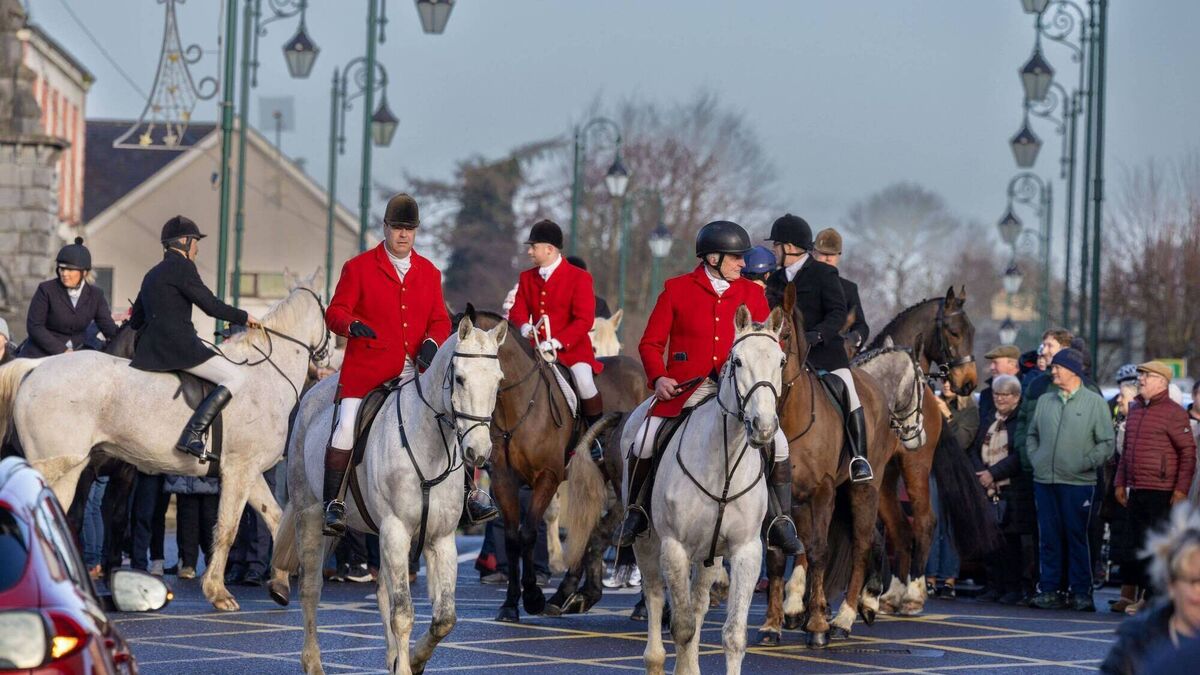
The off for at the Laois Hunt St. Stephen's Day meet in Abbeyleix Photos: Alf Harvey
A CLUB which dates back to 1850, as old as the Irish state, the group was originally the Queens' County Hunt before the free state came into being, whereupon it became the Laois Hunt.
Typically, the hunt meets twice a week, on Wednesday and Saturdays at noon. Current and previous meeting spots where the hunt gathers ahead of kick-off to plan, chatter, eat, and generally catch up include the Castle Arms pub in Durrow and the Abbeyleix Manor Hotel.
David Lalor is the current master of the hunt, a post he has served in since 1992, with over 35 years under his belt. In his professional life, David runs a large mixed farm in Ballacolla and has hosted the national ploughing championships on three occasions.
Involved in the hunt are people from all walks of life, many, and, in fact, most of them, are not professional horse people â farmers, Phd researchers, accountants, vets, insurers, teachers â nor is the Laois Hunt club an exclusively adult venture; for young people looking to develop or perfect their skills in horse riding, there is a dedicated branch of the group, the Laois Hunt Pony Club – affiliated with the national Irish Pony Club – to cater to young horse enthusiasts.
Beyond their bi-weekly meets, the hunt also runs a number of other events throughout the year, including the annual Stradbally Family Fair and National Hound Show, which is hosted at Stradbally Hall. The hunt has also organised several charity raffles over the years, which have raised money for the Irish Cancer Society.
Recently, the Laois Hunt embarked on one of its biggest events of the year, the annual 26 December fox hunt, which this year was attended by over 100 members on horseback, with many foot followers trailing behind the group as it set off from Abbeyleix town square.
This year, a number of protesters gathered to protest the hunt, the first such demonstration in the tradition’s history. They advocated for the banning of what they deem a cruel bloodsport. However, this show of protest was met with a surge in attendance by locals, with one attendee saying: “Never seen a crowd like it. Biggest ever.” Speaking to the Laois Nationalist, master of the Laois Hunt, David Lalor, praised the public’s “marvellous support’’ and the number of Laois Hunt members in attendance, including 100 on horseback. He rebuked one of the protesters’ lines, which argued that the hunt itself had roots in British colonialism, saying: "There was registered hunting in Ireland before it was regularised in England."
David Lalor and the Laois Hunt want to thank the farmers and landowners of Laois for their continued support.