Laois man's wildlife photography business ‘hides’ in plain sight
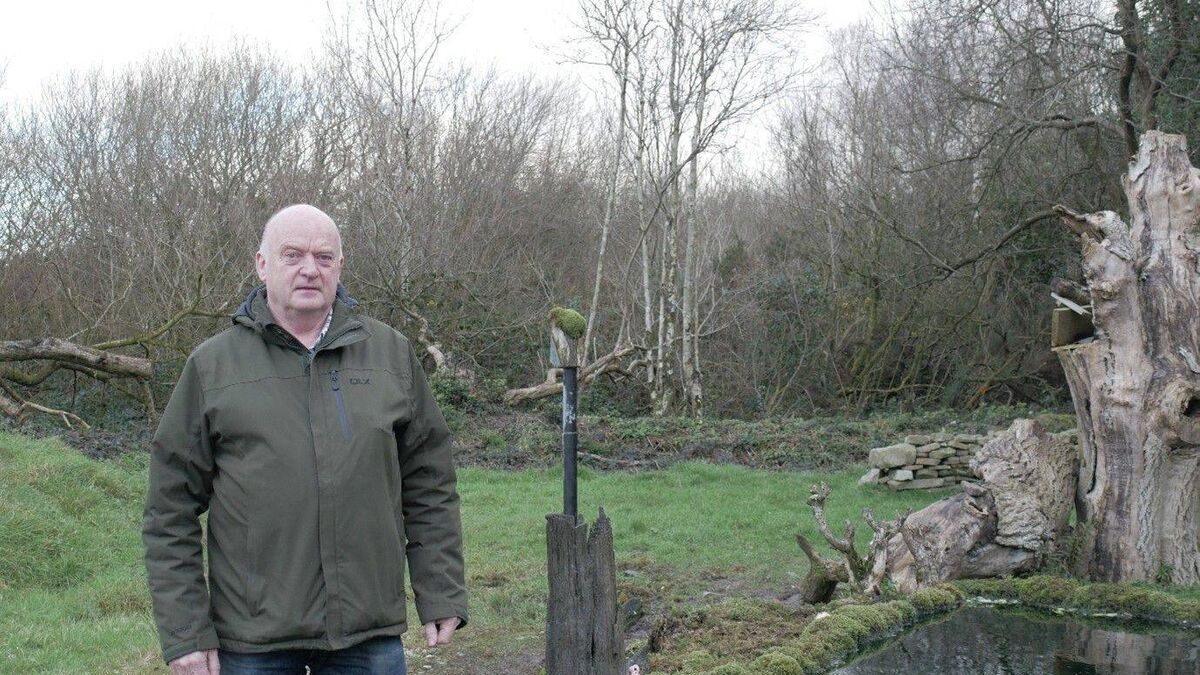
Richard Duff at his Woodland Hide
TEN minutes outside Portlaoise, I pull up to the house of Richard Duff, who, alongside his daughter Aisling, has been running a successful hides business on his land for the past few years. For those not in the know, hides are clandestine huts or small houses camouflaged into the natural terrain, specially designed to both hide the inhabitants and also draw in the local wildlife, enabling photography and nature enthusiasts to snap pictures of critters in their typical environment.
I’m greeted at the door by Richard, who, over the next few hours, takes me around the property, visiting the various carefully arranged hides, theatres one might say, where the animals come to feed, lounge or simply rest their wings before fluttering on. Generally, he drives visitors between the various hides – there are three permanent one scattered across his property, with seasonal ones popping up to cater to those who want to catch the moment kestrel chicks hatch or witness cuckoos in May – though the distance between them is, thankfully, not so great that it couldn’t be walked.
And hemmed in by the native woodland, branches rustlings as birds twitter and chirrup, it is quite easy to forget that there is a road nearby at all. Quiet reigns at all times as we crunch down the gravel pathways, it feels like we have traipsed into far deeper woodlands.
The transportive effect is doubly true of the hides themselves.
Through the door of the woodland hide, I find a snug room with a hard wood floor draped n carpets and several squashy armchairs. In the corner stands a dependable looking stove, which burns merrily away when visitors are in attendance, keeping their hides – if you’ll excuse the pun – warm against the colder elements that reach through the gauze draped window where the photographers are supposed to sit at. Cameras poised. Eyes narrowed. Eager for the perfect shot.
‘‘You’re in their natural habitat as opposed to anything else. So, you have to be quiet. Respectful,’’ says Richard.
Mr Duff is a lifelong wildlife enthusiast. As a kid, he recalls roaming through the forest, eager to spot animals and identify the different kinds of birds that nested in the trees. Laughing, he reminisces on how he used to ‘‘Climb into the trees and take an egg from a nest. Just one, mind you,’’ a practice which, he stresses, he hasn’t gone anywhere near in decades, and youth, which chimes well with how embroiled he has become in biodiversity and conservation efforts in Laois as he draws nearer to retirement.
He is treasurer of the Laois Birder association and carries out many wildlife surveys for Birdwatch Ireland, on top of running the hides.
Asked how and when he got into photography, Richard describes how it was always a lifelong fascination of his, but that it really kickstarted when ‘‘It was my 50th birthday and my wife gifted me a camera, with my brothers and sisters chipping in to purchase a telephoto lens.’’ A specialised type of camera lens which is ideal for birders who want to snap photos at quite the range.
He describes how seven years ago, after most of his kids were adults in their own right and he found more time available to him, he built his first hide. ‘‘We had a granny flat here at the back of the house and we converted that. Took the stove out of that. Put in a bathroom and I would go on a Sunday. Because I had a job that was intense, working six days a week, so I used to take a day off to relax. Watch the animals coming in and I found a corner on the farm where there was native woodland and a 40-acre Coillte forestry and the animals were there.” From there, he started developing his skills in photography, capturing images of pine martens buzzards, blue tits, kestrels and countless others. Richard posted many of his favourite photos on Facebook and before long he was inundated with the same question: where had he managed to capture a photo of a pine marten, a ferret-like creature which is largely nocturnal and is almost never seen in the day. ‘‘People were asking me about the pine martens.’’ This interest coincided with him seeing a man in Scotland who ran his own hides business and so Richard figured ‘‘why not’’ and ran with it.
Several years on and he now has three permanent hides, along with several rotating seasonal ones. Each hide is equipped with all the necessary facilities to keep the photographer comfy; stoves, squashy chairs, in-built gimbles that they can adjust or stash away according to their preference, a bathroom and, of course, the actual fixtures and feeds necessary to draw the animals.
They include a hollowed-out tree trunk, various perches spun from chopped logs and branches, a shelf of bark where the thestrel typically alights to feed, which Richard has dubbed the ‘volcano,’ a tumbledown-style stone wall where smaller creatures can burrow and nest, a settee designed for foxes to room and countless feeders which can draw red squirrels and countless varieties of bird. Later, as we review some of the footage captured by his cameras over a cup of tea, watching as a pine marten bound along a branch to the special spot Richard has sequestered the feed so that there’s no other risk another animal would get at, Richard remembers a story which serves as a fantastic example of how his business is giving back to the community and local wildlife.
Several years back, in a tale with enough dramatic twists to rival the Shakespearean turns of a Davd Attenborough documentary, he recalls a nest on the farm that was originally inhabited by grey grows before the onset of feral pigeons evicted them. The pigeons were in turn turfed out by a pair of mated kestrels, who went on to lay six eggs in their makeshift nest. One day, however, the grey crows returned and slew the mother in a failed effort to take back their nest, leaving the chicks with a father who was unable to feed them.
Normally speaking, the chicks would have died; however, thanks to the fact that Richard had seen fit to install a camera shortly after the eggs appeared, he was in a position to get a licence from the National Parks and Wildlife Service and rescue the chicks. All six chicks survived and today they have kestrels in three different hides. ‘‘They are actually a red listed species at the moment, but they’re very plentiful around here.’’ And time and time again throughout our discussion, that same motif appears. Birds like the yellow hammer reappearing in the area, having not been seen in years. Pine martens reasserting themselves in greater numbers, kestrels, red squirrels showing up in abundance, all thanks to the fact that Richard and his daughter are offering them an oasis of food and comfort during the harsh winter months.
See more stunning photographs from Richard's Hide in this week's issue of the newspaper or online