Laois psychiatric unit gets A grade but one ‘high risk’ fail
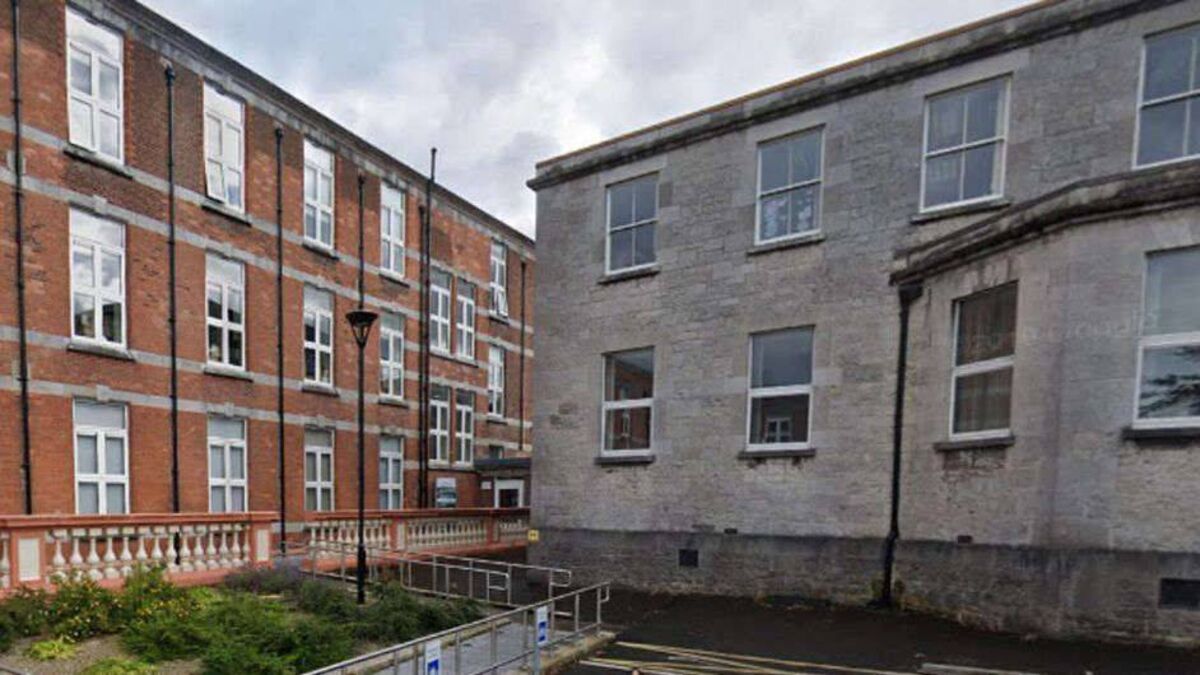
The Maryborough Centre at St Fintan's Hospital, Portlaoise achieved a compliance rating of 91 per cent in its latest inspection report. File image
A PORTLAOISE psychiatric unit for older people received an overall A grade from inspectors this week but was marked ‘high risk’ fail in one category.
After an unannounced four-day inspection, the Maryborough Centre at St Fintan’s Hospital achieved a compliance rating of 91 per cent in its latest report from the national Mental Health Commission (MHC), up from 84 per cent last year.
However, there was one ‘high risk’ non-compliance with the regulation on premises, including ligature points, at the Maryborough Centre. The unit provides psychiatric care for older inpatients and can accommodate up to 16 residents.
The MHC annual report, published on 31 August, found that the Maryborough Centre was non-compliant in three regulation areas, compared with five last year.
During the inspection, carried out from 14 – 17 April, there was non-compliance in terms of the presence of ‘high-risk ligature points’ at the facility.
The centre was also non-compliant regarding its handling of restraint procedures and failing to ensure it had appropriate written operational policies, relating to the prescribing of medicines.
However, MHC inspectors said that management demonstrated ‘awareness and a proactive approach’ to resolving compliance issues. Risk mitigations were already in place for the ligature points at the time of inspection, while new medicine prescription policies were being drafted and were at the final stages of approval. The centre has since received a compliant rating on prescription policies.
Staff at the Maryborough Centre are described in the report as ‘warm, respectful and responsive’ when dealing with residents.
There were 15 residents at the time of inspection, of whom seven had been there for more than six months.
In relation to the high risk non-compliance regarding premises, the inspectors said: ‘Hazards were not minimised, in that plastic refuse bags were used in bins in some areas of the approved centre.
‘A ligature audit identified high risk ligature points within the approved centre which were not reduced to the lowest practicable level, based on risk assessment.
‘In general, the approved centre was kept in a good state of repair internally and externally. However, there were a number of fire door faults present. The maintenance department were in the process of carrying out repairs. Other fire doors in the approved centre did not have a suitable mechanism to hold the door in an open position.
'Due to the difficulty opening these doors, the ability of some residents to move independently and without assistance was impaired. A fire door awaiting a magnetic lock system was observed to be difficult for a resident to open and move through without assistance from staff.’
The centre has been given until 31 December this year to rectify non-compliant issues. The report notes that a contractor has developed ligature reduction handles and woodworks, which remove previously highlighted ligature points, and funding is being sought for the works.
On the moderate risk rating regarding physical restraint of residents, the report said: ‘One episode of physical restraint was inspected. The order for physical restraint was appropriately initiated. However, the person who led the physical restraint did not end it.
‘The person being restrained was informed of the reasons for the restraint and the circumstances which led to its discontinuation. The person was assessed and monitored and staff took into account any specific requirements or needs they had in relation to physical restraint, as indicated in their individual care plan.
‘The person’s representative was informed of the restraint or not, in accordance with the person’s wishes and an explanation was entered in their clinical file. The MHC was informed of the start time and date and the end time and date of each episode of seclusion.
‘An in-person debrief was offered to the person within two working days of the episode of physical restraint. However, the person did not wish to participate in the debrief process. All episodes of physical restraint were appropriately recorded.’
The centre was found to be non-compliant with the code of practice on physical restraint because: ‘The person who led the physical restraint did not end the restraint. The registered proprietor (HSE) did not ensure that policies and procedures regarding staff training included the identification of appropriately qualified individuals to give the training and the mandatory nature of training for those involved in physical restraint.’
The MHC published 12 inspection reports for approved inpatient mental health centres, including the Maryborough Centre.
With a 91 per cent rating, the Portlaoise centre came third in terms of compliance with rules, regulations and codes of practice, in a list that ranged from a high of 100 per cent at a home in Co Clare to a low of 65 per cent at the Adult Mental Health Unit at Sligo University Hospital.
The rules, regulations and codes of practice for mental health centres cover a wide range of issues, from general health of patients, prescribing of medicines and risk management to staffing, use of seclusion and therapeutic services.
Among its positive findings in Portlaoise, the report said that the sensory room in the Maryborough Centre continues to be developed, offering a quiet space for anyone who is over stimulated, including those living with dementia.
The Maryborough Centre reopened in 2022 after extensive post-Covid renovation. The unit suffered the devastating loss of nine residents at Easter in 2020, eight of whom tested positive for Covid.
The renovated centre has one twin en suite bedroom and 14 single bedrooms, of which 10 are en suite. The centre includes a high dependency unit, containing three of the 16 beds.
In the 2026 report, the inspectors said that bedrooms were decorated with residents’ personal effects and were tailored to meet individual needs, while the environment was ‘bright, spacious and well maintained’.
Communal spaces include a large day room subdivided into different seating areas, a quiet space and an activities room. Additional shared facilities included a visitors’ room, a sensory and relaxation space, a large internal sensory garden, developed with input from dementia care specialists to support sensory engagement and wellbeing.
Residents are from across Laois and Offaly and include individuals under five general adult teams, one rehabilitation and recovery team and one Psychiatry of Later Life (POLL) team, a multi-disciplinary team which includes medical, nursing and relevant health and social care professionals.
The report states: ‘Throughout the inspection, the team observed a strong commitment to person-centred care within the approved centre. Staff demonstrated a warm, respectful and responsive approach to residents, contributing to a supportive and therapeutic environment. The overall atmosphere was calm and homely and efforts toward continuous improvement were clear.’