Ukrainians coming to terms with life away from their beloved homeland
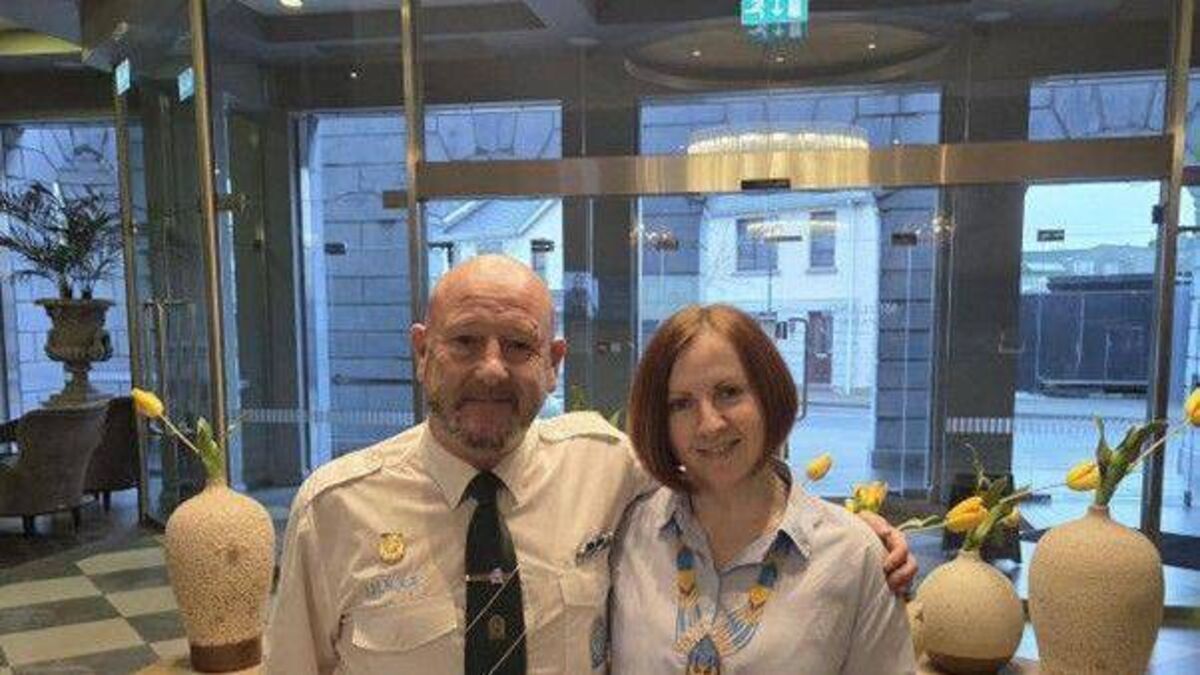
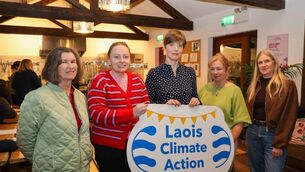
Laois ULSA Chair Svitlana Lebedieva and retired United Nations Peacekeeper Peter Mcnamara
22 FEBRUARY 2022 saw the outbreak of what would become the most devastating ground war in Europe since the end of World War 2.
Thousands of Russian troops flooded into Ukraine, supported by waves of devastating missile and drone strikes, which triggered an exodus of civilians, mostly women and children. As martial law restrictions barred most men from leaving, many of the women and children ended up seeking exile in Ireland.
The exodus of people settled across the length and breadth of the country, including Laois, where the Ukrainian group Laois ULSA was formed (Ukraine Laois Support Association).
"We were established in response to this displacement of Ukrainians, so we registered this group in county Laois,’’ said the chairperson of the group Svitlana Lebedieva, a former tech-industry worker from the central-east city of Dnipro. "The name of this association is ULSA, which is the Ukrainian Laois Support Association, since we were established and registered in December 2023 and the purpose of that was supporting, advising and the assistance of Ukrainians, as well as to help them to integrate into the Laois community.’’ The Laois ULSA group is involved in a plethora of community initiatives â Laois community choir, which is aimed at building bridges between cultures through artistic expression, singing in St Peter and Paul’s church in Portlaoise at Sunday Masses – "which has also been a privilege for us to join," the young people are involved in a variety of Youth Work Ireland projects, they collaborate closely with the parish centre in Portlaoise where they arrange music lessons, sing for a local nursing home and, arguably the best way any group can involve themselves in their community, their active involvement in elections in Ireland.
‘‘And, of course, we were proud to take part in the local elections in 2024 and we informed Ukrainians about the registration process, helped them with the registration process, to fill out the forms … and we did that not because of obligation but because we wanted to be part of the community as well and we cared what would be going on after the elections and it would be a huge privilege for us."
Along with Svitlana, I am interviewing a former United Nations peacekeeper who served in Lebanon and Syria and legal advocate by profession, Peter McNamara. If that name sounds distinctly Irish to you, it's because he is, but for the retired soldier, his affinity with Ukraine and its people runs deep.
Peter has been married to a Ukrainian woman for seven years and lived with her in the Ukrainian city of Bakhmut – now occupied by Russian forces following fierce Ukrainian resistance. ‘‘I assist ULSA with advice regarding legal matters, documentation interaction with other governmental bodies and just assisting Lana in her administration of the integration of ULSA into local communities. Now I'm on pension, I'm retired and that's how I fell in love and I want to live the rest of my life in beautiful Ukraine."
While the organisation is multi-faceted, the core around which the group’s community spirit revolves is music and, indeed, that is exactly what Svitlana says: ‘‘The song is the soul of Ukrainians.’’ Peter also identifies with this cultural lynchpin and recalls how Ukrainian children are embroiled in a musical identity from a very young age and it is this affinity between Ukrainians and music – and especially children and music – that spurred the group and formed the bedrock of their key mission â to preserve Ukrainian culture and language for those children who are growing up now.
At the onset of invasion, there were about 100 Ukrainians – mostly women and children – who arrived in Laois and were eventually reaccommodated in the Town Hotel, Portlaoise.
"There were around 40 plus children at the time and, as you know with children, they did not understand why they were here and why they had to move from their own country and then there was the Christmas time" and so, to boost their spirits, Svitlana’s mother Oksana, who was a musical director in Ukraine, decided to become involved in music lessons so that they could perform a show in the hotel before Christmas.
"The first performance had 15 children participating â 5-14 years old â dancing and learning some songs and they performed in the hotel, which was very good for them. After that success, the adult choir was established and, you know in Ukraine we say, ‘the song is the soul of Ukrainians’ and through our music we can share that spirit and bring people together.’’ Peter McNamara adds that "Lana and myself and the other committee members, we started this organisation to keep the strength in numbers and to ensure that while we have the music and activities of Malva and the bells and the arts and culture element and, of course, while we visit lots of places in Ireland to show the history of Ireland, part of integration, and that's why we endeavour to develop the child now that is here because one day the majority want to return back home to Ukraine, so it's an important part of our teaching. Maintaining Ukrainian culture of language, of music so that the child is never in fear of losing their identity."
For example, children who were four years old when they left Ukraine and arrived in Ireland have been living in a predominantly English-speaking country for almost four years now, nearly half their young lives; key years for a child’s linguistic development.
Svitlana mentions that with some children, because they are so embroiled in English at school, if you speak to them in Ukraine, they will, naturally, reply to you in English, but that, thankfully, ULSA and its work acts as a strong bulwark against any language erosion.
However, along with picking up English while they are here, many of the children – being enrolled in Irish language primary and secondary schools – are picking up Irish, too. ‘‘And so they are singing quite different types of songs. And we just honour our guys who are fighting in Ukraine because children do need to know that. And we sing Mo Ghile Mear, which is Irish â an Irish ballad which follows a man going off to war and his girlfriend or partner not being able to see him again, which is quite emotional for them.’’ Both Svitlana and Peter are full of praise for the supports they have received and highlighted the following people: Nuala Kelly, director of the school of music; cllr Pádraig Fleming, cathaoirleach Barry Walsh, Liam Ramsbottom, Laois Partnership Company, the parish centre, St Peter and Paul’s church and the United Nations Company Post #27 – in which Peter is involved. Particular praise was afforded to TD Sean Fleming, who invited the community – children included – on a tour of the Dáil "and there we felt that we were supported by the government not only in words, but in facts and in action,’’ said Peter.
"Inclusion is so loved by the Ukrainians," says Peter. ‘‘When someone like that brings them up and invites them to the Dáil, that sense of inclusion gives them great strength and support."
The community has undeniably faced challenges to life in Ireland, which Lana categorises into physical and psychological difficulties â the physical issues Lana identifies as broadly similar to issues many Irish people also face and they are accommodation, transport, language and jobs. ‘‘If there is accommodation for someone out of town, for example, but there is no transport, the mother doesn't have a driving licence, children need to go to school. If they are living in Rathdowney and going to the school somewhere else, how can they get there? And to get a job, you must first learn the language. Not every employer – understandably – wants someone who is constantly using a translator," said Lana.
The psychological issues revolve around the uncertainty associated with the Temporary Protection Initiatives, the EU programme which granted Ukrainians asylum in the wake of the war. Once a year, the government announces whether or not the scheme will be renewed for the following year, which leaves many from the community confused about how to plan their lives in the medium and long term. "Sometimes, we do also meet aggressive people asking why we are here, saying that there are safe territories in Ukraine and we explain that we were quite happy at home, living our normal lives. We came here because we wanted to save our children and that is the most important thing."
Thankfully, those people are far and away the minor of exceptions, with Lana saying: " I have never met so grateful, so kind, so generous a people as the Irish really and we do appreciate everything you guys do for us. All your help. Physical. Psychological."