Retired surgeon ordered to pay costs of court case brought over South Dublin Islamic centre
High Court Reporter
A retired surgeon must pay legal costs incurred by directors of the company behind the Islamic Cultural Centre of Ireland after the doctor withdrew claims of corporate criminality against the men, described by a High Court judge as “of the most serious kind” of allegations he’d come across.
Dr Abdel Basset El-Sayed made allegations of fraud, theft and money laundering against the directors in his case, which arose from a dispute over the control of Al Maktoum Foundation CLG, the operator of the centre in Clonskeagh, south Dublin.
Dr El-Sayed, who said he served as a director of the foundation since 2012, had claimed in his action that the directors were unlawfully appointed to the foundation’s board, and sought to have them removed. In December, Dr El-Sayed agreed to withdraw the case.
The directors, notice parties to the action, are Ahmad Tahlak, Hesham Abdulla Al Quassim, Khalifa Aldaboos, Mohamed Musabeh Dhahi and Zahid Jami. The men are residents in Dubai, but have their place of business as Roebuck Road, Clonskeagh.
The mosque attached to the foundation’s centre, a major place of worship for the Irish Muslim community, has been closed since the onset of the dispute last year.
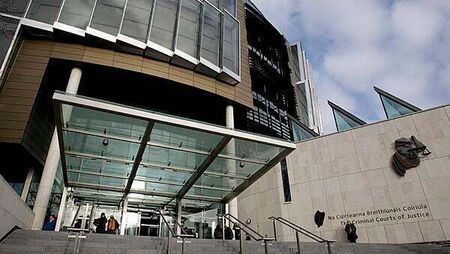
On Tuesday, Mr Justice David Nolan granted an order for legal costs against Dr El-Sayed, following an application moved by Lyndon MacCann, appearing with barrister Niall Ó hUiginn for the directors.
The directors are also seeking an order for costs against Joseph Sallabi, who previously claimed to act for Al Maktoum Foundation in the case as its in-house counsel, and prepared, on Dr El-Sayed’s behalf, sworn statements containing the allegations against the directors. The court adjourned this matter to a date in February.
Opposing Mr MacCann’s application for costs, Robert Barron SC, appearing with barrister Roddy McConnell for Dr El-Sayed, submitted that his client was a man trying to do his best for his community, and was not acting for his own benefit in taking the case.
An order for costs against Dr El-Sayed would be unhelpful in attempts to bring the Irish Muslim community together to reopen the mosque in Clonskeagh, Mr Barron said, noting suspicions and mistrust within the community arising from the dispute.
Counsel said that when Mr Sallabi “got involved” in the case, “things went in an unfortunate direction”.
Mr Justice Nolan summarised Dr El-Sayed’s position, noting that the doctor asserted he “came under the influence” of Mr Sallabi, and didn’t understand the full legal implications of the allegations advanced in his lawsuit.
Mr MacCann said Mr Barron was asking the judge to make “huge assumptions” about the effect of a costs order on the Muslim community. Counsel said that Mr El-Sayed did not immediately withdraw his allegations against the directors when Mr Sallabi withdrew his representation in the case.
Ruling on the application for costs, Mr Justice Nolan concluded that it was appropriate to make an order against Dr El-Sayed. The judge agreed to place a stay on the order until March.
The judge said the allegations made by Dr El-Sayed against the directors in the case were “matters which would require the highest level of proof”. He said the allegations were “of the most serious kind that [he’d] ever come across”.
The judge noted that the allegations were ultimately unproven and withdrawn. He said the allegations should never have been made in the first place.
Noting Dr El-Sayed’s professional standing as a doctor, he said it was “hard to credit” the submission that Dr El-Sayed did not understand the gravity of the allegations levelled at the directors.
Mr Justice Nolan also rejected Dr El-Sayed’s submission that an order for costs would add “another fracture” to the Muslim community in Clonskeagh and beyond. The judge said it seemed to him that the litigation had “already done that”.
The judge said it was the court’s “fervent wish” that the breakdown in relations within that community be remedied, stating that “the Muslim community is an important part of Irish society”.
Separately, a case brought by an imam arising from the mosque’s closure was settled following talks between legal teams for the Islamic Cultural Foundation of Ireland CLG and the cleric.
Imam Sheikh Hussein Halawa had brought an action against the foundation – formerly known as Al Maktoum Foundation CLG – seeking his restoration to aspects of his position and duties at the Clonskeagh centre.
Clíona Kimber SC, for Mr Halawa, told Mr Justice Nolan that the case had settled following a mutual agreement between the parties.
Ms Kimber said that as part of the settlement, her client had agreed to give an undertaking to the court. The terms of the undertaking were not read in open court.