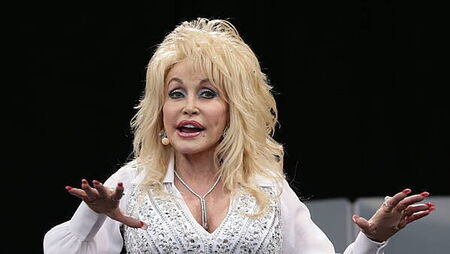
Comedian and TV presenter Tom Allen: Stand-up can still be very blokey

By Hannah Stephenson, PA
He didn’t leave home until he was 37, but comedian and TV presenter Tom Allen says he has always felt older than his years.
He admits that he likes nothing better than to be in his own suburban garden with his partner, Alfie Garston – his first boyfriend – and inviting celebrity guests to join him on his Pottering podcast.
Sounds fairly middle-aged, but perhaps that’s fitting for the quirky, funny, posh-sounding sartorial comedian, co-host of Cooking With The Stars, alongside Emma Willis, and a regular on Bake Off: An Extra Slice.
“As a small kid I saw myself as about 46, which seemed so strange. Then I’d be expected to go to school and do PE. I thought, ‘I can’t be expected to do PE. I’m a 46-year-old person,’ but I was 12. I wanted to stay in and have a bit more autonomy.
“Now I’m in my 40s I see myself as even older, identifying as an 87-year-old woman. Maybe there’s a trend for it – grab some granny living!’”

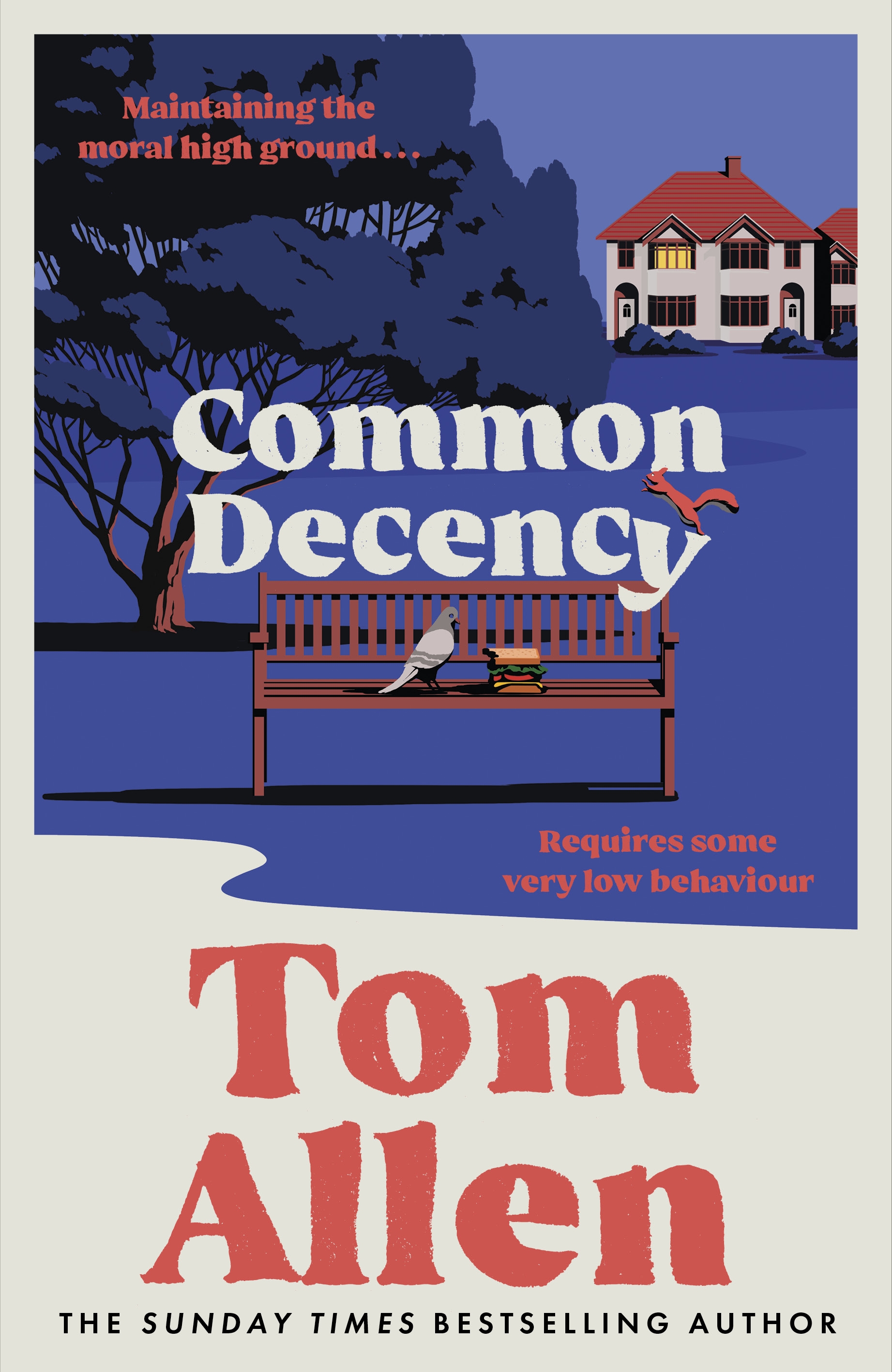
Allen, 42, who has described himself as “an eccentric, sometimes very emotional, Patricia Routledge-obsessed loner”, has now written his debut novel, Common Decency, set in a suburban cul-de-sac and involving an eclectic group of neighbours who come together to try to save a beloved oak tree from the hands of ruthless developers.
They include Vince and his partner Luke, in their 50s, feisty octogenarian Miranda, who is lonely and bored and whose bucket list includes hallucinogens and a fling, put-upon mum and doctor Alice and her acrobat husband Barry, and controlling, chauvinistic Donald and his long-suffering wife Fanny, who have been married for 41 years.
While the book is peppered with Allen’s trademark acerbic wit and sharp observation, he tackles subjects including ageism, namely old people becoming invisible in later life.
“There has been an assumption at times that older people are not relevant or don’t have so much to offer. Actually, every generation has its challenges. We’re not linear groups of people,” he tells the Press Association.
“I did consciously want to write about the importance of valuing older people and the wisdom and perspective they bring.”
He recalls getting lost on holiday as a child and his parents not worrying because they thought he’d probably gone off to talk to some pensioners.
“Lo and behold, they found me chatting to some old people, but not like a child would. I was asking them about their hanging baskets.”
Living with his parents for so long gave him a broad range of material for his comedy, he recalls.
“I just embraced that and talked about the quirks and foibles of my parents and the more I leaned into my experience, the more people connected with it.”
Suburbia, he says, is something that everyone has some experience of. Allen himself has moved back to Bromley, Kent, round the corner from where he grew up.
“I’ve always grown up in suburbia and I live there now, despite having promised that I would never move back to Bromley – I always assumed it was boring – but I’ve realised that actually surburbia, while being a byword for mundane, is actually where all of life happens.”
The son of a coach driver, he grew up in a working-class household where neighbours were very aware of what other people were doing, he recalls.
“Small things, like people being snubbed for an invitation to a barbecue or passed over for a wedding, those petty arguments ensued quite a lot.”
He was bullied at school and was the victim of homophobic behaviour, but there was no mention of it in his suburban neighbourhood.
“There was no mention of anybody being gay or queer. We didn’t know anybody who was gay. It was a world where people fundamentally were just very resistant to making a fuss. The silent generation were like that, weren’t they? There was a lot of that generation around when I was growing up.”
He came out to his parents when he was in his 20s, telling his mother first, anxious about how his father would react. He need not have worried as his father was “nothing but caring”, he has said.
There was much self-loathing and unhappiness before Allen found his feet in comedy, firstly in the National Youth Theatre, then pursuing stand-up at the age of 22, going on to win So You Think You’re Funny in Edinburgh and the BBC New Comedy Award in the same year.
Initially he encountered some homophobia as he dipped his toes into the world of comedy, he recalls.
“When I started out, it was very blokey and I think to an extent it still can be very blokey,” he observes. “It was straight blokes who did stand-up. If you didn’t fit that mould, you did feel like an outsider.
“It was difficult to walk out and just talk about your life. Stand-up is at its best when people are talking about their experiences in the world. When I first started in the 2000s it was difficult.
“Audiences were sometimes a bit like, ‘Oh, and what’s this?’ I found myself having to explain to some people what it’s like to be a gay man in the world.
“Anybody who’s not a straight bloke does often find themselves having to contextualise their experience.”
Things have changed for the better, he continues.
“People are much more aware, much more accepting and much more curious to know one another. I think that’s a sign of progress. There are still corners of the internet which will be very spiteful towards any of us, but on the whole most people inclined to be like that are, I like to think, in the minority, but also maybe not that happy themselves.”
Five years ago, his father, Paul, died aged 80 from a heart attack on his way to a London show for which Allen had bought him tickets as a treat. Allen wrote about it in his second memoir, Too Much.
“It’s very easy to assume that you’d have this time to reflect on how you might cope, but in my experience, in many ways I just had to get on with life. I wanted to support my mum.”
“It’s a very nuanced experience losing someone close to you,” he continues.
“Some days you can feel sad and you cry, some days you feel distracted and some days you feel euphoric because the terrible thing that happened to you is over.”
His mother still lives around the corner, so they see a lot of each other, and his partner has made a big difference to his life.
“It has felt very wonderful to have support and stability. That’s what he brings. I never knew much about relationships but he’s taught me that feeling of security and home.
“We like to sit in the garden and tend to the garden and notice what’s growing and what’s changing, and we like to watch television.
“Alfie has taught me that it’s ok to put on our pyjamas at 8pm and watch a television programme and have an early night. It doesn’t have to be ‘go, go, go’ all the time. That’s been a wonderful thing.”
He hopes to embark on another tour next year, unsurprisingly featuring some tales from suburbia.
“That’s where life happens,” he concludes.