Bike deaths barely budge in EU as amount of car deaths drop sharply - report
Ellen O'Donoghue
Cyclist deaths across the European Union have barely declined over the past decade, even as deaths among car occupants have fallen at four times the rate, according to a new report.
There is an urgent need for action on motor vehicle speed reduction and investment in separated cycling infrastructure, including in Ireland, the report, published by the European Transport Safety Council (ETSC), found.
In 2024, 1,926 cyclists were killed on EU roads, and between 2014 and 2024, cyclist deaths fell by just 8 per cent, an average annual reduction of only 0.5 per cent.
Contrastingly, deaths among motorised road users fell at an annual rate of 2 per cent.
To meet the EU's 2030 target of halving road deaths, an overall reduction of 6.5 per cent would be required, 13 times the current rate of progress for cyclists, the Road Safety Authority (RSA) said on Friday.
"Cyclists now account for over 10 per cent of road deaths in the EU, and without significant safety improvement, this proportion is expected to grow," the RSA said.
However, Ireland has a relatively low cyclist mortality rate compared to many EU countries, the RSA said.
Based on the average for 2022-2024, less than two cyclist deaths per million inhabitants were recorded annually in Ireland, compared to 15 deaths per million in the Netherlands, and around eight in Belgium and Romania.
Despite an increase in serious injuries observed between 2014 and 2024 in Ireland based on An Garda Síochána data, there was a 21 per cent decrease in serious injuries among cyclists over the five years between 2020 and 2024.
Studies across Europe have shown that the actual number of serious injuries is underestimated in police records.
Research based on hospital data has suggested that the true scale of serious injuries is far higher, with fewer than 10 per cent of injured cyclists appearing in police stations in some countries.
In Ireland, however, hospital records have shown between two and three times more seriously injured cyclists than garda-based data for the years 2014-2022.
The records also revealed around nine times more collisions involving no other vehicle, when compared with garda data.
In addition, the hospital data indicated that cyclist hospitalisations doubled in 2022 relative to 2014, along with a sustained increase in the number of cyclist collisions involving no other vehicle up to 2023.
However, motor vehicles remain the greatest risk to cyclists.
Across the EU, 65 per cent of cyclist deaths result from collisions with motor vehicles. Passenger cars account for 44 per cent of cyclist deaths, with heavy goods vehicles and vans also contributing significantly at 9 and 7 per cent respectively.
At least 28 per cent of cyclist deaths involve no other vehicle, such as falls or collisions with kerbs or stationary objects.
In Ireland, collisions involving no other vehicle are the leading cause of serious injuries among cyclists admitted to hospital.
"This underlines the importance of high-quality, well-maintained cycling infrastructure to prevent both serious and fatal injuries," the RSA said.
The ETSC has called on governments to prioritise lower speed limits and enforce 30km/h zones in urban areas where cyclists and motor vehicles share space.
The risk of death for a cyclist hit at 50km/h is many times higher than 30km/h.
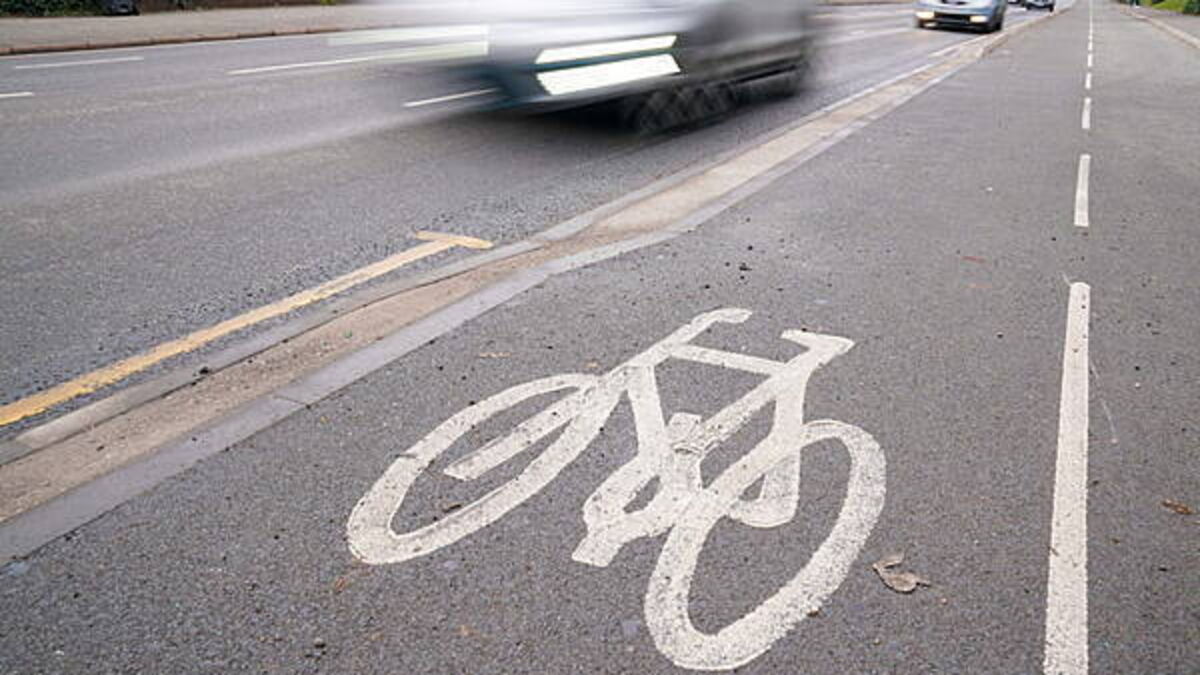
The report also stressed the need for substantial investment in high-quality, separated cycling infrastructure, including protected lanes, dedicated cycle paths and safer junction design.
Co-author of the report, Jenny Carson, said that "Governments are actively encouraging more people to cycle – for the climate, to reduce fossil-fuel use and congestion, for public health, for our cities.
"But they are not providing the safe conditions that cyclists need and deserve. You cannot ask people to cycle and then fail to protect them from fast-moving traffic.”
Michael Rowland, the RSA's director of research, standards and assurance, said that Ireland's cyclist fatality rate is relatively low compated to other European countries, but "every loss of life on our roads is a tragedy.
"The rise in serious injuries on our roads is also a significant concern. We need to act decisively to make our roads safer for cyclists. This means lower speeds in urban areas, better enforcement, and sustained investment in high-quality, segregated cycling infrastructure," he said.
"Encouraging people to cycle must go hand in hand with ensuring they can do so safely.”
Other findings of the report, based on all contributing countries, included older cyclists being disproportionately at risk, with mortality rates rising sharply among those aged over 80; men account for 80 per cent of cyclist deaths; helmets can reduce head injuries by 51 per cent and fatal head injuries by 72 per cent; and that deaths among e-bike users are increasing in countries that distinguish between bicycle types.
Key recommendations by the ETSC included the introduction and enforcement of 30km/hr speed limits in urban areas, increased investment in high-quality separated cycling infrastructure, accelerated roll-out of vehicle safety technologies such as automated emergency braking with cyclist detection, improved data collection on cyclist injuries, including hospital reporting, the development of national cycling strategies with clear safety targets and increased helmet use among cyclists.