Call for HSE to name 50,000 patients in unmarked graves at former asylums
Louise Walsh
Campaigners including musician Bressie, are hoping to get the names of over 50,000 patients of 18 former mental hospitals across Ireland, who lie in unmarked graves, released and remembered on memorial walls.
Relatives who spent 14 years trying to find and mark their beloved great-grandmother's resting place at St Loman's Hospital in Mullingar, Co. Westmeath, have now decided to extend their campaign to give dignity to thousands of others across the country who were buried with only numbers to identify them.
So far, 14 families of the 1300 in Mullingar have claimed the graves of their family members whose simple white crosses were removed unceremoniously from the remembrance site in 2011.
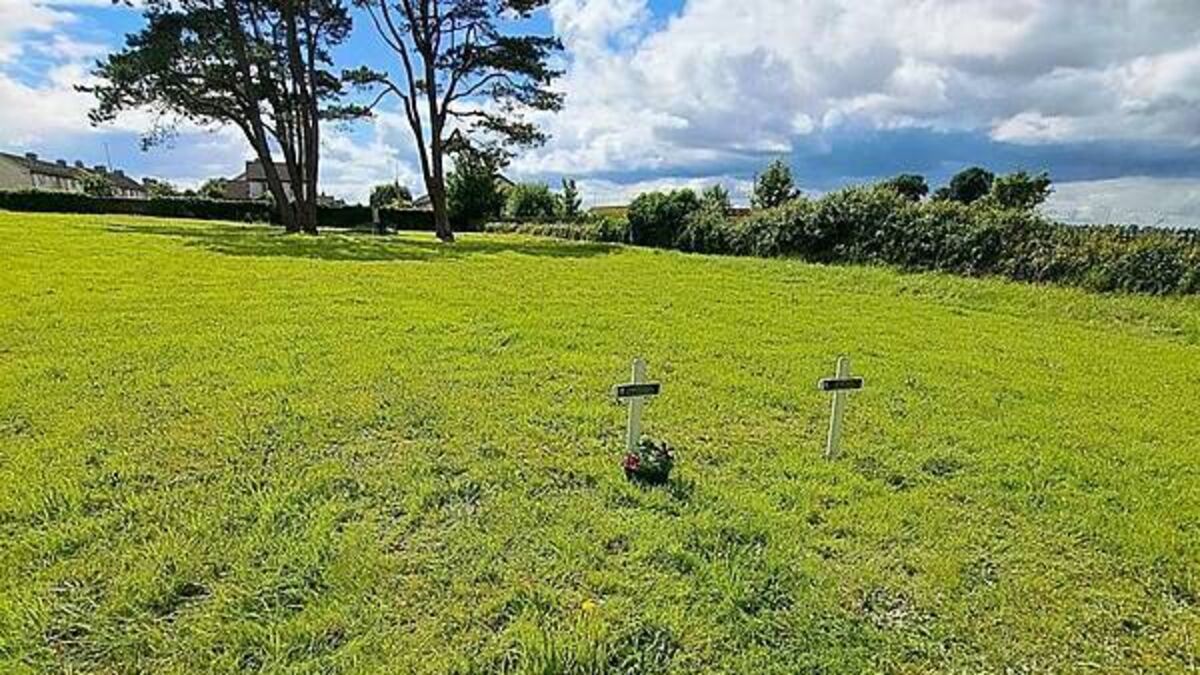
Now, many of the graves interred at the Westmeath facility between 1907 and 1970 lie unmarked in an overgrown area.
Psychotherapist and musician Kathy Crinion and her cousin Julianne Clarke helped found the website 'Friends of Julie' with campaigners as a platform to encourage other families to reach out.
Most of these crosses were removed in 2011 to facilitate the mowing of the grass, according to Julianne.
"This whole campaign was started when Kathy and myself went to exhume our great-grandmother Julia Leonard, who was committed by her husband when she was 30 and pregnant," she said.
"She was carted off to St Loman's mental asylum, and her children, aged between 18 months and nine years of age, were sent to the workhouse in Trim.
"Julia gave birth to a little boy in the hospital, and he was taken away at three months and also sent to the workhouse in Mullingar. She never saw her children again, and the baby was told she had died.
"She eventually died of heart failure at the age of 54 years old and was buried at the hospital with a metal cross over her and just a number, 339, instead of a name to denote who she was."
Their search began when they decided to try to get Julie's body exhumed and buried beside her son, their grandfather, but they couldn't find her grave.
Eventually, they put a white cross up on the site they believe is her grave and ensured her name was on the cross. More and more families came forward to do the same.
Now the campaigners are urging families of other people who were patients of psychiatric hospitals to erect a white cross with their relative's name on it.
These centres were based in Galway, Clare, Waterford, Dublin, Kilkenny, Sligo, Cork, Limerick, Laois, Carlow, Donegal, Monaghan, Tipperary, Westmeath and Kerry.
"We want the HSE to release the names of these people and remember them with memorial walls and crosses at their graves.
"Why are people interred in public cemeteries afforded dignity by having their names above their resting places, but these people can't. Why is there still such a stigma these days on people who were put into these asylums, who often had no mental health problems?
"There were 18 former lunatic asylums, which is what they were called, in the Republic of Ireland, and we know over 50,000 so-called patients were buried on their grounds.
"Many of these people led a tragic life, taken from their family only to be left in unmarked and overgrown graves, without any dignity or respect and still kept away from their families who may want to claim them generations later. These people all have names."
Musician and mindfulness student Bressie, who has often spoken out about the stigma attached to mental health, said: "We talk a lot about mental health stigma in Ireland and how we can erode it.
"To erode it, we must understand where it comes from. Julia's story helps us to understand that. And it's a story that embedded itself in me. It feels like she is urging us all to tell her story."
Further information on the campaign can be found at friendsofjulia.com
All regional HSE centres were contacted for comment.
HSE Dublin/Midlands said that, in relation to St Fintan's, Portlaoise, and St Loman's, Mullingar, they acknowledge conservation and management of unmarked graves is a sensitive and complex matter.
"It is important to note that as many of the people buried in former psychiatric hospital graveyards could have been patients of those hospitals at the time of their death, confirming whether a named person is buried in such a graveyard would also indicate that they may have received mental health treatment.
"This information is treated as a healthcare record under the Freedom of Information Act. Patient information remains confidential even after death, and as a result, burial information of the graves should only be provided to a person’s next of kin, by the organisation with governance over that site."
"Mental Health Services in HSE Dublin and Midlands are fully committed to the restoration of the graveyard located on the St Loman’s Campus, Mullingar, to appropriately honour and memorialise those buried there," the HSE said.
"This work is being carried out through a dedicated project currently underway, involving the conservation and restoration of the graveyard in line with professional archaeological and architectural guidance."
The project is overseen by a steering group operating in partnership with interested family members and the HSE. A contractor has been appointed to complete restoration works, with a target completion date at the end of Q1 2026.
Significant progress has been made to date, the HSE added.
"The HSE remains committed to ensuring the graveyard is treated with dignity and respect, and that the restoration works reflect the wishes of families and the local community."
A memorial monument was installed at the graveyard at St Fintan’s Hospital, Portlaoise (formerly Maryborough Mental Hospital) in memory of those buried there in 2008, the statement said.