Defence Forces called in to assist gardaí as they urge end to 'blockades' at fuel depots
Ellen O'Donoghue, James Cox, Vivienne Clarke and Sarah Slater
- Nationwide fuel price protests have entered a third day
- Protesters continue to block O’Connell Street and O’Connell Bridge in Dublin city centre
- The Defence Forces have been asked to help gardaí in their response to the protests
- Dublin Bus has warned that "massive disruption" is expected again this morning
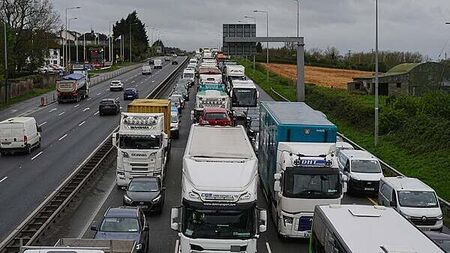
- Delays have been reported on the N4/N4, N3/M3, N2/M2, M1, M7, M8, M18, M20, M8, M22, M1 and several other routes
- Taoiseach Micheál Martin has said there was a fundamental problem with the idea that protestors could park lorries in the middle of O’Connell Street and refuse to move them
- Several Bus Éireann routes have been cancelled
11.27am
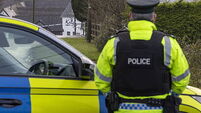
The involvement by the Defence Forces in managing fuel protests will be “limited and of a practical nature”, Acting Deputy Garda Commissioner Paul Cleary has said.
“An Garda Síochána remains in control of this policing operation,” he told reporters at Garda headquarters.
“We have well-established protocols with the Defence Forces that we can request their assistance on a case-by-case basis, which is what we have done at this stage, but, as I said, An Garda Síochána will retain control of the policing operation.
“Any assistance provided by the Defence Forces will be as an aid to the military power and it will be limited and of a practical nature.”
Asked if this would involve moving large vehicles out of the way, Mr Cleary said: “It’ll be as requested by the guards and, again, I’m not going to go into the operational detail of our enforcement plans, but, as I said, this is a wellworn path with the Defence Forces.
“It’s not to say that they will necessarily or may even be used, but the form C70 is basically a request, so we have that option open to us. But, again, I’m not going to go into the operational details of what they may or may not be doing.”
11.19am
The Defence Forces have confirmed their assistance has been requested by gardaí in response to fuel protest blockades, David Raleigh reports.
It is understood the army personnel have been deployed to assist in moving heavy machinery and vehicles blocking routes.
When asked if soldiers were dispatched to Foynes Port, Co Limerick, where blockades are in force, a Defence Forces spokesperson replied, “The Defence Forces can confirm that assistance has been requested from An Garda Siochána in the form of heavy vehicle recovery.”
“As this operation is ongoing, we will not provide further comment until it is concluded,” said the spokesperson.
They added that they are "aware of images circulating of MOWAG Armoured Personnel Carriers in convoy. We can confirm that these are the personnel of the 128th Infantry Battalion conducting mission readiness exercises ahead of deployment to UNIFIL next month.”
10.52am
Several Bus Éireann routes have been cancelled due to the protests.
Customers have been advised to check the service updates section of the Bus Éireann website for the latest before travelling.
We wish to advise customers to plan their journey ahead and check our website for service updates and timetable information - https://t.co/RKieHbtHXa
For customer care visit https://t.co/AQnMxKbZb5 or @TFIupdates— Bus Éireann (@Buseireann) April 8, 2026
"Due to the fuel cost protests, several routes nationwide are experience considerable delays," the operator's website said.
"There are slow-moving convoys and a barricade in Sligo town affecting all services. In addition, there slow-moving convoys on the N18 (Ennis Road), starting in Bunratty heading towards Limerick."
Some of the routes with some cancelled services include Route 51 Cork to Galway, Route 320 Carleville to Limerick, and Route 350 Ennis to Galway.
The bus operator will update its list of cancelled or delayed services here.
10.46am
Gardaí have urged protesters to end "blockades” of fuel depots or “face the full rigours of the law”, Shawna Coxon, deputy commissioner operations, has said.
In a statement to the media at Garda HQ, she said: “Despite our significant and prolonged engagement, which has included explaining and encouraging protesters to facilitate free movement of traffic, it is clear that some people have significantly escalated an already difficult situation by targeting critical infrastructure such as fuel depots and refineries.
“These are no longer protests. They are blockades.
“These blockades are putting at risk supplies of food, fuel, clean water and animal feed. These are critical for the nation and its people. This is not tolerable and it is against the law.”
She added, ”As part of our well-established, graduated policing response in dealing with protests, An Garda Síochána is now moving to an enforcement phase in relation to those impacting on critical infrastructure, unless they desist and disperse.”
Coxon further stated, “An Garda Síochána is advising protesters to immediately cease blockades of such critical national infrastructure or face the full rigours of the law.”
10.39am
Kevin McPartland, the chief executive of Fuels for Ireland has described the response of Government to the fuel protests as “underwhelming.”
“We should never have got to this point. I have a great deal of sympathy for the protesters, and the reality of very high fuel prices is having a huge impact on haulage contractors, on agricultural contractors and the response from Government today I think has been underwhelming. I think they do need to do more,” he told RTÉ radio’s Today with David McCullagh show.
However, he did not agree with the protesters' actions and said the tactic of blocking fuel access to the rest of the country was “not a very smart one.”
Already, a number of forecourts had run out of stock, which was having an impact not just on Sunday drivers, but also on ambulances and people trying to get to essential work.
“The cost that they (protestors) were asking people to bear was exceptionally high and I believe unreasonable. So I think it's appropriate that we take some action to resolve that."
The blockade of the Whitegate refinery meant that Munster was being badly affected as the refinery produces one third of the fuel used in the country, he added.
The number of forecourts out of stock will continue to multiply and the situation will get “worse and worse”, he warned, but he hoped the intervention of the Defence Forces would have a positive impact.
“The problem with this is you might clear the gate, but there's nothing to stop protesters, maybe setting up a blockade down the road or whatever, if they wish to do so.
“Look, we should never be in this situation. This is insane. And also, let's be frank, those blockades should never have been allowed to be established, because, as well as stopping fuel trucks getting in and out, they were also stopping access for emergency vehicles.
"And when you're talking about a fuel depot or a fuel refinery, the health and safety standards are absolutely appropriately, exceptionally high, and we maintain those standards, but one of those standards is that there needs to be maintained emergency access, and there was not for a couple of days this week in Galway, for example.”

10.30am
Delays have been reported on the N4/N4, N3/M3, N2/M2, M1, M7, M8, M18, M20, M8, M22, M1 and several other routes.
Congestion Report:
Delays on routes around Dublin: N4/M4 (E), N3/M3 (E), N2/M2 (E), M1 (S).
Closures on following routes:
M7 - J16 - J18 - BOTH DIRECTIONS
M7 - J29 - J30 - BOTH DIRECTIONS
M8 - J09 - J08 - NORTHBOUND
M8 - J18- SOUTHBOUND
M18 - J02 - J01 - SOUTHBOUND
M18 -… pic.twitter.com/JEhpk8h1I8— TII Traffic (@TIITraffic) April 9, 2026
10.20am
Fuel protests in the Rosslare Harbour area are causing significant delays and disruption to traffic, including access to and from the port and surrounding areas, gardaí have said.
If a member of the public has an urgent situation requiring passage throughthe affected areas, like medical needs or other time-critical circumstances impacted by roadblocks, they have been asked to contact Wexford Garda Station on 053 916 5200 and Gardaí will assess whether Garda assistance is possible.
“While these protests have been peaceful, they are causing significant disruption for people in some parts of the country,” gardaí added.
“We have received reports of emergency workers being delayed, people missing hospital appointments or visits to loved ones, and significant disruption to public transport. Businesses and employees are also impacted.
“While An Garda Síochána respects and facilitates the right to peaceful protest, we must also balance and protect the rights of individuals to travel freely and for businesses to operate.”
Gardaí said they are continuing to engage with protestors locally and are asking again that routes are kept open to facilitate public transport, diversion routes, and emergency access.
"An Garda Síochána has no role in permitting or authorising public gatherings or protests, and no permit is required to organise a protest. Our response to evolving events is graduated and focused on public safety."
10am
Independent Ireland has said it is "deeply concerning" that the government "would move to call in the army rather than pick up the phone and engage with those affected."
In a statement, the party said that the fuel crisis "did not emerge overnight.
"Yet the response from Government has been consistently tone deaf — refusing to listen and refusing to meaningfully engage with the thousands of businesses impacted by their tax policies."
The party said it has called for debate on the issue for weeks, having written to the Ceann Comhairle and calling on the Government to recall the Dáil, "but the Government refused to act."
The Government's approach has "only escalated the situation," the statement added.
"Democracy is built on dialogue, on listening, and on working towards solutions. The deployment of the Defence Forces should always be a last resort, not an initial response.
"Elected representatives from a number of parties have already engaged on the ground, and there is clearly scope for mediation between protestors and Government.
"That opportunity should be taken. We are calling for calm on all sides and for immediate, meaningful engagement to resolve this situation before it escalates further."
9.26am
Taoiseach Micheál Martin has said there was a fundamental problem with the idea that protestors could park lorries in the middle of O’Connell Street, demand the government come talk to them and threaten not to remove the lorries until that happened.
“That's not an acceptable form of protest,” he told RTÉ radio’s David McCullagh show.
“Everybody will be doing that every week. So the way to get a meeting now is just to rock up a couple of lorries, block motorways, block city centres, and you'd better talk to us now.”
There was a whole range of organisations through whom those who were protesting could channel their issues, he added. There had been no effort made in advance to have any meaningful negotiation prior to these protests.
“There are mechanisms that people can utilise and channels that they can utilise. But they need to call off these protests because they're hurting people. They're hurting ordinary people. What's the logic and sense in blocking access to fuel? There are some folk who will have no fuel this morning.”
The government was in “constant discussions” to determine the most effective way to try to reduce pressure on those hardest hit.
Martin said he had been “very taken aback” when he learned that Whitegate was being blockaded. “I couldn't comprehend it. For people who said that they're concerned about the price and so on of fuel. To now be denying people access to fuel is beyond any logical comprehension in my view.
“I don't think it's fair and I don't think it's right to do that. People have been denied access to get to their jobs.”
He denied that the government had set itself on a collision course with the protestors with the involvement of the Defence Forces.
“We haven't set ourselves up on any collision course. If you just look at some of the stuff online, some of the statements that are being made, it's attack, attack, attack all the way. It's disrupt, disrupt, disrupt without any engagement with government.
“And so the divisive nature of this process was not something that was initiated by government in any shape or form. And the last number of days bear evidence to that, a testament to that. We have said all along, we are negotiating with a whole range of groups who are properly constituted and representative.
“Citizens can always find avenues to engage with government. There's no question about that. But not by blockading city centres or by blockading motorways or denying people access to fuel and to water.”
9.24am
Taoiseach Micheál Martin has said it was unacceptable that people were being denied access to fuel because of the protests at critical infrastructure.
“It's unacceptable that people would be denied access to clean water. So the essentials that enable Uisce Éireann to enable public water supplies are now being denied through the blockade and fines. People are finding difficulty getting to health appointments,” he told RTÉ radio’s Today with David McCullagh show.
The essentials of the economy were being blocked and paralysed, that was not fair to the people of Ireland.
“It's not a fair form of protest. Government accepts the right of people to protest and the need for peaceful protest in this country. That's a cornerstone of a democracy. And there's always a balance in terms of how one responds to protests. We don't want to be denying that right or denying opportunities for people to articulate their position and perspectives on a variety of issues.
“But these type of protests have gone far beyond the pale now in terms of the undermining of people's fundamental rights, the citizens' rights to access the essentials of life itself.
“It's extraordinary that we've managed to keep the economy going and keep supplies of fuel going, notwithstanding the unprecedented war in the Middle East. And it's now action taken by people here on our own island that is denying people access to fuel and is undermining supply.”
The Taoiseach said the blocking or motorways and main arteries into cities unacceptable as it was turning the city centre into car parks, it was making life very difficult for businesses on those streets, trying to survive.
The difficulty for Government was the lack of a “clear central focus” as to who had coordinated the protests. He pointed out that John Dallon had admitted he had no responsibility for the blockades at refineries.
“This is the difficulty here. We work through national organisations. We work through properly constituted organisations, like the Irish Road Haulage Association, like the IFA, ICMSA, Macra na Feirme, the Contractors' Associations.
“We have a long and trusted and accepted mechanism for negotiating with different sectors of our community and our society. We do that regularly. We're still doing".

9.05am
The M9 in Co Kilkenny at the Danesfort exit is now blocked by protestors in a slow moving convoy made up of trucks, cars and tractors.
The Tipperary road and the Knockagh roundabouts in Cahir are also at a standstill due to protests which lead onto the M8 at Cashel where a blockade continued overnight.
8.51am
A representative of the fuel protestors John Dallon has said that the protests will not be called off despite plans by the Minister for Justice to involve the Defence Forces in moving protestors from critical infrastructure.
“Micheál Martin came out with a statement yesterday saying the protest was a total disrespect to the people of the island of Ireland. For a man of his integrity and intelligence, it's absolutely disgraceful the statement he came out with and totally disrespectful to the people of Ireland,” he told RTÉ radio’s Morning Ireland.
“It's the government that's holding the country to ransom, not the protesters. Now the protesters and the people of the island of Ireland have a constitutional right to have a peaceful protest and this protest does not just involve people that's in business. This involves nurses, doctors, everybody going to schools or going to work that has to put diesel and petrol into their cars and buy food to put on the table, pay mortgages.
“This is all about the people of the island of Ireland that put that government in power. This government seems to be able to sail off into the sunlight and do what they like and the Irish people seem to have no voice at all."

Dallon said that the Irish Road Hauliers Association, which is going to meet with the government this week, did not represent some of the small haulage companies, while the IFA and ICMSA were just two of the seven farming organisations.
“So there's a bit, there's a kind of a disrespect in all of this. And going into their meetings, there needs to be a voice from the public of Ireland and there's three to four people appointed and there was an email sent into government.”
Dallon said he did not speak for all the protestors and he could not help it if the situation escalated.
“The only person that can stop this protest and that's the Tánaiste, Simon Harris and the Taoiseach, Micheál Martin. It's up to them.”
"The protestors want a cap on white diesel of between 160 and 170, he said. “That’s what we want, and petrol capped as well.”
The protests would continue, he said, “until the Tanaiste and the Taoiseach respect the people of the island of Ireland that put them in power. Until they allow the representatives of the people of Ireland that were put forward as a voice for them in their meetings.”
Dallon said he was not representing those who were blockading the refineries. “I have no voice as regards what's happening down the country as regards blocking up ports. I have no voice in that. What's happening down there is out of my hands. I have no control over what happens”
When asked about his message to people unable to get to work today, he responded: “All I can say to them people is just bear with us, stand with us because we're fighting for the people's rights of the island of Ireland. And if you don't stand by us, this government is going to sail into the sunlight and not listen to us anymore. This is our one time and one time only for the government to realise that the people of Ireland have a voice and it needs to be heard.”
8.40am
Minister for Agriculture, Food and the Marine Martin Heydon has said that the fuel protestors should not be allowed have an impact on the lives of ordinary people.
Speaking on Newstalk Breakfast with Anton Savage the Minister told of how some of his constituents had to travel to Dublin on Wednesday evening and book into a hotel to ensure they could make a hospital appointment on Thursday morning.
“That is not how we allow protests to impact people's lives.”
Heydon defended the decision of the Minister for Justice to involve the Defence Forces in assisting gardaí in removing large vehicles from blocking vital infrastructures.
“We are talking about very large vehicles here in certain instances. So obviously that does need a tailored response in that regard where they are blocking critical infrastructure.”
The Minister said he and the Government understood that people were “very angry” but everyone had been impacted by the “significant fallout” from the Iranian war. The Government was responding “in real time” to ensure that its interventions were measured and mindful of their impact.
The continued blockade of critical infrastructure would have a knock-on impact on every citizen, “people who aren't out protesting, but who too are impacted by high energy costs and the impact and the fallout of this war".
"Government cannot shield the public from every element of the impact of the conflict in the Middle East. But what we do have to do is make sure that our interventions are right. You know, there are people and protesters here talking about a cap on the price of diesel and beyond.
“And I understand why they need that. Because I understand the sustainability of the current prices. But the consequences of government intervening and doing that, we saw what energy caps did with Liz Truss's short government and how people in the UK are going to pay high mortgage rates for the rest of their mortgage terms over the next 20 or 30 years. So government has to be responsible.”
8.30am
The statement from the Minister for Justice reads: "The Minister for Justice Jim O'Callaghan has confirmed that it is well established in law that the Defence Forces may assist An Garda Síochána in aid to the civil power, when requested and when required. On each occasion that the support of the Defence Forces is required, An Garda Síochána issues a form C70 to the Defence Forces to request their assistance.
"The blocking of critical national infrastructure will not be permitted to continue and the assistance of the Defence Forces has been requested. Large vehicles blocking critical infrastructure will be removed. Owners of those vehicles should remove them immediately this morning and should not complain later about any damage caused to those vehicles during removal.
"Denying people access to fuel and clean water is an unacceptable interference in the most basic of human rights."
8.18am
Slow moving protests have already kicked off from the Circle K garage in Tinryland, Carlow and are now starting to block the M9 which leads from Waterford City to the M50.
In Naas from the Castlewarden Junction 6 there is a slow moving protest/convoy underway and from J9a Millennium which is citybound with heavy delays likely behind it all the way to the M50.
Motorists are being advised to use back roads such as Naas, Johnstown, Kill, Kilteel, Rathcoole to get around it.
Alternatively they should get off at J9a and head for M4 at Maynooth/Celbridge.
A large number of protesters have gathered at the Tesco roundabout in Tullamore, Co Offaly,
Labour and Wexford TD George Lawlor has ploughed his support behind protesters actions adding that the Government cannot “bury their heads” away.
Lawlor in an online statement said: “Those involved in fuel protests are ordinary hardworking people trying to make a living.
“The Government simply has to engage in talks and not dig in and bury their heads. Now is the time for leadership not inaction. Everyone deserves this."
7.49am
The Defence Forces have been officially called in to deal with fuel protests across the country.
Minister for Justice Jim O'Callaghan has confirmed the Army responded to a request from gardaí to help remove large vehicles blocking critical infrastructure like oil and water facilities.
It comes on foot of an official request for assistance by An Garda Síochána.
In a statement Jim O'Callaghan said owners of vehicles should remove them immediately this morning, and should not complain later if those vehicles are damaged during removal.
7.36am
Fuels for Ireland chief executive Kevin McPartland has said that the blockade of refineries in Foynes, Galway and Whitegate that the 50 per cent of all of the fuel that is sold in Ireland going through those three facilities is now not getting to forecourts.
“That means 50 per cent of households in Ireland, 50 percent of businesses in Ireland are not going to be able to get fuel if this is allowed to continue,” he told Newstalk Breakfast with Anton Savage.
“I find it interesting that the Taoiseach talks about a national sabotage and then we don't seem to be responding to that. To me, if you have the head of government talking about a national sabotage, then that would demand some sort of response from the state. And the Gardaí standing back leaning on squad cars, watching this, isn't what we need here. We need to ensure that people can get fuel.”
McPartland warned that if the blockades continue much longer then soon “scores” of forecourts around the country will run out of fuel.
Dublin Port needed to remain accessible, he said as it is the port that supplies Dublin airport. There needed to be “some sort of enforcement” by gardaí.
7.28am
Dublin Bus spokesperson Blake Boland has warned commuters of the “massive disruption” again this morning and has spoken of efforts to transport people as close as possible to the city centre.
Speaking on RTÉ radio’s Morning Ireland, Boland said that Dublin Bus was creating temporary terminuses around the city which allowed buses run in as far as they could then turning around.
The protestors in the city centre were “splintering out” with two or three people blocking off certain junctions not allowing buses through, he said.
“So what we've been doing is making diversions on those cross-city routes, but that's not really possible at this stage, to a large extent. So what we're doing now is we're creating what we might call temporary terminuses.
“We're running buses from the outskirts of the city in as close as we can get them before they risk them being trapped by the protesters, turning those buses around and operating them back out. And that's particularly important on those cross-city routes. So it helps us to avoid buses getting trapped in the city centre and at least operating as much of that route as we can.”
Boland added that Express services had also been cancelled with the purpose of using those resources to “close the gaps".
His advice to commuters this morning was to keep up to date on what services were operating through the Dublin Bus website, the TFI website and social media.
7am
Today marks the third day of demonstrations against what protestors say is Government inaction on the fuel crisis.
Truckers and farmers blocked access to ports across the country overnight and plan to take convoys to the cities once again.
Organisers say they'll set off from various locations including Limerick, Sligo, Portumna, Portlaoise, Cork, Waterford and Tullamore from 7am, with more traffic disruption expected on motorways and in towns and cities.
The demonstrations continued into Wednesday with escalations including the blockading of fuel depots and the Whitegate oil refinery in Co Cork, a move described by Taoiseach Micheál Martin as “an act of national sabotage”.
Other Coalition figures, including Tánaiste and Finance Minister Simon Harris, as well as Justice Minister Jim O’Callaghan, emphasised the importance of access to fuel depots and warned of consequences for unlawful activity.
Martin also said it was “not acceptable” to turn Dublin’s main thoroughfare, O’Connell Street, “into a car park” as protesters used tractors to substantially clog up traffic in the centre of the capital.