Housing market could be ‘cooling’ as prices rise by 3.7% in a year
By Gráinne Ní Aodha, Press Association
There are indications that the housing market could be “cooling” slightly as the average house price rose by 3.7 per cent in the year to March, the slowest rate of increase in almost three years.
Property website Daft.ie warned that average house prices are 42 per cent above pre-Covid pandemic levels and 9 per cent below the peak of the Celtic Tiger.
Nationally, the average price of a three-bed semi-detached home in the first quarter of 2026 was €435,000.
The average listed price rising by 3.7 per cent in a year marks the slowest rate of increase since late 2023, it said.
Analysis of transactions registered in the Property Price Register and matched to the Daft.ie database also suggest that prices rose by 5.6 per cent in the year to March, the slowest rate of increase since 2023.
The typical gap between the listed price and transaction price was 5.8 per cent nationally in early 2026, down from one percentage point in the last six months.
In the cities, there is some evidence that listed price inflation slowed in the year to March, while transaction prices fall.
There were just over 10,100 second-hand homes for sale nationwide on March 1st, up 6 per cent on a year ago, but still less than half the pre-pandemic norm of more than 26,000.

Ronan Lyons, author of the Daft.ie report and economics professor at Trinity College Dublin, said there were signs the housing market was “cooling”.
“Across both list and transaction prices, there are clear signs that the housing market is cooling slightly, with inflation now at its lowest rate in over two years,” he said.
“But this is not a uniform shift. Instead, we are seeing a two-speed market emerge, with conditions stabilising first in and near urban areas where supply is improving.
“In Dublin in particular, increased availability – driven in part by greater activity in the second-hand market – is easing the intensity of competition between buyers.
“However, in much of the country, supply remains far below normal levels, and this continues to drive stronger price increases.
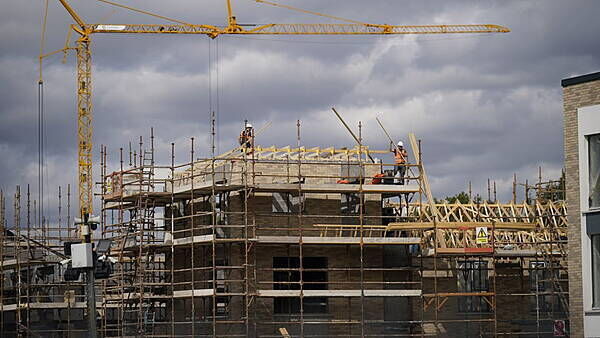
“Supply still shapes outcomes, with improving availability easing price pressures, but Ireland’s housing market remains fundamentally undersupplied.
“Taking into account the housing deficit, as well as new requirements, the number of new homes built per year needs to approximately double, across owner-occupied, rental and social housing, to bring long-term balance.”