Fr Paddy Byrne: Ascension ‒ a time for ‘going home’
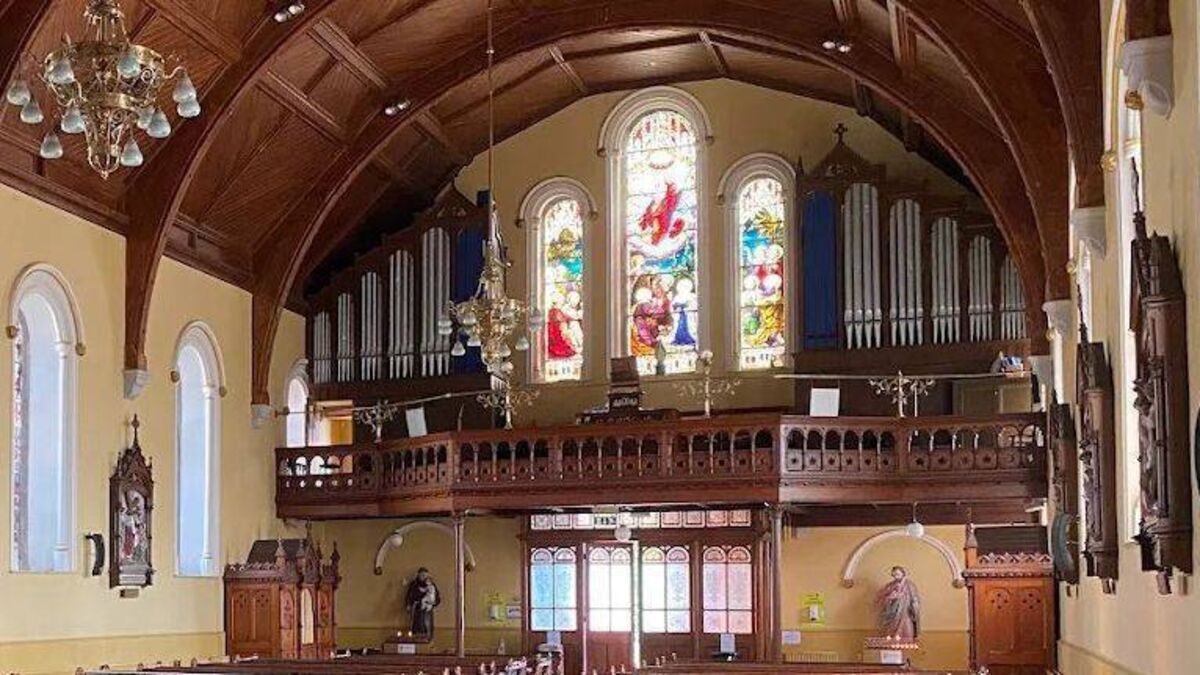
The beautiful stained-glass window, over the choir loft, in the parish church in Abbeyleix
THERE is a very beautiful stained-glass window, over the choir loft, in the parish church in Abbeyleix. The window depicts the glorious Ascension of Our Lord Jesus Christ into heaven. It tells the story of Jesus, now fulfilled in his ministry, returning home to his father in heaven and making that permanent pledge to his followers: “I am with you always, yes, until the end of time.” This is a wonderful time of year, when nature reflects the joy of resurrection and ascension and awakens within us all a deep and lasting hope that all will be well.
The following hymn is often sung at funeral Masses. It is comforting to remind ourselves that the core message of Christianity is the powerful gift of resurrection and new life. It also reminds me about the great feast of the Ascension.
The Italian composer Giacomo Puccini wrote La Boheme, Madama Butterfly and Tosca. It was during his battle with terminal cancer in 1922 that he began to write Turandot, which many now consider his best work. He worked on the score day and night, despite his friends’ advice to rest and to save his energy. When his sickness worsened, Puccini said to his disciples: “If I don’t finish Turandot, I want you to finish it.” He died in 1924, leaving the work unfinished. His disciples gathered all that was written by Turandot, studied it in great detail and then proceeded to write the remainder of the opera.
The world premier was performed in La Scala Opera House in Milan in 1926 and maestro Arturo Toscanini, Puccini’s favourite student, conducted it. The opera went beautifully, until Toscanini came to the end of the part written by Puccini. He stopped the music, put down the baton, turned to the audience and announced: “Thus far the master wrote, but he died.” There was a long pause, no one moved. Then Toscanini picked up the baton, turned to the audience and, with tears in his eyes, announced: “But his disciples finished his work.” The opera closed to thunderous applause and found a permanent place in the annals of great works. Jesus instructs us in his Ascension message to finish his work of saving mankind by proclaiming His Good News by words and deeds.
The recent walk celebrating Darkness into Light mirrors that ascension journey. While Darkness into Light raises significant funding towards those seeking healing regarding mental health, it is also suggests that light brings hope and healing. The Christian story is a celebration of how our God blesses us with resilience, courage and hope, even in times of challenge.
As we move through the month of May, nature responds magnificently to the blessing of light and warmth. The dawn chorus, these days, sings a beautiful hymn, proclaiming that, indeed, God's light is brighter than any darkness, God's hope is greater than any despair. Ascension, essentially, is returning home to where all of us feel a deep sense of belonging and inclusion.
A beautiful old story tells of how Jesus, after his Ascension into Heaven, was surrounded by the holy angels who began to enquire about his work on earth. Jesus told them about his birth, life, preaching, death and resurrection and how he had accomplished the salvation of the world. The angel Gabriel asked: “Well, now that you are back in Heaven, who will continue your work on earth?” Jesus said: “While I was on earth, I gathered a group of people around me who believed in me and loved me. They will continue to spread the gospel and carry on the work of the Church.” Gabriel was perplexed. “You mean Peter, who denied you thrice and all the rest who ran away when you were crucified? You mean to tell us that you left them to carry on your work? And what will you do if this plan doesn’t work?” Jesus said: “I have no other plan â it must work.” Truly, Jesus has no other plan than to depend on the grace-assisted efforts of his followers.
St Teresa of Avila, when writing the following, realised that every moment of life is both sacred and unique. Her spirituality celebrates a deep awareness that we are all part of Christ’s body.
Teresa of Avila (1515-1582)
Christ has no body but yours,
No hands, no feet on earth but yours,
Yours are the eyes with which he looks
Compassion on this world,
Yours are the feet with which he walks to do good,
Yours are the hands, with which he blesses all the world.
Yours are the hands, yours are the feet, Yours are the eyes, you are his body.
Christ has no body now but yours,
No hands, no feet on earth but yours,
Yours are the eyes with which he looks
compassion on this world.
Christ has no body now on earth but yours.