Fr Paddy Byrne: St Peter Claver ‒ patron saint of missionary work
x
SOON, pope Leo XIV will travel to the Sicilian island of Lampedusa, returning to a place that has become one of the most powerful symbols of the migrant crisis and the Church’s call to solidarity with the vulnerable.
The visit comes 13 years after Pope Francis made Lampedusa the destination of the very first journey of his pontificate in 2013, shortly after a migrant boat capsized in the Strait of Sicily, claiming countless lives. At the time, Pope Francis said the tragedy had remained “like a thorn in my heart causing me pain,” explaining that he felt compelled to go there “to pray, to show my solidarity, but also to awaken our consciences, so that what happened will not happen again.”
Pope Leo’s return to Lampedusa will inevitably recall the words pope Francis spoke there in 2013 â words that continue to resonate across the Church and the world. “Where is your brother?”
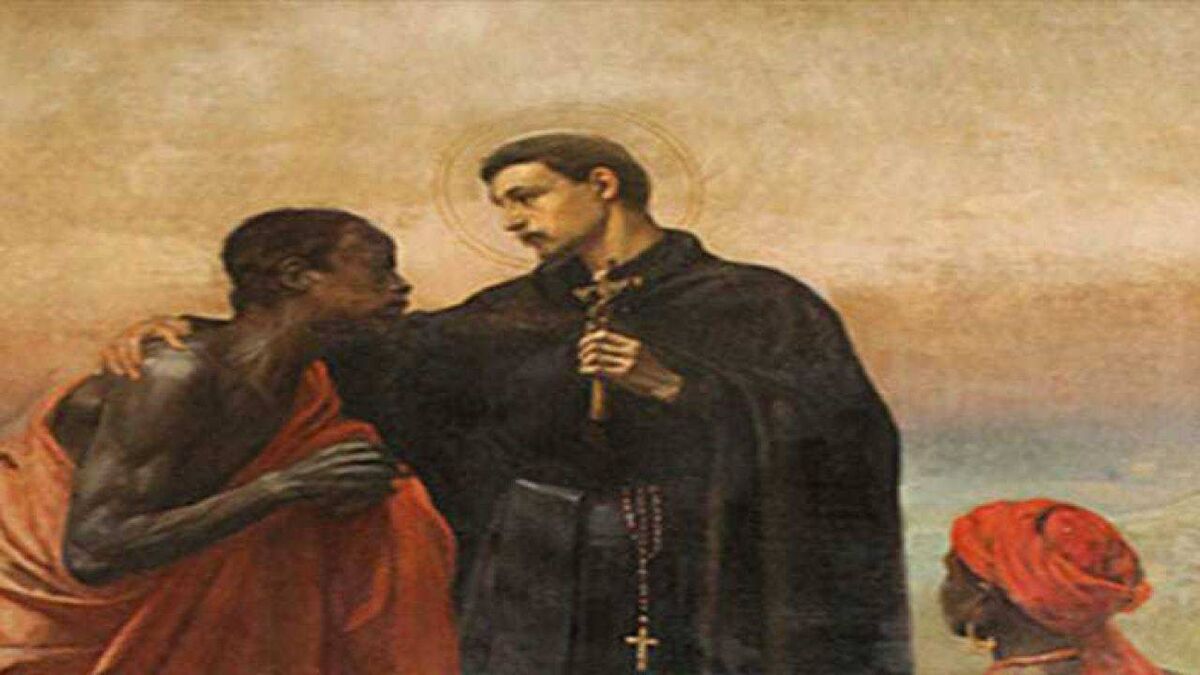
Pope Francis asked during that historic visit. “This is not a question directed at others; it is a question directed at me, at you, at each one of us.” One of the blackest marks upon the many colonies established by European countries was, of course, the establishment of a slave trade. Countless people were sold as commodities and sent across the world to live out their days on plantations and in mines. In the Spanish colonies of South America in the 1600s, the indigenous peoples were dehumanised in this way and voices of protest were rare indeed. Which makes the work of St Peter Claver even more remarkable: he devoted his life entirely to the physical and spiritual welfare of slaves.
Peter Claver was born to a wealthy family in Verdu, Spain in 1581. He studied at the University of Barcelona and after graduating decided to enter the Society of Jesus. At the age of 20, he joined the Jesuit noviciate at Tarragona. While studying philosophy at Majorca, Claver was advised by Alphonsus Rodriguez to travel as a missionary to the Spanish colonies in South America. Claver agreed and volunteered for the missions, arriving in Cartagena in 1610. Cartagena, located in modern day Colombia, was one of the major port cities of South America and slave ships from Africa would dock there to sell their goods.
These slaves were in high demand for working in the gold and silver mines there and an estimated 10,000 slaves travelled into the port each year. When Claver arrived in Cartagena, he travelled first inland to Bogotá, where he finished his studies. This achieved, he returned to Cartagena, where he was ordained a priest in 1616. Then, Claver, who in the time he spent in the colony had become very aware of the plight of the slaves, set about ministering to the welfare of the hundreds of west Africans brought across the Atlantic to be put to work.
Claver was on hand from the moment the slave ships docked at the port. The slaves were kept in the hold in such horrendous conditions that an estimated one-third of those who undertook the journey didn’t survive. Those who did make it arrived malnourished and terrified; Claver brought medicine and food with him when he went down into the holds of newly arrived ships and would not leave the ship until he had in some way given aid to everyone he encountered.
Fr Alonso de Sandoval, five years’ Claver’s elder, acted as mentor to him in his efforts. Sandoval, too, felt strongly the need to help those who had lost their freedom and been brought across a sea against their will. While Claver looked to the needs of the newly arrived slaves, Sandoval travelled the plantations where they were put to work, converting some and pleading for better treatment of them by their owners. Claver, too, would journey to see those he had helped on the boats during the season when few trade ships crossed the Atlantic. As he travelled the plantations, Claver would refuse to stay with slave owners, instead spending his nights in the slave quarters.
Claver devoted decades of his life to the welfare of others until by the end of his life he was left too ill to leave his room. For four years, he was bedridden, forgotten and neglected until his death in 1654. Upon his death, however, he was given a public funeral and many turned out to pay their respects.
Fr Peter Claver was beatified in 1850 and canonised in 1888 and was declared the patron saint of missionary work among all African peoples. Claver’s tremendous witness challenges all people who follow Christ to embrace the most vulnerable with a sense of compassion and kindness.
Prayer to St Peter Claver for compassion and justice