'Stories to make a stone cry' - caring Tom’s quest to help the homeless
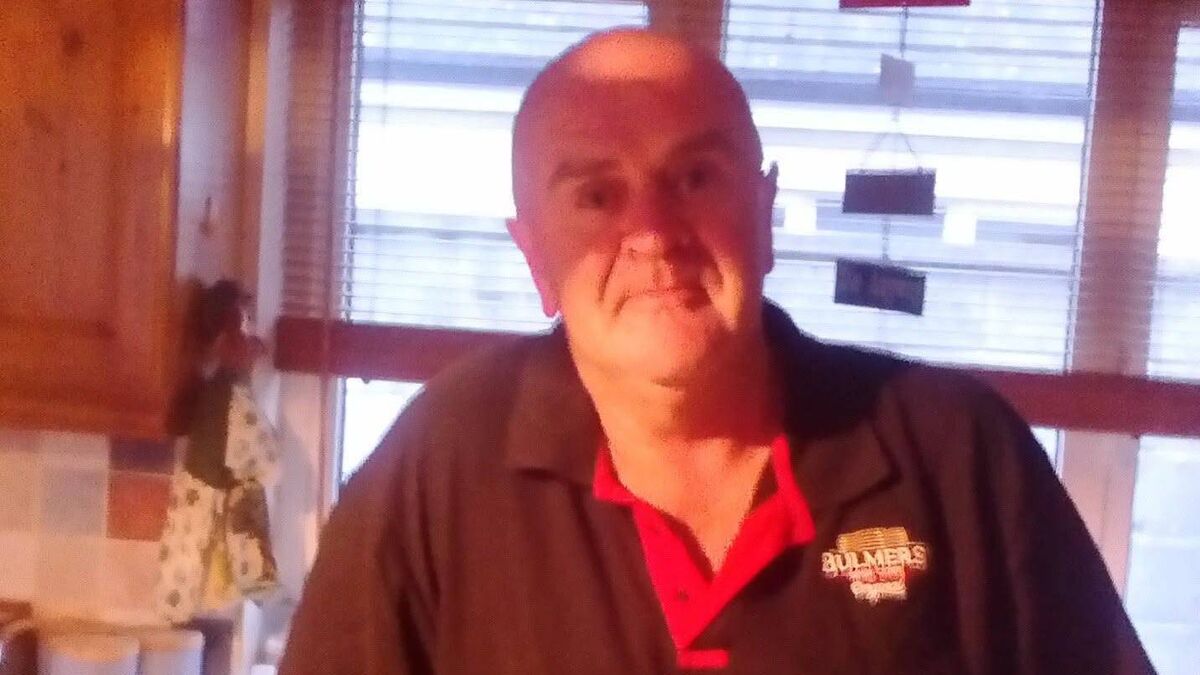
Tom Duffy: "I can't fix everything, but if I can fix one person, I’m not doing too bad”.
For over eight years, Portlaoise resident Tom Duffy has assisted homeless people and people at risk of becoming homeless.
“I used to run soup runs up in Dublin”, he says. “I had to pack it in because of my own mental health”.
Originally from Belfast, but based in Laois since 1997, Tom has encountered people in desperate situations.
“I could tell you stories would make a stone cry”, he says. “I’ve given an 82-year-old woman a sleeping bag to sleep in, on O'Connell Street - an 82-year-old woman! Could you imagine trying to give your granny a sleeping bag to sleep in?”
He continues: “I've watched people commit suicide. I remember one lad on a bridge in Dublin; the Millennium Bridge … His last words were, ‘fuck this, I can't take this anymore’, and he jumped off the bridge at the side … I heard his neck break”.
Tom pauses to let the moment rest. “That really affected me. I've seen so much pain.” In another instance, about five years ago, a young man sat beside Tom at a soup run outside Trinity College; he told Tom he had just tried to die by suicide.
“And I asked him, ‘why did you do that, Son?’”, Tom says. The young man said it was because his ex-partner would not allow him to see his two sons.
Tom had stern words for him: “I said, ‘well, that was a bit stupid, wasn't it? … Within a year or two, your sons would be calling someone else Daddy, because you'd be dead’”.
Two-and-a-half years later, while Tom was at another soup run outside the GPO, he was approached by the same young man, who informed him that their conversation “was the biggest kick [he] ever got.” He told Tom that from the night he had been told to “cop on”, he hadn’t taken drugs or had a drop of alcohol to drink.
He pointed to a woman nearby with two young children. “That's my new girlfriend”, he said, “and they're my two kids.’” He told Tom that he now sees his children every second weekend. “They're happy, and I'm happy”, he said, before adding: “The reason I'm here is because of you”.
Although heartening, Tom cannot afford to get emotionally attached to the people he helps. “It kills you”, he says.
Tom had previously worked with charities to help homeless people regain agency in their lives. These days, however, he mostly works on his own.
“I don't like any of these registered charities because to me, they're not in it for the right reasons, they’re in it for their own reasons”, he says.
He speaks about an incident he witnessed on Christmas Eve three years prior, in which a registered charity provided food to people in need that was two years out of date.
“I had to get €600 worth of shopping vouchers and go and do shopping for Christmas Eve, because this registered charity decided to poison them”, he says.
Although he no longer works with charities, Tom still finds a way to support those in need. Over time, he has accrued a network of Facebook friends that will assist him whenever he puts out an appeal.
“If I put an appeal out to help you, [my Facebook friends] know that you must be genuine … They trust me, and I love the fact that people trust me”.
Tom says he is very selective in those he chooses to help. “I find it more rewarding because I find the right people”, he says. He will always publish his appeals anonymously and will never reveal the identities of those he supports.
“I know so many people around Portlaoise, I would never tell you a name, not for a bucket of money would I tell you someone's name”, he says.

Tom recently attracted attention for a post made on Facebook; at the time of writing, it has 254 likes and 75 comments. It documents the last week in the life of a man approaching his 80th birthday, who was worried about a bill.
“His whole life was spent in pain because he grew up with the animals in the church … As a child he [experienced] clerical abuse … The man had such a hard life”.
Tom was made aware of the man’s plight through a mutual friend, a “warrior for people who suffered clerical abuse”, he says.
“She found him”, he continues. “It took her nearly three years to get to know him. She would bring him up a dinner two or three times a week, and they got very close”.
She informed Tom that the man needed help; he had a bill to pay and he was panicked. Tom asked his Facebook network to help. “Within eight hours I had, I think, €480. By the time we finished the next day, it was €640”.
The money donated was used to pay for the man’s electricity and gas, and Tom’s friend – the woman who had gotten to know the older gentleman over time – bought and cooked him his favourite dinner: pork ribs, cabbage and potato.
The older man then asked for one more thing: “He said, ‘I'd love a new suit’”. Tom’s friend assumed he was looking for it for his upcoming birthday, his 80th.
Once that was done, the older man turned to Tom’s friend and said: “I go to bed happy tonight.” Sadly, he did not wake the next morning.
Tom speculates that he asked for the new suit to be buried in, as “he must have known he was dying”, he says.
Tom’s friend is, understandably, quite upset. “I haven't been able to speak to her in a week. She can't talk to me.”
“I hear these stories week in and week out”, says Tom. Indeed, with soaring rents and a rising cost of living, homelessness is deepening issue throughout Ireland. In March 2026, the number of homeless people in the country increased again, to 17,308, according to data from the Department of Housing. This was a 12.5 per cent increase on the previous year and 196 more people than a month previously.
Pat Dennigan, chief executive of Focus Ireland, is quoted in the : “It is heartbreaking to see homelessness stuck at a record level and to know that thousands of children are growing up without the security of a home. Homelessness is not a foregone conclusion. With the right policies we can turn this around.”
In Laois, the situation has worsened. According to figures in the May 2026 management report by Laois County Council, the number of registered homeless families in the county has more than doubled in the last year, with 14 families and 32 single people staying in emergency accommodation.
All figures listed above do not account for people in other precarious living situations, such as those who are couch surfing, living in overcrowded accommodation, domestic violence refuges, or direct provision.
What more can be done to help mitigate this issue? Tom would like to see more local supports. “Somewhere for people to go for drug addiction or alcohol, any sort of addiction”, he says.
Unfortunately, there is often a bilateral relationship between addiction and homelessness.
“I was talking to the father of a young lad today uptown, and his son is coming back after five or six months in Galway, after getting treatment in a centre. Why should a young lad or girl in Portlaoise have to travel to Galway to get help?”
Tom also says there should be more capacity for people who cannot afford to go private. “There is no service for virtually anything unless you can pay … I've seen so many young people around here in addiction … They're turned around.”
Even when they can be seen, they are meet with waiting lists and other barriers. “You have to be three weeks sober before these places will take you in. I mean, it's hard enough to get off drugs and drink without having to go cold turkey on the streets for two or three weeks to possibly get a bit of help”.
In his years assisting people in homelessness and addiction, Tom has seen a lot of hardship; heartbreaking stories of adversity that come from living on the margins. Undoubtably, the work can be tough going. What is it that keeps him motivated? “I can't fix everything”, he says, “but if I can fix one person, I’m not doing too bad”.