PSNI officer questioned on why CCTV team did not receive Noah Donohoe phone map
By Claudia Savage, Press Association
A police witness at an inquest has been questioned as to why a map showing the last-known location of Noah Donohoe’s phone was not provided to CCTV operators.
Jurors at Belfast coroner’s court heard that those tasked with searching CCTV had been given the information needed and maps are “classified as sensitive” under PSNI policy.
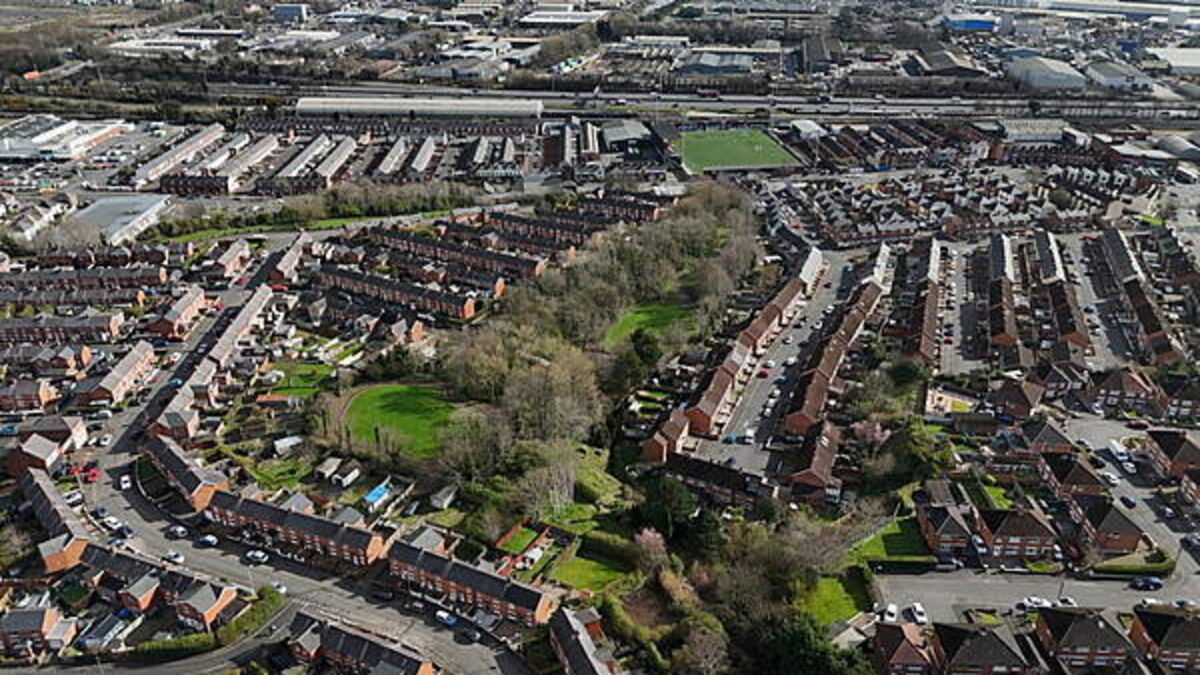
Noah, a pupil at St Malachy’s College, was 14 when his naked body was found in a storm drain tunnel in north Belfast in June 2020, six days after he left home on his bike to meet two friends in the Cavehill area of the city.
A post-mortem examination found the cause of death was likely to be drowning.

Inspector Bell, who was a sergeant in June 2020 and had been involved in the investigation to find Noah, gave a second day of evidence.
Donal Lunny KC, representing the PSNI, asked if there might be some “inevitable slowing down or short gap as one shift comes off”, to which Mr Bell agreed saying it is “unavoidable really, shifts start and finish at the same time”.
Lunny later asked if the jury should interpret gaps of activity in police logs as “absence of action” in the search for Noah.
“No,” Bell said.
“I can only speak for when I was on duty but our officers were very committed to this and were doing everything they could to find Noah, there’s always actions going on throughout the whole shift.”
Mr Lunny took Mr Bell through a number of police logs showing checking of CCTV along Noah’s suspected route of travel and said officers were checking the timings of the CCTV as they made their way across Belfast.
“Yes, and when officers are checking CCTV they generally aren’t physically checking it, someone is checking it for them,” Mr Bell said.
He said this person was “usually a manager” and police “take our lead from them because each individual CCTV system is different”.
The inquest had previously heard concerns in relation to CCTV from Grove leisure centre, where counsel for Ms Donohoe contended police failed to spot Noah.
Jurors were directed to a statement from another officer that attended that location and said there had been “inquiries conducted at Grove leisure centre, no CCTV available at this time, no staff present to operate it”.
Bell said it is “quite normal” to have to go back to a location to check CCTV at a later date and “unfortunately that was common during Covid” due to people working from home.

Further police logs show that an eyewitness reported seeing Noah’s bike in Northwood Road, which took police to that area.
Asked by Mr Lunny if Noah had been identified on the Grove leisure centre CCTV that would have become place last seen, Mr Bell replied “yes”; but asked if that is “then superseded by eyewitness” testimony of seeing Noah’s bike, Mr Bell further agreed.
Brenda Campbell KC, representing Noah’s mother Fiona Donohoe, had further questions for Mr Bell in relation to how telecoms liaison unit (TLU) evidence was used in relation to the CCTV search.
She asked the officer why a TLU map received by police showing a radius of Noah’s phone’s last connection to cell towers was not passed to those searching CCTV at base.
Bell explained that “TLU maps are classified as sensitive”, adding “I don’t decide if this information is sensitive or not” and that it was PSNI policy as the staff viewing CCTV are civilians.
“I made sure I relayed the information to them that would have enabled them to do the CCTV check,” Mr Bell said.
The inquest previously heard from Community Rescue Service (CRS) regional commander Sean McCarry, who said he received TLU information from police at about 11am on June 22, giving an update as to where Noah’s phone was last located.
Ms Campbell said: “Our position is that, in fact, these maps or at the very least this information, should have been with the CCTV operators” shortly after their receipt by police.
She said that if “TLU material cannot be provided to CCTV camera operators because of some sort of embargo”, then that is “a matter of concern when it comes to high-risk missing persons”.
She highlighted that another officer had sent a TLU map to Mr McCarry and asked why civilian volunteers can have access to these maps and use them, but CCTV operators could not.
Lunny said Mr Bell had made it clear “he provided information to them to enable them to check cameras in that area”.