Review warns of ‘toxic’ culture in Troubles legacy investigation body
By Claudia Savage, Press Association
An independent review has described a “toxic” and “divided” working culture inside the body tasked to investigate unresolved Troubles cases.
The appraisal of the Independent Commission for Reconciliation and Information Recovery (ICRIR) was commissioned following concerns about its effectiveness and culture.
It found “a clear risk that things will run out of control in the absence of clear unified leadership”.
Northern Ireland Secretary Hilary Benn said he is “deeply concerned” by the findings which are “unacceptable and falls below the standards expected”.

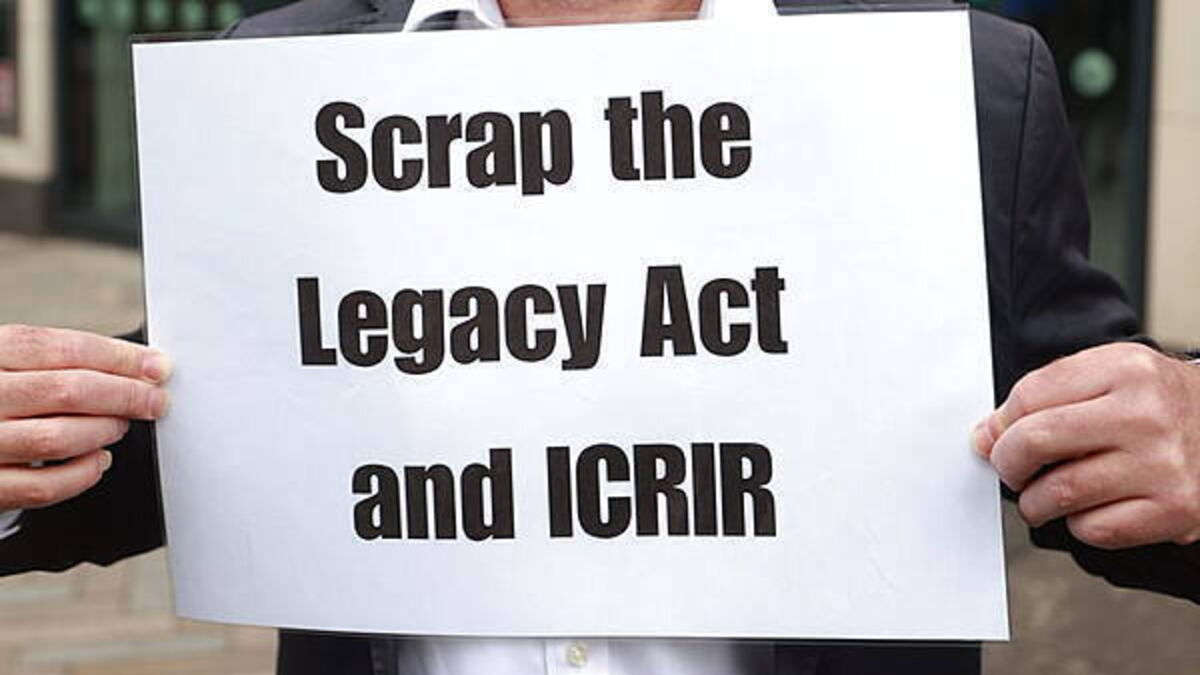
All UK police investigations into Troubles-related killings were shut down in May 2024 under the previous Conservative government’s Legacy Act and the ICRIR was established.
Labour’s Bill, agreed as part of a joint framework with the Irish Government, will put in place a reformed Legacy Commission with enhanced powers.
The review of the ICRIR carried out by former Northern Ireland Civil Service permanent secretary Peter May identified that the organisation has been “facing significant problems” linked to internal governance and culture at senior levels.
These issues are said to be stemming from “a combination of the governing legislation which creates structural weaknesses, problems with the financial management and governance of the organisation, and conflict among its senior leaders which is damaging the operation of the organisation and overall morale”.
The report said the issue of culture within the organisation was “the most remarked-on element of this review during the meetings held with staff members”.
It describes a senior leadership team which has “become quite divided in their approach” and a staff base “who have become increasingly aware of the problems”.
“For staff, that has led to a loss of confidence in the senior team as well as for some to say they are considering seeking other roles or not seeking to extend secondments,” the review says.
“In addition, many are disillusioned that what they had hoped to be part of was not meeting those hopes.”
The report adds: “Descriptions of the culture in ICRIR (and particularly relating to the senior team and their interactions) have included language like ‘toxic’, ‘silo working’, ‘divided’ and ‘disrespectful’.
“The scale and nature of the issues reported are such that there is a clear risk that things will run out of control in the absence of clear unified leadership to set out what is and is not acceptable.
“As a result, urgent action is needed to grip the issues and address problem behaviours.”
Some of the behaviours outlined include “senior leaders talking openly to staff about their concerns about members of the senior team and being negative about other senior leaders” and “surprisingly highly emotional responses to due process with people questioning motivations of those responsible for processes”.
Concerns are also raised in relation to the number of mostly senior women who reported being treated in ways that were ‘“rude” and “disrespectful”.
“In addition, some indicated they believed this behaviour to be gendered in nature – ‘I would not be treated in this way if I was a middle-aged man…’ was one quote,” the review reads.

The May review also raised questions in relation to the ICRIR’s finances, claiming its current funding and staffing levels are “not sufficient to support the commission’s view of what is required under the legislation”.
This is said to be causing staff “real concern that they will not have the means to deliver case outcomes within any reasonable timeframe and that in interaction with requesting individuals this is not sufficiently being explained”.
The report adds: “That is particularly the case now that some cases are being paused due to lack of resource to take them forward.
“That problem is going to worsen as more cases are brought forward.”
Speaking following the publication of the independent review, the ICRIR’s chief commissioner Sir Declan Morgan said the body’s job is to “ensure that accountability and justice are secured” for Troubles victims and survivors.
“We acknowledge and regret the shortcomings identified in the May report. As chief commissioner I am deeply sorry that this has happened on my watch,” he said.
“We are committed to addressing this as we move forward.
“I want to assure those that have come to us for help, that none of the recommendations in the review relate to our pursuit of individual investigations.”
He added: “Our investigations teams are working tirelessly for families that have come to us for help. We will soon reach the milestone of producing our first report and once we have reached that milestone, I expect a steady flow of reports over the months and years to come.
“We are a young and developing organisation, and the independent review was jointly commissioned to provide a clear, objective assessment of the ICRIR’s corporate effectiveness and cultural health.
“Where the review identifies actions and recommendations, these are opportunities for growth. Where it calls for improvement, we recognise the need for change and some of this is already underway.”
Benn said the ICRIR senior leadership team have “a duty to uphold the organisation’s values and those of the wider public sector to ensure victims, survivors and their families can have confidence in the organisation’s ability to deliver”.
“I am deeply concerned to see some of the findings in Peter May’s review,” he said.
“What has been identified is unacceptable and falls below the standards expected. It is for the ICRIR board to take whatever steps are necessary and appropriate to address this.
“Since receiving the findings, I have met each of the commissioners individually, and a joint ICRIR-NIO oversight committee has been established to ensure that the review’s recommendations are swiftly addressed.”
The May review did say despite problems outlined there are “real strengths in the work done to date in creating the commission” and it “has many good people committed to the mission of the organisation”.