Supreme Court dismisses appeal over conviction of Regency getaway driver
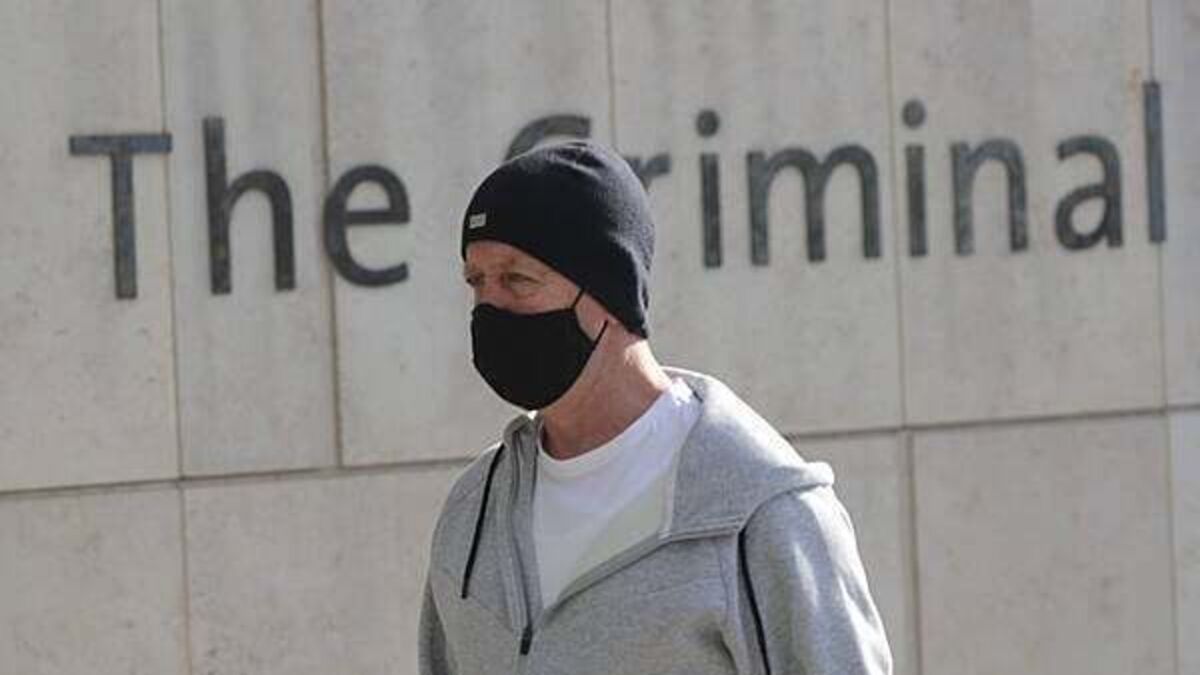
High Court Reporter
The Supreme Court has dismissed an appeal by a man convicted for acting as a getaway driver for the Hutch organised crime group on the day a Kinahan gang member was shot dead at Dublin’s Regency Hotel.
Jason Bonney (55), of Drumnigh Wood, Portmarnock, Dublin, was convicted in April 2023 alongside Paul Murphy (64), of Cherry Avenue, Swords, Co Dublin, by the non-jury Special Criminal Court of facilitating the Hutch criminal organisation in carrying out the murder of David Byrne in February 2016. The killing led to a significant escalation in a feud between the two gangs.
Bonney was jailed for 8½ years and Murphy for nine years.
Both men were tried from January to April 2023 alongside Gerard Hutch. The court acquitted Hutch of the murder of David Byrne.
Last November, the Court of Appeal rejected the appeals by Bonney and Murphy against their convictions.
The Supreme Court agreed to hear a further appeal brought by Bonney. The top court will only hear appeals if they meet certain criteria - specifically, that they raise a point of law of general public importance and an appeal is in the interests of justice.
Bonney’s appeal centred on the correct definition of alibi evidence under the Criminal Justice Act 1984.
The Special Criminal Court treated the evidence of two defence witnesses, Peter Tyrell and Julie McGlynn, as alibi evidence under the 1984 Act.
Tyrell and McGlynn’s evidence concerned the movements of a black BMW vehicle on the day of the Regency Hotel attack. The trial court ultimately found Bonney guilty of facilitating the Hutch gang by providing access to the black BMW on that day.
In treating Tyrell and McGlynn’s testimony as alibi evidence, the prosecution was allowed to call a rebuttal witness, Paul Byrne.
Bonney’s side argued that Tyrell’s evidence was not alibi evidence under the 1984 Act, as it did not amount to a positive “assertion” of Bonney’s whereabouts at the relevant time. In the circumstances, Byrne’s rebuttal evidence should not have been permitted, they submitted.
While McGlynn’s evidence was alibi evidence, Byrne’s evidence did not rebut her testimony, they argued.
Bonney’s appeal also dealt with whether the alibi definition question could be raised in an appeal court, in circumstances where it was not argued at trial. The Court of Appeal refused to permit Bonney’s side to raise those arguments.
In a judgment on behalf of a five-judge Supreme Court, Justice Niamh Hyland on Tuesday dismissed Bonney’s appeal.
The judge said the Court of Appeal was correct in not allowing Bonney’s arguments on alibi evidence to be raised in circumstances where Byrne’s evidence was not objected to at trial. Notwithstanding this finding, the judge went on to consider the correct interpretation under the 1984 Act.
She noted that the definition of alibi evidence is concerned with geography – it requires a “positive identification” of an accused in a place that is different from the scene of the crime. “The legislation requires evidence that a person was not at the relevant place because he was at a different place,” she said.
This means that Tyrell’s evidence ought not to have been treated as alibi evidence by the Special Criminal Court, as it did not touch on the whereabouts of Bonney. Notwithstanding this finding, the judge said Bonney suffered no injustice when he was refused permission to raise this argument.
Byrne’s evidence was admissible as rebuttal evidence to McGlynn’s evidence, the judge held, noting that it was adduced in response to an alibi notice issued by the defence. It was not unfair that Byrne’s evidence was delivered - as is usual when an alibi notice is served - after the defence’s evidence closed, the judge held.
The judge also pointed out that the Special Criminal Court was independently satisfied of Bonney’s guilt and rejected both the evidence of Tyrell and McGlynn.
“In short, had the point on alibi evidence been raised and determined in [Bonney’s] favour, it would have made no difference to the outcome of the trial,” the judge said.
Judges Iseult O’Malley, Séamus Woulfe, Gerard Hogan and Brian O’Moore agreed with Hyland’s judgment.