21-point loss highlights gap for Laois U/20 hurlers
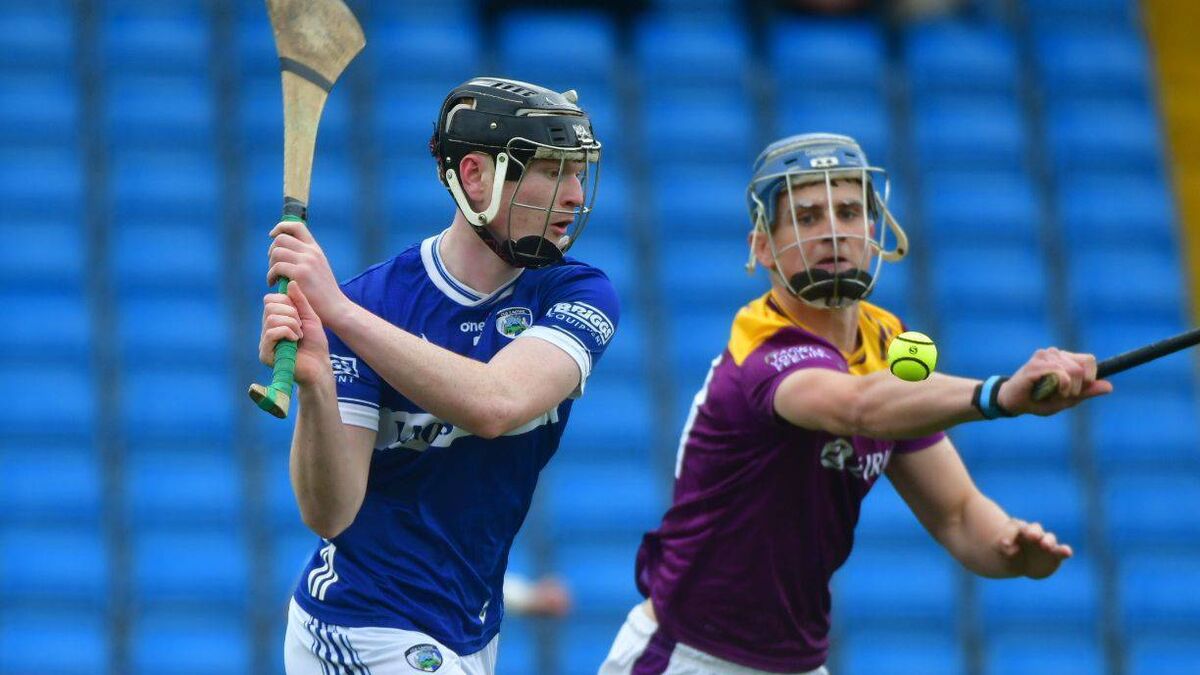
Photo: Denis Byrne
LAOIS hurling took a sobering hit this weekend as the under-20 side exited the Leinster championship following a 21-point defeat at the hands of Wexford. On paper, it’s just another result in a long season. In reality, it raises deeper questions about where Laois stands in the development race and how wide the gap has become.
A loss of that margin doesn’t happen by accident. It reflects differences in physical conditioning, tactical sharpness, and perhaps most tellingly depth. Wexford didn’t just beat Laois; they overwhelmed them in every sector.
From the opening minutes, the contrast in pace and precision was clear. Laois struggled to win primary possession, and when they did, they often lacked the support runners or composure to turn it into scores.
Under-20 is supposed to be the bridge between promising youth and senior readiness. For Laois, that bridge currently looks fragile. When a team at this level is so comprehensively outplayed, it suggests that the pipeline feeding into the senior ranks is under serious strain.
What makes this even more frustrating is that there were flickers of hope earlier in the year. The Laois minors did reach Tier 1 which is a notable achievement in itself and a sign that progress is being made at underage level. But that progress came with caveats.
They struggled through much of the campaign, except for the performance against Galway. While resilience is a valuable trait, consistently being on the back foot is rarely a foundation for long-term success.
There’s a pattern emerging: Laois teams are competing but not controlling games. They are hanging in, rather than dictating. And at higher levels like under-20 Leinster that approach gets exposed quickly.
It would be too easy, and ultimately unhelpful, to pin this on players or management alone. The issue feels more structural.
Counties like Wexford have spent years investing in coaching systems, school competitions, strength and conditioning programmes, and clear pathways from juvenile to senior. Those systems don’t guarantee success, but they do reduce the likelihood of collapses like this.
Laois, by contrast, appear to still be building that consistency. There are talented individuals coming through, but talent alone isn’t enough in the modern game. Without a robust framework to develop and support those players, they risk being left behind by counties who are operating at a higher level of organisation and intensity but there are signs of this happening.
The challenge now is not to overreact, but also not to dismiss this as a one-off. Heavy defeats can either be written off—or used as a catalyst. For Laois hurling, it needs to be the latter.
There is still a base to build on. The minors reaching Tier 1 shows that there is potential in the system. But potential needs direction. It needs better alignment between underage grades, more emphasis on physical development, and perhaps most importantly, a clearer identity in how Laois teams want to play.
Because right now, the gap is not just on the scoreboard, it’s in the standards being set. And unless those standards rise quickly, results like this may become less of a shock and more of a pattern.