Healthcare assistant who swore at disabled patient and entered woman's bathroom loses case
Darragh Mc Donagh
A healthcare assistant who was sacked for swearing at a disabled patient and entering a woman’s bathroom without permission in a string of incidents that occurred on a single day has lost a case for unfair dismissal.
The man, who worked for a healthcare provider supporting people with severe and profound disabilities, also admitted to removing a patient’s mattress and bedding in an alleged act of emotional abuse.
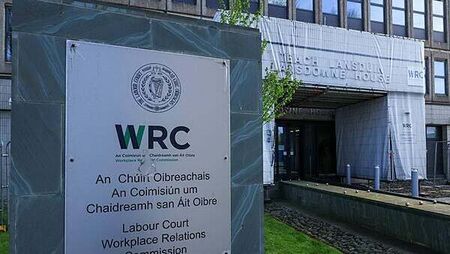
An adjudication hearing of the Workplace Relations Commission (WRC) was told that four such incidents occurred on a single day in June 2024, leading to an internal investigation after they were reported by a social worker.
It was alleged that the healthcare assistant had used profanities on several occasions when a patient refused to shower, and verbally abused a colleague in front of another patient.
He was also accused of entering the bathroom of a female resident after she had showered, causing her to scream in distress, and allegedly removing bedding from a resident to prevent them from relaxing.
The man had been employed as a healthcare assistant since 2012 by the organisation, which is funded by the Health Service Executive (HSE) to care for around 80 individuals, many of whom are non-verbal and immobile.
A formal investigation into the four incidents began in January 2025 under the National Trust in Care policy. He was dismissed for gross misconduct but took the case to the WRC on the grounds of unfair dismissal.
The man admitted to wrongdoing but described the incidents as a “once-off” and a “blip” over a couple of hours that should not blemish 13 years of good service. He told the WRC that he felt unsupported on the day and was not in a “right headspace”.
He was remorseful and argued that dismissal had been entirely disproportionate and that he should have received a written warning and further training instead.
His union representative argued that the employer had erred by failing to instigate a separate internal disciplinary investigation alongside the Trust in Care process, which they claimed denied the worker his constitutional right to cross-examine witness statements.
The organisation, represented by Ibec, countered that a separate probe was unnecessary because the facts were fully established and accepted. Management witnesses testified that the level of trust required for a frontline carer was extremely high and had been “irreversibly broken”.
They stated that, because many of their residents cannot articulate abuse, the organisation’s overriding duty was to protect those completely at the mercy of their carers.
In her findings, WRC adjudication officer Bríd Deering said the worker’s full admission to the core facts of the misconduct had significantly reduced the procedural necessity to cross-examine witnesses.
She ruled that the investigation and subsequent disciplinary procedures had conformed to a standard of fairness and objectivity. Concluding that the employer had discharged its burden of proof under the Unfair Dismissals Act, she found that the severe nature of the emotional abuse and neglect justified immediate termination, rendering the complaint not well-founded.