Laois-based former student of Carlow College mourns loss of educational opportunities in the southeast
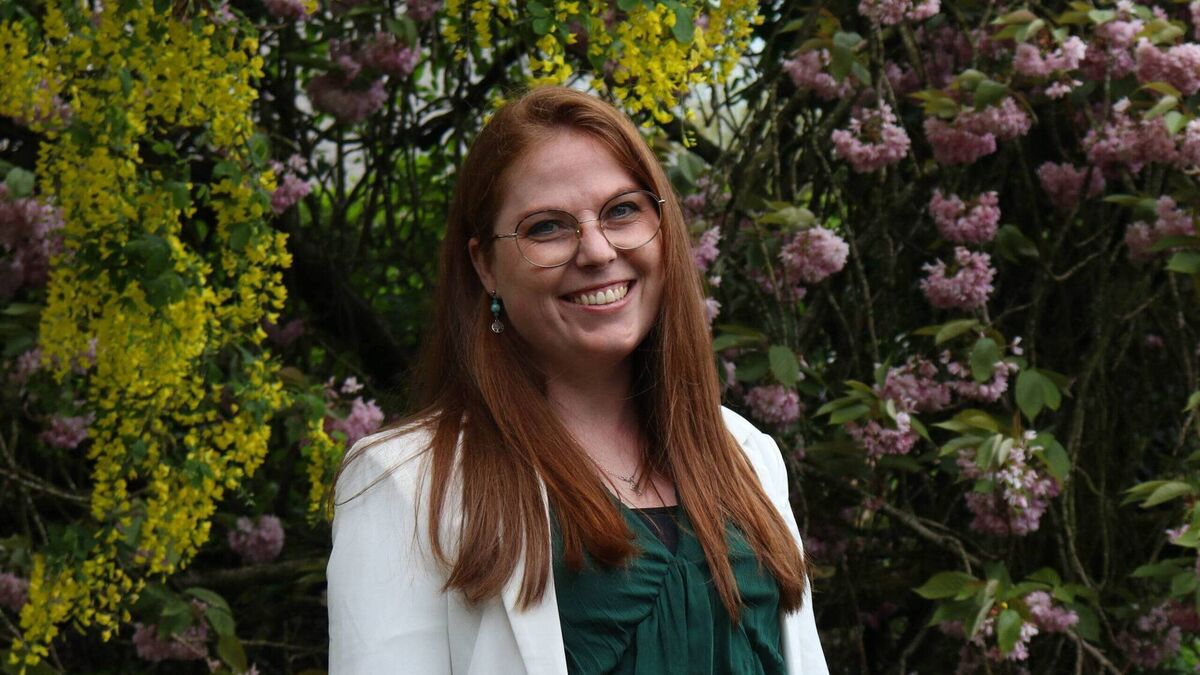
Pictured: Regina Dunne, former student of Carlow College.
A Portlaoise-based former student of Carlow College says she is “sad at the loss of opportunity” for people who are in a similar situation to her own, in the wake of the college’s closure.
Regina Dunne completed her undergraduate degree in English & History between 2014-2018 and later progressed to the MA in Irish Regional History from 2023-2025. Both degrees were completed at Carlow College.
The institution was a kind of safety net for her. “I wouldn't have gotten a degree or a master's degree if Carlow didn't exist,” she says.
She continues: “I dropped out of college early, when I was young … I was a single parent. I have multiple disabilities and immune disorders. I wouldn't have been able to commute to a city college or university”.
Dunne adds that she would not have found the level of support she received from the lecturers in Carlow College in other third-level institutions.
“It's a family, a community”, she says, adding: “I don't think you would get that sense of community in any other college in the country”.
Since graduating, Regina has become a published author, and between December 2023 and January 2026, she was the EU Just Transition tourism activator for Laois. In January, she was appointed to the role of tourism strategy manager of Dublin City Council. “The skill to be able to do that came from the education that I got in Carlow”, she says.
It was announced in May that Carlow College will close its operations the next two years, with its land and buildings to be transferred to South East Technological University (SETU).
Dr Ida Milne, a lecturer in European history at Carlow College, says the institution has “one of the highest rates of SUSI [Ireland’s national awarding authority for further and higher education grants] funding in the country”, meaning it is “attractive to a certain economic demography, who couldn't afford the bigger cities to go to college”.
Its closure, she says, means there is no longer an English and history pathway in the southeast, despite the popularity of those subjects.
Says Regina Dunne: “The pipeline of people with those skills coming through is gone in an era when we need that skill set more than anything else; we need critical thinkers, we need objective thinkers, we need ethical thinkers. That skill set is gone unless you can afford to go to a city.”
Dr. Milne echoes Regina’s sentiments: “It's one type of education for the rich and another type for the less well-off…It's widening the divide”.
Over the next two years, a phased redundancy process will be implemented for the 87 staff currently employed by the college. The approximate 600 students who are currently enrolled will be allowed to complete their studies. However, from September 2026, no new student intakes will be offered.
Dr Milne has voiced frustration at what she says is poor communication from the college. “We've been told very little”, she says, adding that, for years, staff were told by management that the plan was to integrate with SETU.
However, at a well-attended meeting held in support of Carlow College staff on Friday 12 June in the Seven Oaks Hotel, Seán Fleming, Fianna Fáil TD for Laois, told attendees that, according to communication he received from James Lawless, Minister for Further and Higher Education, plans for amalgamation had never been discussed with anyone.
“It’s a very difficult situation,” Mr Fleming tells the . “The two governing bodies [from Carlow College and SETU], with the mediator appointed by the department, came up with this proposal”, he says.
He continues: “It was a surprise because everybody up to now would have assumed that there was some sort of a merger going to take place rather than a full closure”.
The other issue, Mr Fleming says, is that “the Irish taxpayer has been funding a private Catholic Church entity” in Carlow College. “Some people say the idea of the Irish taxpayer handing money to a religious [organisation] to run a privately-run college is not what the taxpayers should be doing”, he says.
However, according to staff member Dr James Heaney in a speech at a public demonstration at Carlow College on Sunday 14 June, the college offered to transition to public ownership in 2022, whether through SETU or another public institution.
Dr Milne considers conversations about funding a deflection. “It’s about 87 staff losing their jobs, and really the question is ‘why will SETU not take us on?’ Is there some reason that we have not been told?”
There are major campaigns to save Carlow College. Two public meetings and demonstrations were held in Carlow town over the weekend of Friday 12 June, while an online petition calling for transparency has gathered close to 1,000 signatures.
“We're trying to see what we can rescue”, says Dr Milne. “Could we get more money? We're not being given much in terms of redundancy, [and] our wages are low.
She continues: “I'm in my 60s, what are the chances of me getting a permanent job? I have to find a way of supporting myself”.
Minister Lawless was due to meet a staff and union delegation on the evening of Monday, 22 June. A spokesperson for the college said no further statements will be issued in relation to this matter.