Shaun the Sheep off the Laois: Interview with animator Seamus Malone
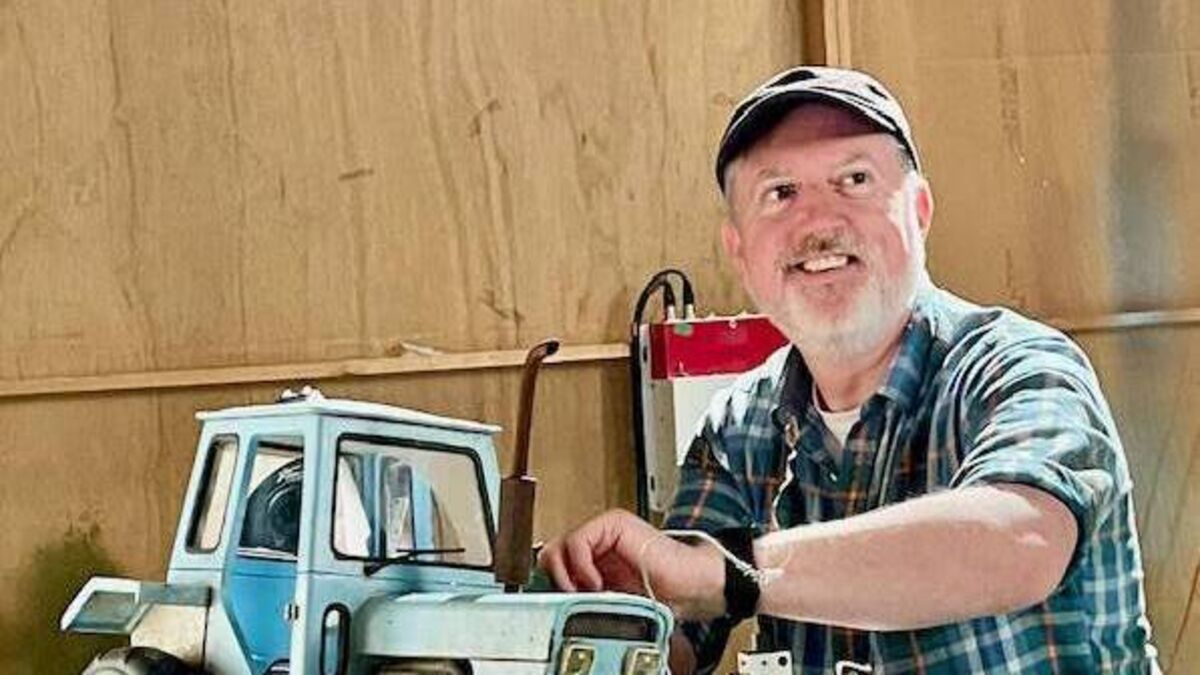
Seamus used memories of his childhood in Laois as inspiration for Shaun the Sheep.
(2000), (2005), (2006). Drop any one of these film titles around a younger millennial or older Gen Z and you will be hit with a frenzy of remembered quotes and scenes, such is the power of Aardman Animations productions to linger in the minds of those who grew up watching them.
As with any creative endeavour, it is important to remember that no single production arrives in a vacuum – in the case of animation, there are teams of animators, producers, directors, editors (and more) who work tirelessly to bring it together.
Seamus Malone is one such creative. The Laois native has enjoyed a long-standing relationship with Aardman, having joined the studio as an animator in 1997. He has also worked as an animator, supervising animator or director for DreamWorks Animation and Sony Pictures Imageworks.
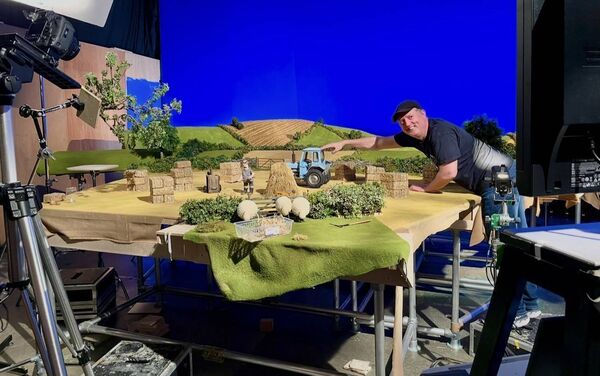
His work as co-writer and series director of the latest season of long-running animated children’s series (2007-present) has earned him a TV BAFTA nomination ahead of the ceremony in early May.
Dialling in on a gloomy Friday morning from his home in Bristol, Seamus tells the that he did not always want to be an animator. In fact, growing up on a farm in Barrowhouse, just outside Athy, he dreamt of being a “stuntman, astronaut, or farmer”.
“But I was interested in art”, he says, “and I did like making things with my hands; I used to draw and scribble all the time, without realising it almost.” When Seamus was around 15 years old a friend encouraged him to enter a competition on , a teen-centred TV programme that aired on RTÉ from 1988-1993. “I sent in cartoons … and little stories behind them”, the veteran animator says.
Seamus came second in the contest, which was judged by renowned Irish artist Jim Fitzpatrick, noted for his work based in the Celtic tradition, and for his collaborations with musicians such as Thin Lizzy, Sinead O’Connor, and The Darkness.
Encouraged by his success, and now with a mind to pursue animation as a career, Seamus applied to Ballyfermot College of Further Education (BCFE) a few years later. He did this despite not having a portfolio to hand: “I was fairly green”, he laughs.
He was told to come back with some samples of life drawing: “I [returned] with all these drawings of cows in the field … the only thing I could draw really was animals at the time.” Seamus got into the college and would spend two years honing his craft before applying to Aardman, a British studio which, by the mid-1990s, had become celebrated for its stop-motion and clay animation techniques. This aligned with Seamus’s interests, as he always enjoyed the tactile nature of stop motion.
The studio asked Seamus to travel to Bristol, and for three days solid he was asked to do walks and lip sync tests. He officially joined the Aardman team in 1997.
At this point, the studio was known primarily for its Oscar-winning comedic shorts. Shortly after starting however, Seamus realised that he and five other animators were being trained up to work on Aardman’s first feature film:
Co-financed and distributed by DreamWorks and Pathé, the film was inspired by the 1963 epic . It tells the story of a group of chickens who attempt to escape an egg farm upon discovering they are going to be turned into pies.
Seamus and the team spent two-and-a-half years working on the project. Apart from one team member who had worked on (1993), nobody at the studio had worked on a stop-motion feature film before.
“We didn't know what we were doing really until about three-quarters of the way through”, says Seamus. “We were just having a laugh making this film, we never thought it would be popular.”
It was a gamble that paid off; the film was a critical and commercial success and was DreamWorks’ most successful release until the following year. A story of revolt, it was humorously (and lovingly) embraced as a revolutionary urtext by users on Twitter and Tumblr throughout the 2010s.
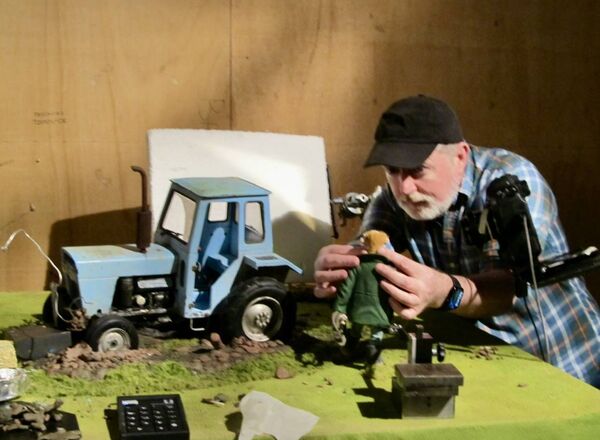
Over the years, Seamus has worked on many notable productions for Aardman, including the Oscar-winning feature (2003-2006), (2007), (2011), (2024), as well as advertisements and idents.
Through the studio’s collaboration with DreamWorks, Seamus also worked on and (both 2006), which allowed the animator to gain experience in the world of computer animation.
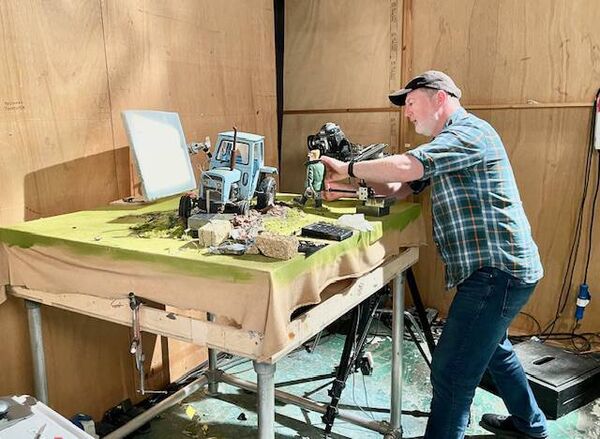
Seamus had worked on as a director, writer and animator, but in 2024 he was asked to be series director for the entire show for its seventh season.
“When you're series directing, you're looking after music and the animation and the story and the writing – the whole thing”, he elaborates.
Seamus found scope to put a lot of himself into series seven, including some of his childhood memories of Barrowhouse, Co. Laois.
“There's an episode called ‘Stuck in the Muck’, which I wrote”, he says. “It's about a tractor getting stuck and Shaun trying to help it out. Years ago, we had an old tractor that got stuck in a field. My dad went up to the neighbours’ and got a big chain and another tractor to try and help pull it out, and then that tractor got stuck as well.
“So, then there were two of them stuck, and we had to get a JCB to get them out, and it was kind of farcical, I suppose.” The season’s Laois connections don’t end there – the veteran animator returned home to record his friend’s tractor, as he found the tractor effect in the studio’s sound library too “clean” to be believable.
“It sounded like a Tesla engine or something. I wanted that diesel-y, in-need-of-service sound of an engine”, he laughs.
His work on season seven of has earned him a TV BAFTA nomination alongside colleagues Danny Gallagher and Anna Leong Brophy under the ‘Children’s Scripted’ category.
Although he has been part of productions that have earned BAFTAs before, this represents his first ‘named’ nomination.
“I'm very proud of it”, he says. “And it's not just me. It's for everybody else as well. Animation is a collaboration of a lot of people, from writing to storyboarding to model making, painting, set dressing, animating, editing, music.”
Seamus has previously been nominated for an Emmy for his work on the 2018 BBC and Netflix co-production . However, the most impressive of his accolades is a dedicated plaque on the grounds of his former secondary school, Athy College.
It was unveiled in 2019 as part of the Made of Athy project, which honours figures in the entertainment industry who have a connection to the town. “I'm very, very honoured by it, and there was a lovely ceremony,” he says, adding that whenever he is in Athy he makes sure to pass by it, “just to see it's still there”.
As a youth, Seamus was inspired by legendary animator Chuck Jones, who is best known for his work with Warner Bros. animation, including the and shorts. “I was definitely more a Warner Brothers style of animator than, say, a classic Disney style of animator, because I love the comedy and comedic timing especially.”
Seamus also cites and creator Matt Groening as an early influence, as well as Wallace & Gromit creator Nick Park. Seamus recalls seeing Park’s pioneering 1993 short (the debut of the Wallace and Gromit characters) as a student in Ballyfermot.
“I thought ‘oh my God, I might as well give up now because that's just brilliant. That's amazing’.” Seamus would later work with Park on various projects at Aardman.
The Irish animation industry has seen many changes since Seamus began his career. For example, when he was a student, many graduates of BCFE went on to work at Sullivan Bluth Studios, a state-of-the-art facility near the Phoenix Park.
Founded by American animation giant Don Bluth, the studio produced memorable work such as (1986), (1988), and (1989).
Bluth had transferred the studio to Dublin from the United States in 1986 and helped to set up the animation course at Ballyfermot to augment his workforce. At its peak, the studio employed more than 350 people, most of them Irish.
“Ballyfermot was seen as a stepping stone into Don Bluth. That's where I was hoping to go”, says Seamus. Unfortunately, the studio closed in the mid-1990s due to financial difficulties, meaning Seamus (and many other animators) had to move abroad to find work.
However, in the years since, there has been significant development in indigenous animation with the growth of Irish studios like Boulder Media, Brown Bag Films and the Kilkenny-based Cartoon Saloon, whose work has been nominated for multiple Academy Awards.
“Now there are loads of places and there are loads of college courses for animation. There are many more people doing it now than when I started”, says Seamus.
And just what advice would Seamus offer to budding animators? “It’s good to observe the basics”, he says. “Draw if you can, even if it's stick figures. Develop characters to try and tell a story through pictures.
“It is great to do a comic strip or a cartoon strip where you've only got three panels, and you have to tell a story in those three panels, with a beginning, middle, end. If you can tell a story like that, it's a great tool to have.
“Just keep observing the world and keep drawing, keep practicing. That's something that I try and do myself all the time.”