Staff did not know about dangerous drug in prison before death of young prisoner, inquest hears
Seán McCárthaigh
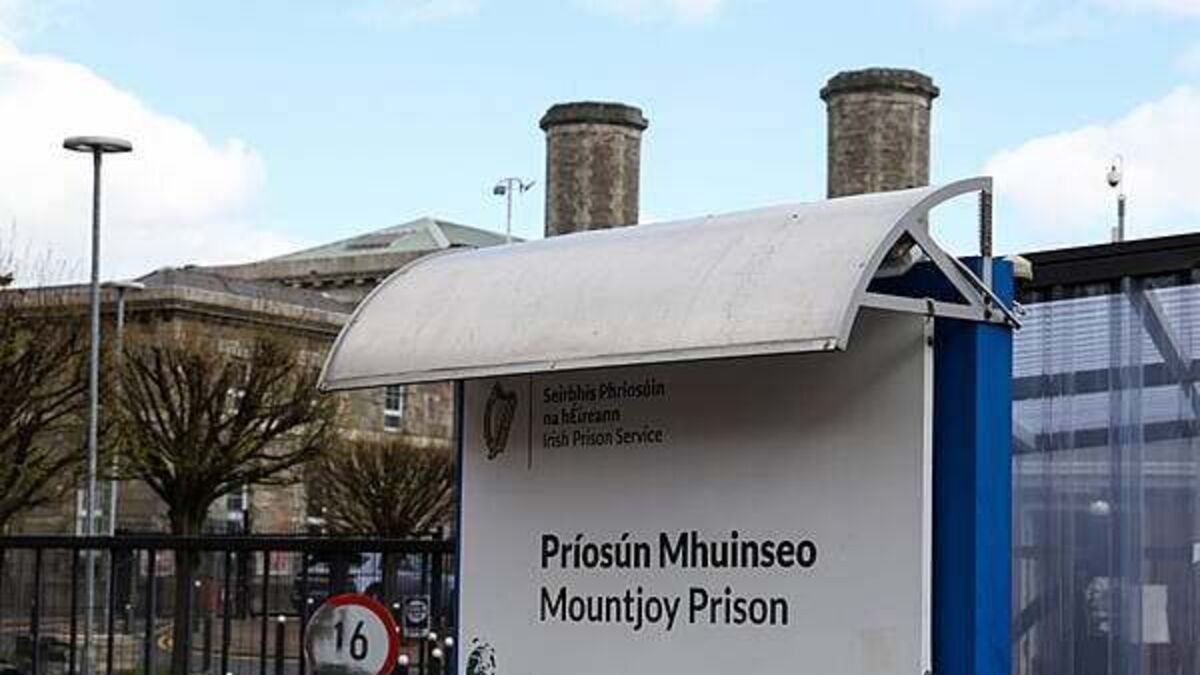
Staff at Mountjoy Prison were formally notified about an unusual, dangerous drug circulating in the prison just hours after the sudden death of a young inmate from an overdose two years ago, an inquest has heard.
Adam Darcy (21), a single father of two from Whitehall, was found dead in bed in his prison cell on the morning of July 18th, 2024.
A sitting of Dublin District Coroner’s Court heard a prison officer had observed the deceased appearing intoxicated on the previous afternoon, although no concern was raised about his health by various prison staff who had subsequently checked on him.
A report by the Inspector of Prisons recorded how there had been four overdoses in Mountjoy in the week before Darcy’s death.
However, various prison officers and medical staff from Mountjoy testified to having no knowledge about an unusual drug in the prison at the time.
The results of a postmortem showed that Darcy, who came originally from Darndale, died from mixed drug intoxication.
It showed he had consumed a high but non-lethal level of alprazolam (otherwise known as Xanax) as well as lower quantities of olanzapine and ketamine.
However, chief State pathologist Linda Mulligan, who carried out the postmortem, said she subsequently learnt that an analysis by the State Laboratory of tablets discovered in the prison, found they contained nitazene – a highly potent synthetic opioid which was relatively new to Ireland.
Mulligan said the drug breaks down and leaves the body quickly, which makes it difficult to detect at postmortem stage.
Although there was no proof of nitazene being found in Darcy’s body, the pathologist said she believed it was a contributory factor in his death “on the balance of probabilities.”
In reply to questions from the coroner, Mulligan said the effect of the drug was unpredictable even among users who had a tolerance for it.
The pathologist said she understood it was around 500 times more potent than morphine.
Former assistant governor of Mountjoy, Aisling Nolan, told the inquest that the Irish Prison Service had been notified by the HSE on the same day that Darcy died about the presence of yellow tablets containing nitazene circulating in prisons.
Nolan said information leaflets were distributed to all prisoners and staff and posted on every landing on receipt of the information, which had resulted in other prisoners handing over 300-400 yellow tablets.
The witness outlined other measures taken by the IPS, including the change in the material of nets over the prison yard from nylon to steel, which she said had a significant impact in preventing drones from dropping drugs into the prison.
Nolan said a confidential line had also been established where families of prisoners could report any pressure on them to smuggle drugs into prison, while education and information programmes on drugs were available to inmates.
The deceased had been serving a two-year prison sentence for drugs after being committed to Mountjoy in August 2023.
The inquest heard that Darcy was looking forward towards his scheduled release in late 2024 to see his young twin girls.
In a written statement, another prisoner, Darren Foster, said he was told by a cellmate of the deceased, Adam Baker, that Darcy had taken seven tablets on the evening before his death.
Foster said he had also seen other prisoners under the influence of some type of substance over the preceding four days.
Baker told the hearing that he had no firm recollection of events apart from being woken up the following morning at 8am and panicking when there was no response from Darcy when they were called for breakfast.
He described the deceased as his best friend and part of his family, as the pair had been inseparable when growing up as neighbours.
“We were partners in everything,” he added.
Baker, who is still in custody, said they had both taken white tablets in the prison yard on the afternoon of July 17th, 2024 where they had also obtained yellow tablets that were going around Mountjoy which they took later that evening.
“We didn’t realise what we were taking or the strength of them,” said Baker.
The witness said he broke down after realising his friend was dead.
“I miss him so much. My life hasn’t been the same without him. He’s the first person I think of every morning,” said Baker.
Asked by counsel for Darcy’s family, Diarmuid O’Leary, if he had any concern at any stage about his friend, Baker replied: “The two of us were in a mess, to be honest.”
The deceased’s father, Damien Darcy, gave evidence of formally identifying his son’s body to gardaí at Dublin City Mortuary in Whitehall.
In a statement read on her behalf by O’Leary, his mother, Sharon, said her son’s birth was “the best day of our lives.”
She said her son who came from a working-class background was “adored and loved so much.”
Ms Darcy described him as a “very kind and gentle person” who loved helping people and playing sports as well as being talented at art.
She pointed out that Adam and his younger brother, Duane, idolised each other despite a 10-year age gap.
However, Ms Darcy said her son became involved with “wrong company” in 2017 when he was 16.
“We did everything in our power to try and guide Adam away from trouble towards a better life,” she remarked. “We tried to protect him from the influences around him.”
Tracy said they never gave up hope on their son and pointed out he got a job as a plumber and was trying to create a more stable future for himself but faced a lot of peer pressure.
She added: “Unfortunately where we lived in Darndale at the time, having a job was not seen as a positive thing among young people.”
The inquest heard Adam moved out of the north Dublin suburb to a new home in October 2023 in what was meant to be a fresh start.
“We’re living in hell without our son every day,” said Ms Darcy. “I stand here today as a broken mother.”
She expressed hope that lessons could be learnt so that no other young person or their family have to face a similar experience.
Dr Cullinane replied that it was no compensation but that her wish for some good to have come from his death seemed to have been realised from changes in the prison system.
A jury of four women and two men returned a verdict of death due to misadventure.
They also recommended that the Irish Prison Service should provide training and awareness for staff in relation to prisoners who show signs of intoxication.