When do the clocks go forward? Should daylight saving time be scrapped?
Eva Osborne
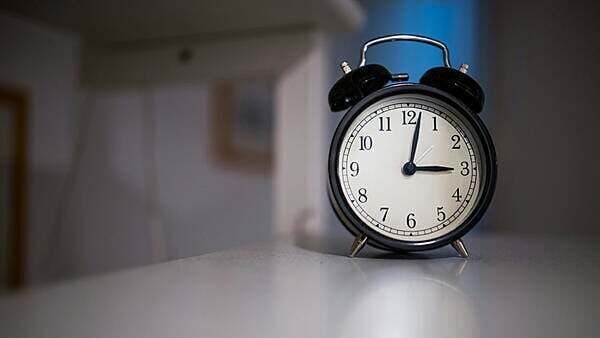
On Sunday, March 29th, the clocks will go forward by one hour. This means that, at 1am, the time will change to 2am.
This change will mark the beginning of Irish Summer Time (IST) and the end of Greenwich Mean Time (GMT) and will mean longer, brighter evenings from next week.
IST, or daylight saving time (DST), lasts until the final Sunday in October, when the clocks go back an hour.
In 2019, the European Parliament voted in favour of ending these seasonal time changes.
EU institutions have not made progress on implementing the decision, and the European Commission has said that it does not plan to submit a new proposal on the matter to the Parliament.
This means that no changes are expected to summer and winter time in the coming years, according to Citizens Information.
What are the impacts of the clocks changing?
Dr John O’Neill, molecular biologist and cellular rhythm expert from the Cambridge-based Medical Research Council Laboratory of Molecular Biology, said there are “small but significant” risks because of the time change.
Dr O’Neill told the Press Association: “It does not really serve much of a benefit to anybody these days, whilst exposing us to a small but significant series of risks.
“It is like everybody in the country gets an hour’s jet lag, all at the same time. You see an increase in incidence of heart attacks and strokes, and you do get an increase in the number of road traffic accidents for a few days after clocks change.”
Dr O’Neill said incidences of heart attacks and stroke increase because our bodies anticipate daily activity at certain times, and when the clocks change our physiology is not primed and ready.
He said: “If you place all of those burdens and demands on, for example, the cardiovascular system, an hour earlier, then it is just not quite as well prepared to satisfy the demand, so in people that are a bit older or a bit less healthy, it increases their risk of an adverse event, a heart attack or a stroke.”
Does every country change their clocks?
No, most countries do not observe DST. Only about a third of countries change their clocks in spring, and most are in Europe and North America.
In the last decade, Azerbaijan, Iran, Jordan, Namibia, Russia, Samoa, Syria, Turkey, Uruguay, and most of Mexico have all stopped the seasonal time changes, according to the Pew Research Centre.
Additional reporting PA.