Motorist pay out more than €2 million a month in Tolls
Ken Foxe
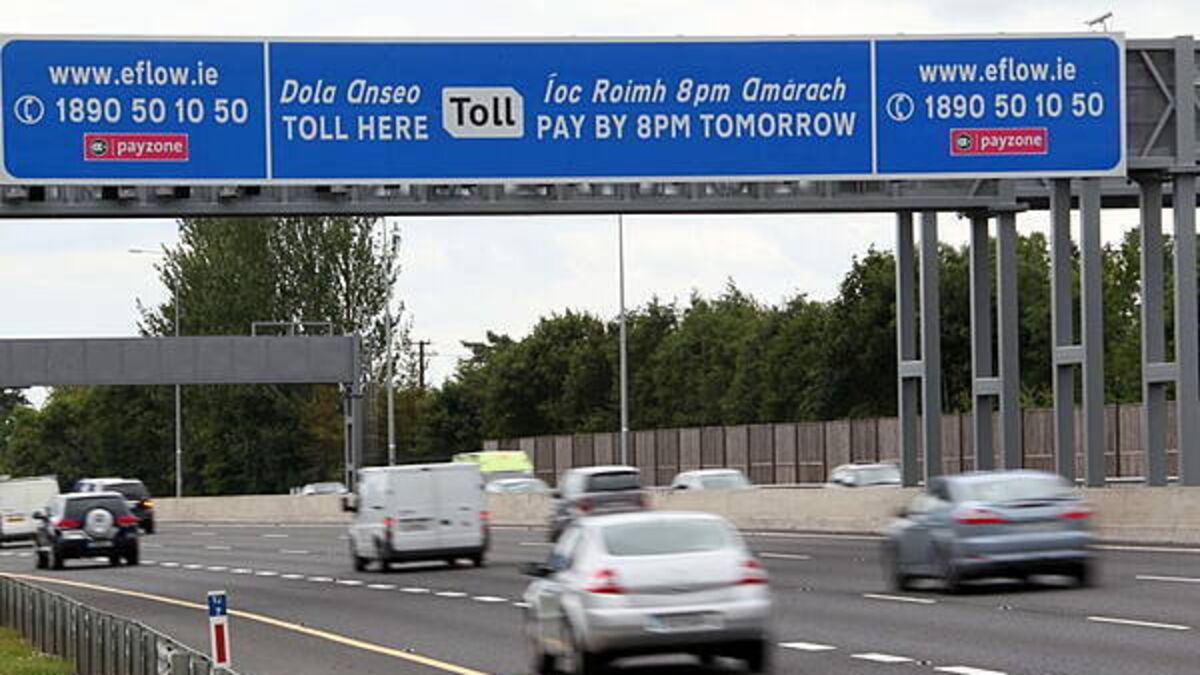
Motorists are paying out more than €2.3 million a month to dodge rush hour traffic by using the Port Tunnel in Dublin.
Transport Infrastructure Ireland (TII) figures show a steady rise in the volume of private cars using the tunnel.
In January, the transport operator increased the toll that applies to traffic headed towards the city centre from €13 to €14 while leaving the outbound toll at €12.
Despite the increase, overall private car use of the Dublin Port Tunnel has continued to rise.
Last year, the average number of private cars using the tunnel was 454,000.
In the first six months of this year, that figure rose to 466,000, according to records released under FOI.
During January and February – the first two months after the price rise – revenue from tolls was €2.146 million and €2.143 million respectively.
By March, the number of private cars using the tunnel increased sharply with motorists paying €2.48 million in charges.
In April, revenue dropped to €2.29 million before hitting a peak of €2.53 million in May, the highest figure of either 2025 or 2026.
The amount of money paid fell to €2.45 million as general traffic levels declined as secondary schools and colleges closed for summer.
Altogether, just over €14 million was collected from private car use of the Dublin Port Tunnel in the first six months of this year.
There was also revenue of €4.2 million from light goods vehicles, €47,000 from small buses, and €40,000 from motorbikes.
Use of the Port Tunnel for large buses and heavy goods vehicles is free.
The volume of private car traffic is now nearly double that of HGVs, even though the tunnel was specifically designed to cater for trucks and lorries accessing Dublin Port.
Separate figures show that speeding continues to be a problem in Dublin Port Tunnel.
The underground route has an 80kph limit and 420 cameras attached to its vehicle management system.
Despite that, almost 8,000 vehicles were detected speeding across 2025 and the first six months of this year.
Last year, there were nearly 5,100 speeding incidents, just over 60 percent of which involved southbound vehicles headed towards the city centre.
Between January and June, there were a further 2,800 – around 63 percent of detection involving southbound traffic.
Asked about the figures, a TII spokesman said Dublin Port Tunnel was a critical economic link for most goods and services coming in and out of the country’s main port.
He said an average speed camera system was a key safety feature, and they worked closely with An Garda Síochána to ensure safe operations.
The spokesman added: “Given increased levels of traffic using Dublin Port Tunnel during the AM southbound peak in 2025, TII increased tolls during these peak hours for citybound traffic from €13 to €14 in 2026.
“The object of this toll increase is to preserve capacity for HGVs, as non-HGV traffic continued to increase in 2025, during morning peak periods.
“The tolling income collected by TII on M50 and Dublin Port Tunnel is combined with Exchequer funding to pay for TII’s annual protection and renewal of national roads.”