Fr Paddy Byrne: Fr Willie Doyle lived an inspirational life
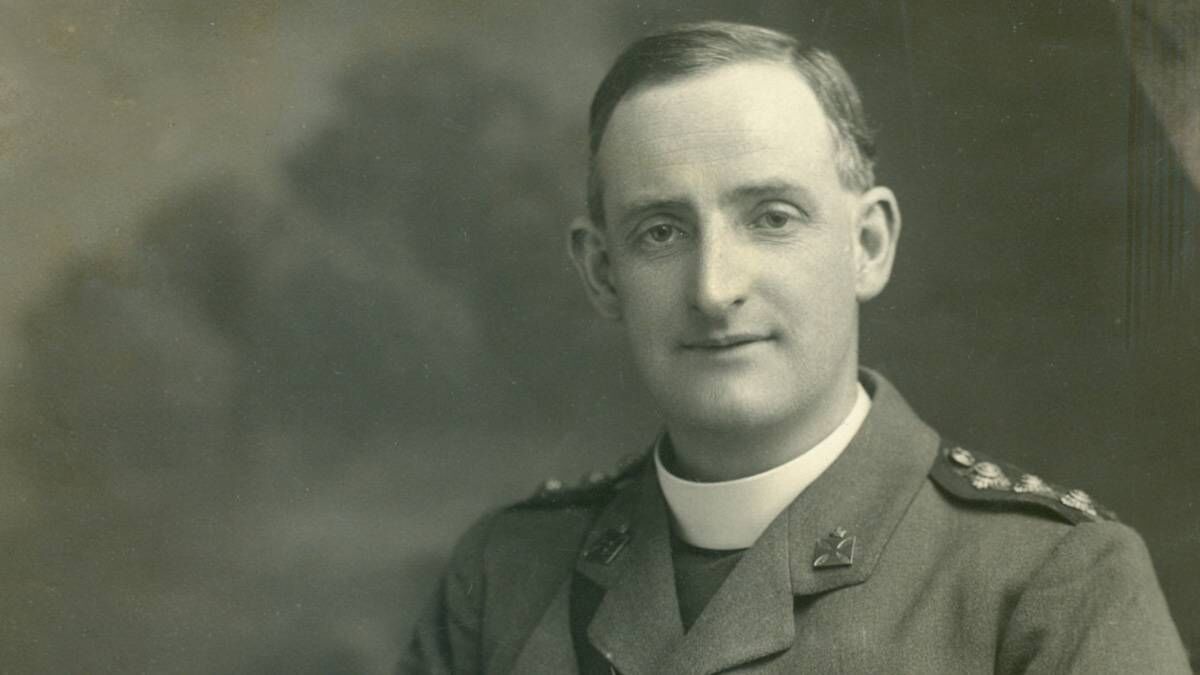
The late Fr Willie Doyle
THE canonisation cause of heroic First World War chaplain Fr Willie Doyle, SJ, this week moves to its Roman stage. The diocesan phase of the Cause is now complete and has been sent to the Dicastery for the Causes of Saints in Rome. Father Willie Doyle, SJ (1873-1917) was an Irish Jesuit priest, renowned preacher and confessor and heroic military chaplain in the First World War. He is remembered for his courage under fire, deep spirituality, practical charity and self-sacrifice. He is a Servant of God whose cause for beatification and canonisation is advancing in the Catholic Church.
William Joseph Gabriel Doyle was born on 3 March 1873 in Dalkey, a suburb of Dublin, the youngest of seven children of Hugh Doyle (a court registrar) and Christine Doyle (née Byrne). The family was devoutly Catholic and practically charitable â the poor regularly received help from their home. Four of the seven children entered religious life â two brothers became Jesuits, one died shortly before ordination and a sister became a Sister of Mercy.
Educated partly in Ireland and at Ratcliffe College (a Catholic boarding school run by the Rosminians in Leicester, England), young Willie showed early signs of kindness. He helped servants with chores, brought food and money to the poor and even cleaned or painted their homes. He enjoyed sports and practical jokes, traits that later made him popular with students and soldiers.
Inspired by reading St Alphonsus Liguori’s Instructions and Considerations on the Religious State, he entered the Society of Jesus (Jesuits) in March 1891 at St Stanislaus College, Tullabeg (in the diocese of Meath). His long formation (about 16 years) included periods of ill health from a digestive complaint that continued throughout his life. He taught at Clongowes Wood College (where he helped found the magazine The Clongownian) and Belvedere College, studied philosophy in Belgium and England and completed theology at Milltown Park, Dublin.
He was ordained on 28 July 1907 (in the same ceremony as Blessed John Sullivan) and took final vows in 1909 after tertianship in Belgium. On the day of his ordination, he resolved “to go straight for holiness” and strive to become a saint. As a novice, he had already offered himself as a martyr, writing a resolution in his own blood. From 1908 to 1915, he served on the Jesuit mission staff, giving at least 152 missions and retreats across Ireland and Britain. He became known as a powerful preacher, confessor and spiritual director with a gift for reaching hardened or neglected sinners. He also promoted working men’s retreats, supported the Pioneer Total Abstinence Association and helped found a Poor Clares monastery in Cork. Behind his active apostolate lay a hidden life of intense prayer, penance and offering himself as a victim for the salvation of souls, especially priests.
When war broke out in 1914, Doyle volunteered as a chaplain (he had earlier hoped for missionary work in Africa). Appointed in late 1915 to the 16th (Irish) Division of the British Army, he served primarily with the 8th Battalion, Royal Irish Fusiliers, and also ministered to other Irish units, including the Royal Dublin Fusiliers, Inniskilling Fusiliers and Irish Rifles. Despite holding officer rank, he lived in the trenches with the men, sharing their hardships, dangers and rations.
He served through major engagements â the Battle of Loos (where he endured a gas attack and was mentioned in dispatches), the Somme (especially the assaults on Guillemont and Ginchy), Messines Ridge and Passchendaele (Third Battle of Ypres). He repeatedly risked his life to administer the sacraments to the wounded and dying, carry men to safety under fire and bury the dead â Catholics and Protestants alike. He also showed kindness to German wounded and prisoners.
Soldiers of all backgrounds held him in high regard; he was described as fearless and an “angel of mercy.” For bravery at the Somme, he received the Military Cross. He also earned a divisional parchment of merit for conduct during a gas attack. He was recommended for the Distinguished Service Order and the Victoria Cross, but neither was awarded (some contemporary and later accounts suggest anti-Irish, anti-Catholic or anti-Jesuit prejudice played a role). His commanding general, William Hickie, called him “one of the bravest men who fought or served out here.” On 16 August 1917, during the Battle of Langemarck. Fr Doyle was killed by a German shell while going to the aid of wounded soldiers (including two Protestant officers from Ulster) in no-man’s-land and administering last rites. His body was never recovered; he is commemorated on the Tyne Cot Memorial. He was 44. His wartime letters and spiritual writings reveal a man of profound faith, humour and self-sacrifice. After his death, Alfred O’Rahilly’s 1920 biography brought his inner life and heroism to wider attention. He has long been regarded as a “martyr of charity.” Devotion to him has persisted and he has influenced figures, including (according to some accounts) aspects of Mother Teresa’s spirituality.
A cause was considered in the 1930s but not pursued at the time. In 2022, the Fr Willie Doyle Association, supported by the Irish Jesuits and the diocese of Meath, successfully petitioned for the opening of his cause. Bishop Tom Deenihan formally opened the diocesan inquiry on 20 November 2022 at the Cathedral of Christ the King in Mullingar. Fr Willie Doyle remains an inspiring example of priestly zeal, courage and love of neighbour â ready to lay down his life for others regardless of creed or nationality. His story continues to draw interest among those seeking models of holiness amid the trials of ordinary and extraordinary life.
Some of Fr Willie's thoughts: "I think the best of all prayers is to quietly kneel and let Jesus pour himself into your soul"; "Look upon nothing as too small to offer to Jesus"; "To do something great and heroic may never come, but I can make my life heroic by faithfully and daily putting my best effort into each duty as it comes around"; "Keep smiling, it is the very best remedy for gloom"; and "Let him act must be your motto. Jesus will bring all things right in the end. The more I get to know God, the more inclined I feel to let him work out things in his own way and time and to go on peacefully not troubling about anything.”