Laois ARC Project celebrates two years of changing lives
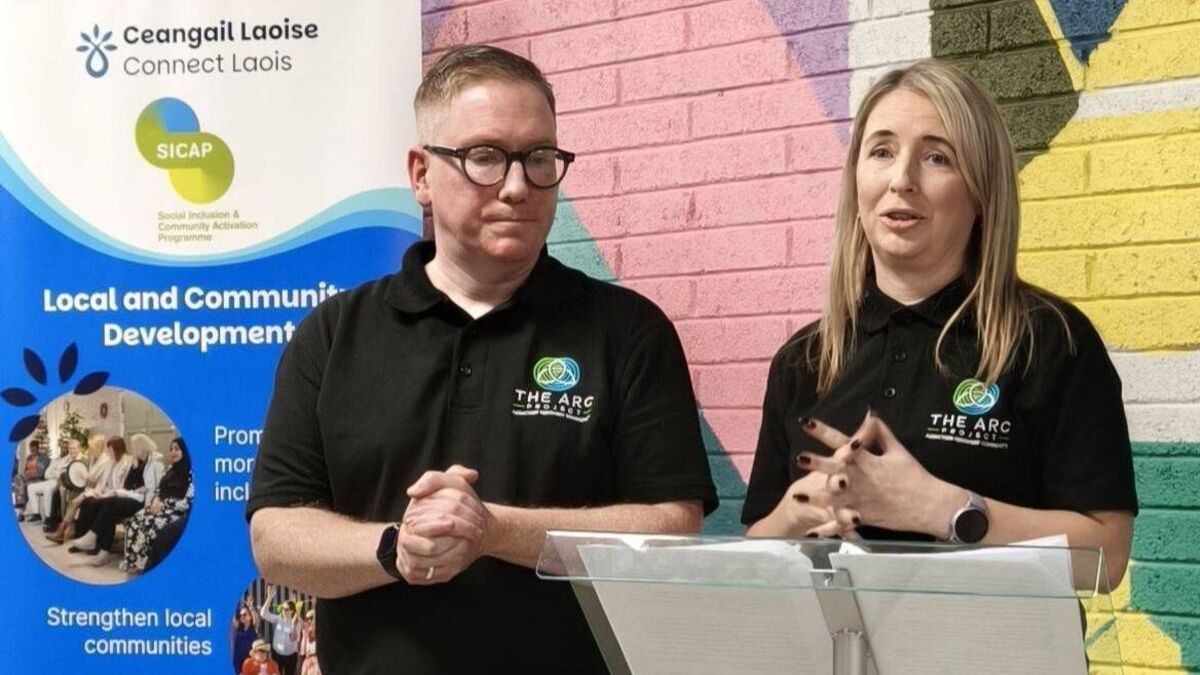
Founders of The ARC Project David Delaney and Michelle Robertson pictured together at their second anniversary gathering in Connect Laois Portlaoise Photos: Stan Henderson
THE ARC Project celebrated two years of changing lives in the county at Connect Laois on the New Road, Portlaoise on Thursday 29 October showing that sometimes the biggest step on the road to recovery is to simply walk through a door.
Behind every story of addiction there is a person, a family and often a struggle being silently carried and in Portlaoise The ARC Project is building a community where nobody has to face that struggle alone.
It might be the first time someone has admitted they need help, a family member who has spent years worrying in silence, or someone who has made progress in recovery but still feels isolated and unsure where they belong.
For the people who attend The ARC Project that door leads to something increasingly precious for them, a place where they are welcomed, listened to and accepted without judgement.
The anniversary gathering was attended by Cathaoirleach of Laois County Council Cathleen Fitzgerald, Senator Maria McCormack and TD Seán Fleming who had also attended the first anniversary last year, hence their presence recognised the importance of the project and the support it provides to individuals and families across the county.
As the project celebrated its second anniversary the message from those involved was clear. Recovery is not something that happens in isolation. It grows through connection, understanding and the knowledge that there are people who will happily walk alongside you.
Caroline Lydon, CEO of Connect Laois explained how the project began with a very real need in the community. She said: “Two years ago co-founders Michelle Robertson and David Delaney approached the organisation about establishing support for people affected by addiction as well as their families.
Connect Laois works to bring funding and opportunities into local communities, helping to respond to needs on the ground.
“The partnership with ARC has helped turn that original idea into a growing range of supports. The work has also included a QQI Level 5 Certificate in Community Addiction Studies, with two courses and 40 participants as well as the On Track programme developed through a Healthy Ireland partnership at Mill Court Community Centre in Portlaoise. While the programmes and qualifications are important the heart of ARC is the people who gather there,” For Michelle Robertson, the need for such a place was deeply personal. Addressing the gathering of over 40 people, she said: “Addiction does not always look the way people expect. Someone can be working, raising a family, studying and smiling while behind closed doors they and their loved ones are struggling. Too often fear of judgement keeps people from asking for help.” Michelle and David wanted to create somewhere people could speak honestly, find understanding and discover that they were not alone. What began with a family support meeting has grown to include recovery meetings, the Green Door Café, recovery coaching, family support, creative and physical activities, education and opportunities to become involved in the wider community.
Continuing, Michelle said: “Sometimes just coming through the door is a huge step for people and everyone is welcome here. Recovery is about more than leaving an addiction behind and that it is about building a healthier, more connected and meaningful life. Families need support and hope too, and their experiences deserve to be heard. The letters ARC stand for Addiction, Recovery and Community, three words that capture the project's inclusive approach. Everyone belongs here, and everyone should have hope,” Co-founder David Delaney spoke about the importance of changing how society views people affected by addiction. He said: “People affected by addiction should not be defined by their past but recognised as valued members of the community with relationships to build and contributions to make.
“Behind every story is a person, and often an entire family. Challenging stigma means listening, learning and making sure people are not excluded because of what they have been through.” The impact of that welcome from the founders was evident in the words of three participants who spoke to the gathering. Keith Dunne spoke about being in recovery for 13 years. Following a workplace accident his mental health suffered and he found himself looking for something more than simply staying clean.
He said: “Through The ARC Project I found connection, friendship and a renewed sense of purpose. Taking part in the Addiction Studies course also changed my outlook and strengthened my desire to help others. The ARC brought that back for me. That sense of connection was what I had been missing.” For Keith, the everyday things matter like having somewhere to meet for a coffee, talk openly, build friendships and develop a routine. He hopes the project will receive the support it needs to continue growing. Concluding he said that “If I can leave this room tonight and help even one person, I'm okay with that,” Jamie O'Dwyer spoke movingly about the effect addiction had on his family. While he had been focused on his own difficulties, he came to realise how much those closest to him had suffered.
He said: “Taking part in the Addiction Studies course alongside my sister opened my eyes to her experience. It also meant learning to listen and accept that she had feelings and opinions that deserved to be heard.” He reflected on how valuable a place like ARC could have been earlier in his recovery, somewhere he could have said without fear of judgement that he was struggling and needed help.
Today, he described a different relationship with his family and the importance of making amends.
“We are all healing together and I'm proud to be a recovering addict today.” Ger Dunne also spoke about the importance of community, understanding and the healing that can happen when people share their experiences. He reminded the gathering that families can carry an enormous burden too. The support of others who understand can make that weight easier to bear.
He said: “Two years after its beginnings, The ARC Project is still reaching out to people and families who may feel isolated. Its work depends on volunteers, partnerships and the continued support of the wider community.” Its anniversary was not only a celebration of how far it has come, but a reminder of how much more can be done. Because behind every person who walks through the door is a story worth hearing and sometimes the kindness of a cup of tea, a conversation or someone saying “I've been there too” can be the beginning of something life changing.
Before light refreshments and sandwiches David concluded by thanking everyone involved and jokingly saying that there was a cake but because Health Ireland is involved this year there isn’t one! Which got a good laugh from the gathering.
On behalf of The ARC Project David thanked the facilitators Ger, Sylvia, Brian, Caroline and Mia, Connect Laois, Caroline Lydon, Peter Ormonde and Emer Kelly, Recovery Academy Ireland, An Cosán, Fiona Skehan of Health Ireland, OnTRACK, Triona Byrne at DCU Recovery College, Claire Naughton and the teams at Cuan Mhuire in Athy, The Dara Project and Paula Kirwan at Kelmer International, Alan Lawless, Declan Feeney with a “special thanks” to Larry Hennessey of Respond! Housing Association for supporting The ARC Project with the Mill Court Community Centre in Portlaoise.
The ARC Project invitation is open to everyone and the simple message is to come as you are and that there is a place for you there.
More information and how to make donations to The Arc Project is available on the website www.thearcproject.ie. Enquiries can be emailed to info@thearcproject.ie or phone 085 8187470.