Ryanair aircraft tyres burst on landing after braking system fault, investigation finds
Seán McCárthaigh
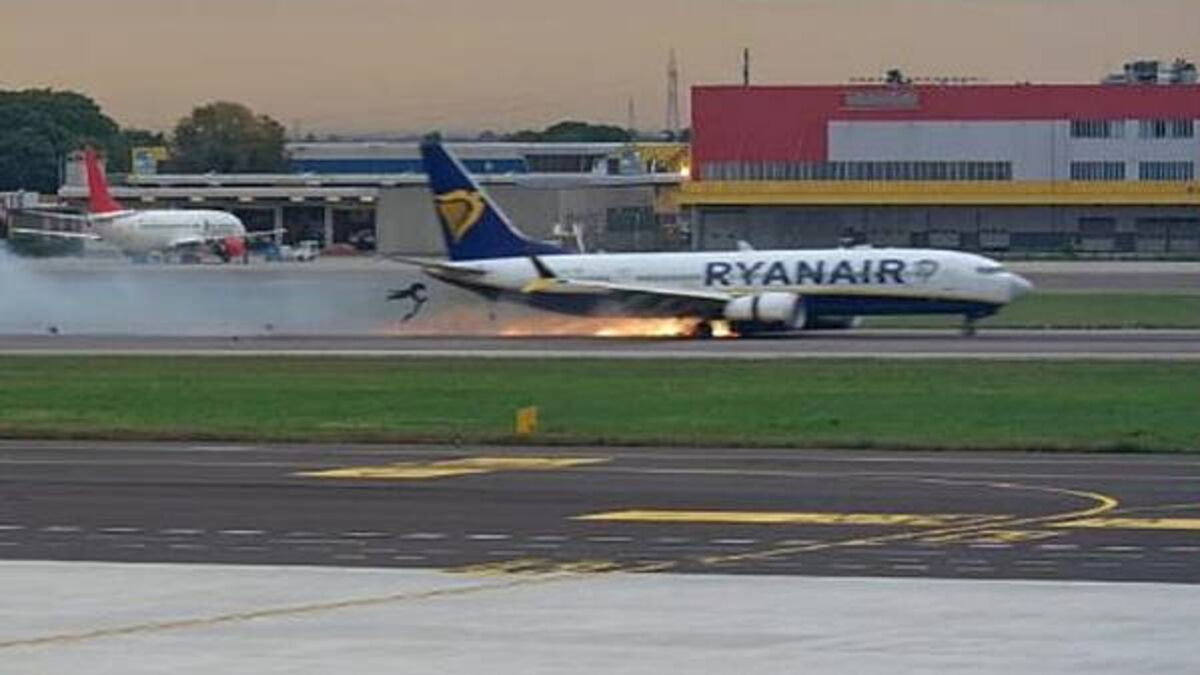
All four tyres on the main landing gear of a Ryanair aircraft burst on touchdown at an Italian airport after its anti-skid braking system had been deactivated as a result of a persistent fault, an investigation has found.
A report by the Italian Civil Aviation Safety Investigation Authority, known as the ANSV, found the serious incident had resulted from an incorrect sequence of actions being unintentionally applied by the flight crew while landing an aircraft with its antiskid system disabled.
The incident occurred on the Irish-registered Boeing 737-8200 MAX plane with 162 passengers and six crew members on board a flight from Barcelona as it landed at Milan Bergamo Airport in Italy on October 1, 2024.
The passengers and flight crew were all unharmed, but they had to disembark from the aircraft while it was still on the runway.

Significant damage was caused to the plane’s wheels and braking system, while there was also extensive damage to the runway, which had to be resurfaced before flights could resume later that evening.
The ANSV report said contributory factors included the crew’s lack of training on flight simulators for landing an aircraft with an inoperative anti-skid system.
Investigators said there was “less than adequate evidence” in aircraft manuals of a clear and timely sequence of the required actions to perform such a landing.
The investigation found the anti-skid system had been deactivated the previous day following maintenance checks after a warning light illuminated repeatedly during a series of flights out of Barcelona.
The aircraft was released for flying with the anti-skid system still inoperative in the absence of evidence of specific faults following a further maintenance check.
After four eventful flights, further checks carried out on the Boeing identified the failure of a sensor which was linked to just one of two anti-skid channels.
The ANSV report found an on-duty technician who established a spare component was unavailable had left the anti-skid system deactivated.
It also identified a discrepancy in Boeing documentation about whether an operative anti-skid channel “must not” or “should not” be deactivated.
The ANSV said the discrepancy may have contributed to the decision to disable an operative anti-skid channel unnecessarily.
It said both the ground crew and pilots correctly planned and prepared the aircraft for landing without the anti-skid system and were aware of the implications of landing without it.
Investigators said the aircraft had also reached the runway at the correct speed and rate of descent.
However, pressure was inadvertently applied to the brakes before the speed brakes were deployed, which caused them to lock and resulted in the tyre blowouts.
The report noted that Ryanair’s training programmes do not include practical training sessions in a flight simulator for an aircraft with its anti-skid system deactivated.
Following its own internal investigation, the airline reduced the maximum repair window for fault rectification from 10 days to just one flight.
Ryanair has also now made it mandatory for flight crews to contact their duty pilot for an operational briefing on the procedures, restrictions and threats for operating an aircraft with an inoperative anti-skid system.
The ANSV issued three safety recommendations to Boeing in relation to the operation of the aircraft with its anti-skid system disabled.